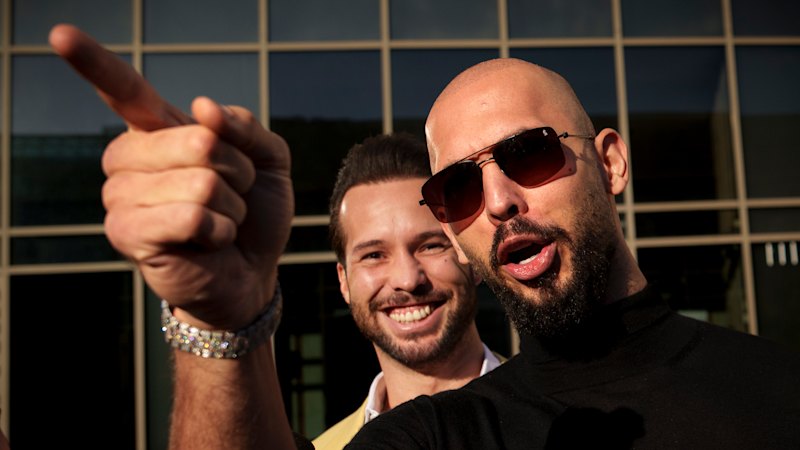
The trajectory of Andrew and Tristan Tate—from kickboxing niche participants to global digital entities—represents a repeatable, data-driven methodology for audience acquisition via extreme polarity. Their brand operates not as a traditional celebrity enterprise, but as a high-velocity conversion funnel designed to weaponize algorithmic feedback loops. By deconstructing their operational framework, we identify a deliberate system of psychological anchoring, tiered monetization, and institutional evasion that explains their resilience despite systemic legal pressure.
The Algorithmic Acquisition Engine
The Tates achieved market dominance by identifying a fundamental inefficiency in social media content distribution: the "virality gap" between moderate content and high-conflict, contrarian assertions. Their strategy utilizes a multi-stage funnel designed to maximize reach before narrowing to high-intent conversion.
- Top-of-Funnel Fragmentation: Instead of maintaining a single central account, the brothers incentivized an army of affiliates to recirculate short-form, high-intensity clips across TikTok, YouTube Shorts, and X. This decentralized distribution acts as a firewall; if one node is banned, the network remains operational.
- Polarity Calibration: Content is engineered to trigger intense sentiment—either visceral agreement or aggressive refutation. Algorithms prioritize engagement metrics (comments, shares, saves) above sentiment analysis. By forcing a reaction, the Tate brand forces the algorithm to serve their content to the opponent’s demographic, expanding their reach beyond their base.
- The Scarcity Anchor: By positioning themselves as outsiders fighting a "Matrix" of globalist control, they create an "us versus them" psychological state. This builds high switching costs for followers; to reject the Tates is to admit one has been "fooled" by the system.
The Monetization Architecture
The transition from influencer to revenue-generating entity relies on the "Hustler’s University" model, now rebranded as The Real World. This is a classic subscription-based recurring revenue model (SaaS) applied to the self-help and finance education market.
- Low-Barrier Entry: A monthly fee (typically ~$50) lowers the cognitive friction for younger, liquidity-constrained demographics.
- Affiliate Incentivization: The business model converts consumers into distributors. By offering commissions for successful referrals, the Tates offloaded their marketing acquisition costs onto their user base. This creates a self-perpetuating growth cycle where users are financially motivated to remain within the ecosystem.
- The Ecosystem Lock-in: Once inside, the platform provides proprietary communication channels (Discord, private apps), isolating members from dissenting external information. The platform serves as a controlled environment where the Tates act as the sole source of "truth" regarding finance, fitness, and interpersonal relationships.
The Legal and Reputational Risk Profile
The charges filed by the Romanian Directorate for Investigating Organized Crime and Terrorism (DIICOT)—comprising human trafficking, rape, and forming a criminal gang—represent a high-stakes stress test of their operational resilience. From a risk management perspective, the brothers have adopted a strategy of institutional delegitimization.
The Mechanism of Defense
- Jurisdictional Arbitrage: By basing operations in Romania, they utilized a legal environment with different procedural norms than the UK or US, allowing them to frame local prosecution as politically motivated "persecution" rather than criminal accountability.
- Information Asymmetry: By controlling the narrative via their own media channels, they pre-empt official court findings. They do not need to prove innocence in court; they only need to maintain a threshold of "reasonable doubt" among their core constituency to ensure their brand remains solvent.
- Asymmetric Warfare: The brothers utilize the legal system’s slow pace to their advantage. Every procedural delay, appeal, or motion serves as content for their channels, generating revenue while the case remains in stasis.
Legal Categorization of Claims
The charges against the Tates revolve around the "Loverboy Method"—a documented tactic in human trafficking where perpetrators cultivate romantic dependencies to exert psychological and economic control over victims.
- The Trafficking Allegation: Prosecutors argue the Tates utilized coercion to force individuals into producing adult content for the "OnlyFans" ecosystem. The economic mechanism here is labor exploitation: extracting high-margin digital content value while retaining the majority of the proceeds via platform fees and organizational skimming.
- The Financial Component: Large-scale money laundering allegations suggest the Tates attempted to integrate illicit proceeds from this exploitation into the formal economy through real estate, luxury assets, and cryptocurrency holdings. This is a standard defensive maneuver to diversify liquidity in the event of asset seizure.
The Economics of Misogyny as a Product
The Tate brand is a reaction to a perceived "crisis of masculinity." Their content addresses real anxieties among young men—declining social mobility, loneliness, and confusion regarding modern gender roles—but provides a destructive solution: the commodification of dominance.
By defining social success as the acquisition of capital, physical power, and sexual access, they turn "misogyny" into a performance metric. Followers are not merely consuming content; they are purchasing a blueprint for perceived status. This makes the brand immune to conventional moral criticism because the criticism itself is framed as proof of the "Matrix's" failure to understand the "Truth."
Strategic Forecast and Market Survival
The survival of the Tate business model is decoupled from the legal outcome of their trial. Whether they face incarceration or acquittal, the decentralized infrastructure they built is now self-sustaining.
- Brand Decentralization: Even if the primary figures are removed, the "Tate persona" has been memeticized. Thousands of creators now mimic their speech patterns, ideological frameworks, and marketing tactics. The ideology has detached from the individuals.
- Platform Resilience: The migration from centralized social platforms to private, subscription-gated networks limits the ability of Big Tech to de-platform the movement. They have successfully moved their revenue stream behind a wall that content moderation teams cannot easily access.
- The "Martyrdom" Premium: A conviction will not destroy the brand; it will increase the "us versus them" narrative, potentially strengthening the resolve of the remaining base. An acquittal will be framed as a total victory over global systems, serving as the ultimate marketing proof for their recruitment funnel.
Strategic Recommendation for Content Platforms
Platforms attempting to mitigate this content type must pivot from reactive banning to algorithmic demotion. Banning individuals functions as a catalyst for their martyrdom narrative. Instead, platforms must apply "frictional distribution"—removing the ability of such content to auto-play, share across networks, or benefit from recommendation engines.
The primary vulnerability of the Tate model is the cost of acquisition. If the virality of their content is throttled at the infrastructure level—denying them free reach to non-subscribers—the funnel dries up. Without constant inflow of new, lower-tier subscribers, the recurring revenue model faces churn rates that exceed the rate of new sign-ups, eventually leading to structural insolvency. Focus on suppressing the distribution vectors of the affiliate network rather than targeting the central figures themselves.