Silence.
That is the first thing you notice when you step out of the noisy fluorescent corridors of an underfunded high school and into a room where young women have actually been invited to speak without raising their hands for permission.
I remember that specific kind of silence from my own adolescence. When you grow up watching the adults around you triage emergencies—figuring out which utility bill can wait until Friday, or whether the car transmission will survive another winter—you learn very quickly that your own ambitions are a luxury item. You shrink your voice to fit the room. You keep your head down. You mistake survival for a plan.
For twenty years, while millions of television viewers tuned in to watch Judith Sheindlin eviscerate deadbeat roommates and dishonest mechanics with a sharp tap of her pen and a withering glare, a completely different courtroom was convening off-camera. There were no bailiffs. There were no syndicated reruns. There was only a room full of teenage girls, a collection of formidable adult women, and a stubborn refusal to let potential die of neglect.
Her Name Is Judy.
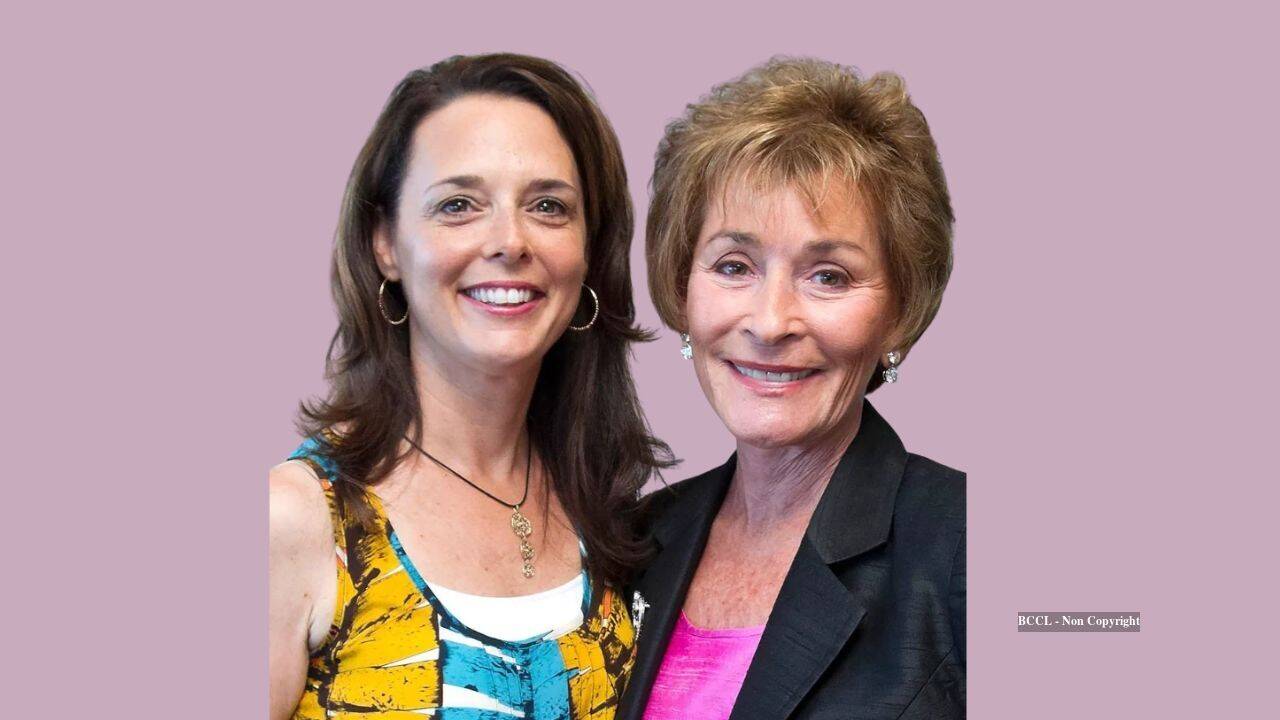
That is the name of the mentoring organization founded in 2006 by Judge Judy Sheindlin and her stepdaughter, Nicole Sheindlin. Over the past two decades, the program has quietly reached more than 1,500 young women across New York, Los Angeles, and beyond. If you read the standard press releases marking this twenty-year milestone, the story sounds polite, tidy, and entirely predictable. It reads like a bulleted list of charitable tax deductions and ceremonial luncheons.
It misses the point entirely.
The Architecture of Invisible Walls
To understand why a mentoring program run by a daytime television titan actually works, you have to strip away the celebrity gloss and look at the mechanics of how young women get sidelined before they ever reach adulthood.
Consider a hypothetical teenager—let’s call her Maya. Maya is sixteen, sharp as a tack, and sits in the third row of an eleventh-grade history class in the Bronx. She gets decent grades. She does not get suspended. Because she is not actively failing, the school system classifies her as fine.
In the bureaucracy of modern education, "fine" is a death sentence for ambition.
Maya does not know what an internship actually looks like, because nobody on her block has ever worked in an office where you don't wear a name tag. She does not know how to negotiate a college financial aid package, because the paperwork reads like an ancient legal text written in a language designed to keep her out. When she looks at the future, she doesn't see a ladder. She sees a brick wall with no doors.
I spent years navigating that exact fog. When you don't have a map, every minor setback feels like a verdict on your intelligence. You bomb one algebra quiz and decide you aren't a math person. You fumble one awkward interview and decide you don't belong in corporate buildings. Without someone sitting across the table to tell you that failure is just data, you internalize every stumble as permanent proof of your own inadequacy.
This is the invisible crisis that Her Name Is Judy was built to dismantle.
When Nicole Sheindlin and Judith Sheindlin launched the initiative in 2006, they weren't trying to create a finishing school for polite young ladies. Judith Sheindlin built her entire public persona on a single, uncompromising philosophy: nobody is coming to save you, so you had better learn how to stand on your own two feet.
Why Most Mentorship Fails
We have turned mentorship into a buzzword so diluted it barely means anything anymore. Corporations host awkward speed-networking mixers, pair a junior employee with a senior vice president for two lukewarm coffees, and congratulate themselves on solving inequality.
Those programs fail because they treat confidence like a motivational poster. You cannot tell a seventeen-year-old girl to "believe in herself" if you haven't given her the tools to defend her own arguments, manage her own money, and walk into a room knowing she has earned her seat.
Think of confidence not as a mood, but as a muscle. You don't get stronger by reading books about weightlifting. You get stronger by picking up heavy things repeatedly until your body adapts to the load.
In the Her Name Is Judy workshops, the heavy lifting happens through radical accountability and sustained proximity. The program doesn't just drop an inspiring speaker into an auditorium for forty-five minutes and disappear. It pairs high school girls with dedicated female mentors who show up consistently, month after month, year after year.
They tackle the unglamorous mechanics of adulthood. They dissect how credit scores work before a predatory lender ever gets a chance to ruin a twenty-year-old's life. They practice public speaking until the tremor leaves the voice. They talk openly about bodily autonomy, toxic relationships, and the subtle ways women are conditioned to apologize for taking up space.
The Television Persona Versus the Private Reality
There is an obvious irony here that critics love to poke at. How does a woman famous for barking "Don't pee on my leg and tell me it's raining" become a nurturing guide for vulnerable teenagers?
Actually, it makes complete sense.
Teenagers have an extraordinary radar for phoniness. If you walk into a room full of sixteen-year-olds speaking in soft, therapeutic platitudes, they will tune you out before you finish your first sentence. They know when they are being patronized. They know when an adult is performing charity to feel good about themselves.
Judith Sheindlin does not coddle. She never has. Throughout her career—first as a prosecutor in the New York family court system, then as a supervising judge in Manhattan, and finally as the undisputed queen of daytime television—her message to women has remained remarkably consistent: do not surrender your agency.
In her courtroom, she reserved her sharpest fury not for criminals, but for women who handed their paychecks, their dignity, and their decision-making power over to irresponsible men, only to act surprised when the bill came due. It was tough medicine, delivered without sugar, and it resonated with millions of viewers precisely because it refused to treat women as fragile victims.
Behind closed doors with the Her Name Is Judy cohorts, that same fierce pragmatism transforms into fierce protection. When Judge Judy looks at a room of teenage girls, she isn't seeing charity cases. She is seeing future judges, doctors, business owners, and mothers who simply lack the insider playbook that wealthy kids inherit at the dinner table.
Fifteen Hundred Ripple Effects
Numbers can numb the brain. When we hear that a program has reached 1,500 young women over twenty years, our eyes glaze over. Fifteen hundred sounds modest compared to the millions of students struggling across the country.
Stop looking at the raw headcount and start looking at the geometry of influence.
When one young woman breaks out of generational stagnation, she does not go alone. Consider what happens next. She becomes the older sister who edits her little brother's college essay. She becomes the cousin who explains what a 401(k) match is at Thanksgiving dinner. She becomes the mother who reads to her children every night and refuses to let them accept mediocrity from their local school board.
Over two decades, those 1,500 alumni have graduated from high school at rates that dwarf the national averages for their demographics. They have walked across college stages at NYU, Cornell, Howard, and dozens of state universities. They have entered law firms, hospitals, newsrooms, and tech startups.
More importantly, many of them have come back.
The true measure of any twenty-year institution isn't the founder's speech at the anniversary gala. It is whether the people who walked through the door at sixteen choose to return at twenty-six to hold that same door open for someone else. Today, former Her Name Is Judy mentees sit on the other side of the table, guiding a new generation of teenagers through the exact anxieties they once survived.
The Uncomfortable Truth About Opportunity
Writing about programs like this always carries a quiet ache, because celebrating twenty years of success forces us to confront how badly we are still failing everyone else.
I look at the landscape of opportunity in 2026, and it feels more polarized than ever. Artificial intelligence is automating away the entry-level jobs that used to serve as stepping stones for working-class kids. Higher education costs have ballooned into six-figure traps. Social media feeds young women an endless, toxic stream of curated perfection while stripping away real-world community.
Against that backdrop, a small room where adult women sit down with teenage girls, turn off their phones, and look them in the eye feels almost subversive.
It is easy to be cynical about celebrity philanthropy. Plenty of famous people slap their names on foundations that spend ninety percent of their budget on galas and administration while accomplishing very little. It takes twenty years of unglamorous, repetitive, behind-the-scenes work to prove that you actually mean it.
Judith Sheindlin is in her eighties now. She has long since secured her place in television history, her fortune, and her legacy. She didn't need to spend two decades funding scholarships, hosting workshops, or challenging young women to stop shrinking themselves. She did it because she understood a fundamental truth that most of our institutions have forgotten: talent is distributed equally, even when opportunity is not.
Somewhere tonight, in a quiet community room after the last school bell has rung, a sixteen-year-old girl is sitting straighter in her chair, holding a legal pad, realizing for the very first time that her voice does not need permission to fill the space.