Most celebrity real estate stories are boring. A star buys a mansion, adds an infinity pool, and flips it three years later for a quick profit.
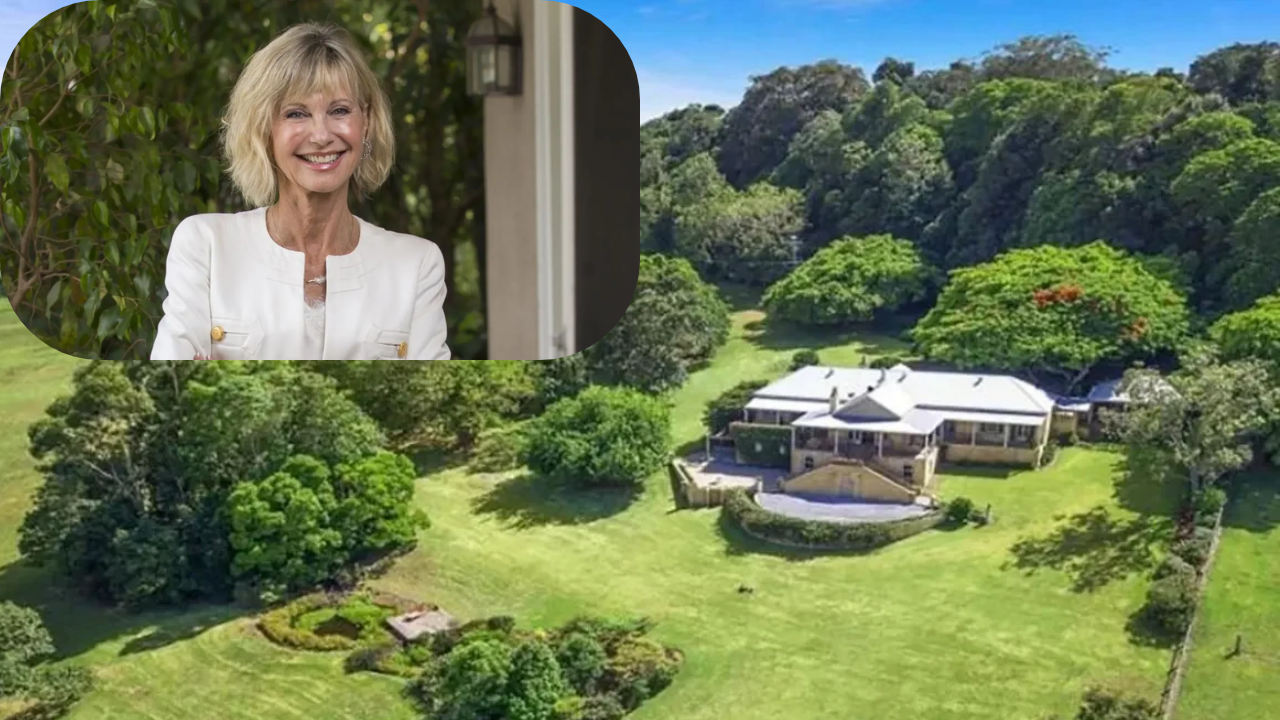
Olivia Newton-John did the exact opposite with her Dalwood estate in New South Wales.
Instead of turning her 187-acre property near Byron Bay into a flashy compound, she spent decades replanting thousands of native trees to bring back local wildlife. And when the property finally hit the market following her passing, the sale wasn't about cashing in on fame—it was directly tied to funding her lifelong mission in cancer research and wellness.
If you've only ever known Newton-John from Grease or her chart-topping pop hits, you're missing the biggest part of her legacy. Her work at Dalwood shows how land conservation and medical philanthropy can actually work together in the real world.
Why Dalwood Was Never Just Another Celebrity Farm
When Newton-John bought the Dalwood property in the Byron Bay hinterland back in the late 1970s and early 1980s, it didn't look like the lush sanctuary people see today. Like much of the Northern Rivers region in New South Wales, large sections had been cleared for grazing and agriculture.
She saw potential where other buyers only saw degraded pasture.
Over more than four decades, Newton-John worked alongside local conservationists to rewild the land. We aren't talking about planting a few decorative shrubs around a driveway. She oversaw the planting of tens of thousands of native Australian trees, restoring subtropical rainforest corridors that had been wiped out generations earlier.
It worked. Wallabies, koalas, echidnas, and dozens of native bird species returned to the estate because their habitat was finally back.
Honestly, most wealthy landowners talk a big game about sustainability while keeping manicured, water-guzzling lawns. Newton-John actually got her hands dirty and let the bush take over. She didn't want a showcase farm. She wanted a functioning ecosystem where Australian wildlife could breed and move safely between fragmented pockets of forest.
What Makes the Byron Bay Hinterland So Ecologically Important
To understand why Dalwood matters, you have to look at the geography of the Northern Rivers region. This area sits right on the edge of the Gondwana Rainforests of Australia, one of the most biologically diverse places on the planet.
When farmland breaks up these forests, wildlife gets trapped. Koalas, for example, have to cross open ground or roads to find new eucalyptus trees, which puts them at massive risk from cars and domestic dogs. By turning her working farm back into continuous native bushland, Newton-John created a safe buffer zone.
The Realities of Rewilding Australian Farmland
Anyone who has ever tried to restore cleared land in subtropical Australia knows it's brutal work. You can't just scatter seeds and walk away.
- Invasive species take over fast. Camphor laurel and lantana choke out native seedlings within months if you don't actively manage them.
- Soil compaction slows everything down. Decades of cattle grazing pack the earth tight, making it hard for delicate rainforest roots to establish.
- Weather swings are extreme. You deal with severe droughts one year and torrential flooding the next, both of which can wipe out young plantings.
Dalwood succeeded because the restoration wasn't a one-off PR stunt. It was a forty-year commitment. The property evolved into a genuine private wildlife refuge, complete with creeks, waterfalls, and dense canopy cover that kept the local microclimate cool and damp.
How the Dalwood Sale Connects to Her Cancer Work
Following Olivia Newton-John's death in August 2022 after a thirty-year battle with breast cancer, questions naturally came up about what would happen to her beloved Australian sanctuary.
Her family and estate made sure the property's next chapter stayed true to her values. The sale of the Dalwood estate was structured to support the Olivia Newton-John Foundation Fund, an independent charity she established to sponsor global research into plant medicine and gentler, less toxic cancer treatments.
This wasn't a random decision. For Newton-John, environmental health and human health were the exact same fight.
From Diagnosis to Global Advocacy
Newton-John was first diagnosed with breast cancer in 1992—the very same weekend her father died of the disease. She underwent a partial mastectomy, chemotherapy, and reconstruction, using her experience to push for better patient care.
In 2012, she partnered with Austin Health in Melbourne to open the Olivia Newton-John Cancer Wellness & Research Centre. If you've ever spent time in a standard oncology ward, you know how sterile and depressing they feel. She insisted this facility be different. Alongside standard clinical treatments like radiation and chemotherapy, the center integrates wellness therapies—acupuncture, massage, art therapy, and meditation—designed to treat the whole person, not just the tumor.
When her cancer returned in 2013 and again in 2017, metastasizing to her sacrum, she doubled down on botanical medicine. She used medical cannabis to manage severe pain and wean herself off heavy opioids, which sparked her final major project: funding rigorous scientific trials into how plant-based therapies interact with cancer cells.
What Most People Get Wrong About Celebrity Philanthropy
Let's be honest—plenty of celebrity foundations are little more than tax shelters or vanity projects that spend half their budget on gala dinners.
Newton-John's model was completely different. She put her own assets, her own time, and her own personal reputation on the line for decades.
- She bridged conventional and integrative medicine. She never told patients to abandon science or skip chemotherapy. Instead, she funded clinical trials at major hospitals so doctors could gather hard data on which complementary therapies actually reduce side effects and improve survival rates.
- She tied land conservation to healing. She genuinely believed that spending time in nature—like walking the trails at Dalwood—helped patients recover mentally and physically.
- She planned for legacy, not just headlines. Linking the Dalwood estate sale to her foundation ensured that the physical land she spent forty years healing would continue funding medical breakthroughs long after she was gone.
The Architecture and Lifestyle of the Dalwood Property
You might expect a global superstar's estate to feature gilded bathrooms and massive concrete structures. Dalwood was deliberately modest.
The main residence was built to blend into the surrounding bush rather than dominate it. Think timber decks overlooking the valley, wide verandas designed to catch the coastal breeze, and large windows framing the restored rainforest rather than manicured gardens. There's a simple elegance to a home that prioritizes views of wild wallabies over status symbols.
Buyers looking at properties in the Byron Bay hinterland usually want privacy and luxury. Dalwood offered something much rarer—a turnkey conservation legacy where forty years of hard ecological labor had already been completed.
How You Can Support This Kind of Conservation and Research
You don't need 187 acres in New South Wales or a Hollywood fortune to build on what Olivia Newton-John started at Dalwood. Whether you care more about wildlife habitat or better cancer care, there are practical ways to get involved right now.
- Support verified plant-medicine cancer trials. Check out the Olivia Newton-John Foundation to see the specific clinical research projects they fund into botanical therapies and integrative oncology.
- Rewild your own patch of dirt. Even a suburban backyard can serve as a stepping stone for local birds and pollinators if you rip out invasive grass and plant native species suited to your exact soil and climate.
- Look into conservation covenants. If you own rural acreage, organizations like Bush Heritage Australia or local land trusts in your own country can help you place permanent legal protections on your land so future buyers can't bulldoze the habitat you've built.
Olivia Newton-John proved that what you leave behind matters far more than what you accumulate. Dalwood stands as proof that a single person with patience and conviction can bring a dead landscape back to life—and use that same generosity to help save human lives too.