Sweat.
That is the first thing Mumbai demands from anyone who steps onto its streets in the middle of the afternoon, regardless of the bloodline running through their veins or the security detail trailing three paces behind them. The air in India’s financial capital does not merely warm your skin; it wraps around your lungs like a damp wool blanket, thick with the scent of diesel exhaust, frying street-side vada pav, sea salt blown off the Arabian Sea, and the collective urgency of twenty million people trying to get somewhere before the clock runs out. Meanwhile, you can find other events here: Anatomy of the Phuket Shophouse Fire and Urban Structural Failure.
For decades, the script for a British royal visit to India was written in marble and silk. It meant gated colonial clubs, manicured polo lawns, crystal chandeliers reflecting off state banquet tables, and bullet-proof motorcades parting the traffic like Moses at the Red Sea. The public saw the royals through tinted glass or over the shoulders of armed guards. The distance was intentional. Distance preserves mystique.
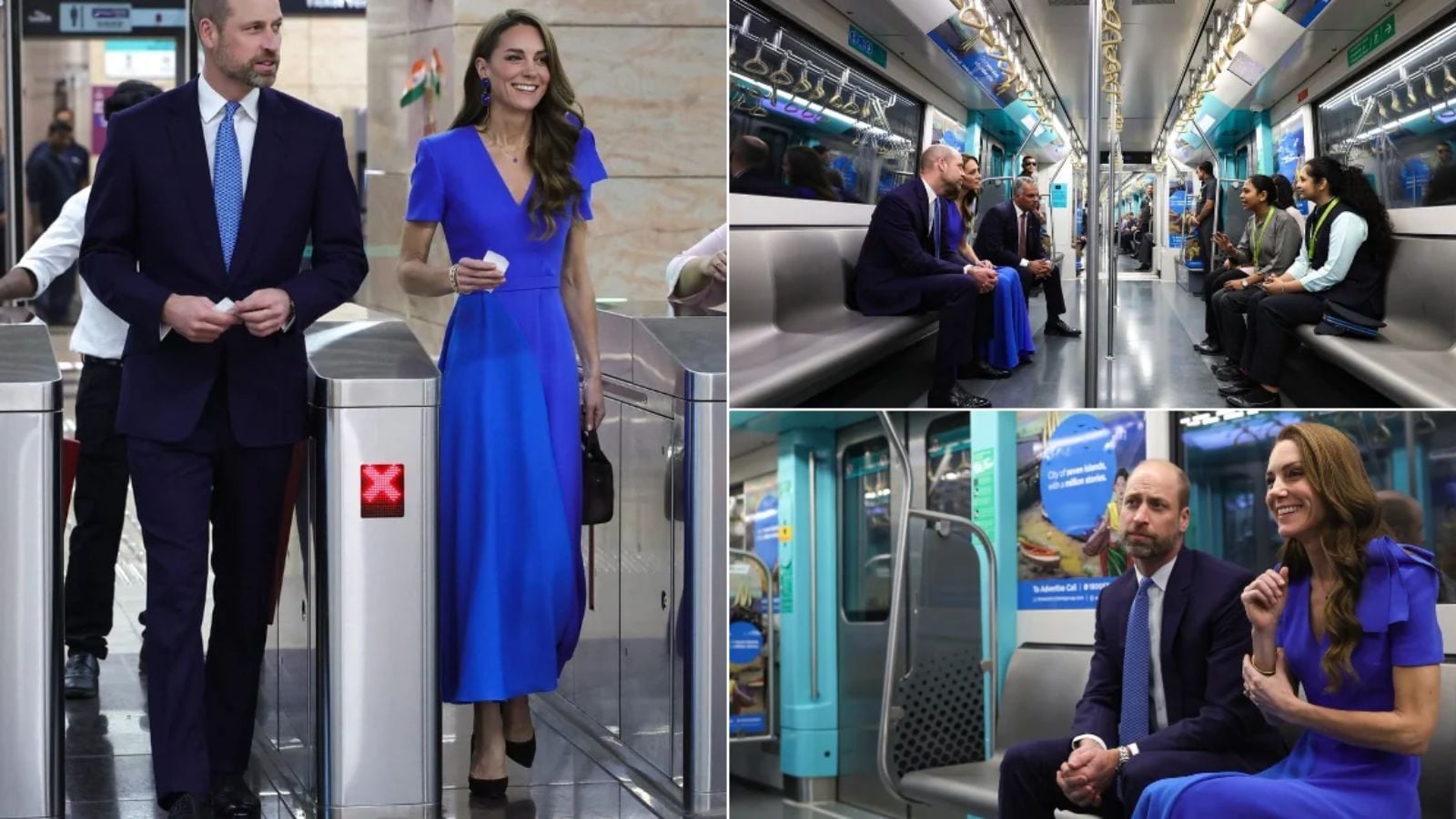
Then came the afternoon Prince William and Catherine, Princess of Wales, walked up the stairs of a Mumbai Metro station, tapped their transit cards, and rode the rails. To explore the full picture, we recommend the excellent report by The Guardian.
On the surface, it looks like a neat piece of public relations choreography. Cameras clicked. A short video clip circulated across social media feeds, captioned with the predictable, breathless shorthand of modern celebrity journalism: Watch the Prince and Princess take the train. People smiled, scrolled past, and forgot about it by dinner.
They missed the real story entirely. Because when you strip away the flashbulbs and look at the steel tracks beneath their feet, that brief commuter ride sits at the intersection of post-colonial history, urban survival, and the fragile art of modern diplomacy.
The Anatomy of a Commute
To understand why two future monarchs standing inside a subway car matters, you first have to understand what transit means in Mumbai.
Imagine a hypothetical commuter—let’s call him Rohan. Rohan is twenty-nine, works as a junior accountant in Bandra Kurla Complex, and lives forty kilometers north in Virar. Every morning at 7:15 AM, Rohan does not simply "catch a train." He enters a physical negotiation with gravity and crowd dynamics. On Mumbai’s legacy suburban railway network—the lifeline built during the British Raj—up to seven million people cram into carriages designed for less than half that number. During peak hours, commuters stand twelve to a square meter, hanging out of open doors with white knuckles gripping vertical steel poles while the train hurtles forward at eighty kilometers per hour.
In Mumbai, how you move through the city is the most honest indicator of your social class. The wealthy glide above the chaos in chauffeured sedans, insulated by air conditioning and tinted windows. The middle and working classes fight for every inch of breathable air on the rails.
I remember the first time I tried to board a southbound train at Dadar station during the evening rush. You do not walk onto the carriage; the crowd behind you simply lifts you off your feet and deposits you inside, wedged shoulder-to-chest against strangers whose heartbeats you can literally feel through your shirt. When the train lurches around a bend, the entire human mass sways in unison like kelp in an ocean current. You quickly realize that in this city, infrastructure is not an abstract policy topic debated by urban planners. It is the difference between dignity and exhaustion.
Now, picture the Mumbai Metro—specifically the newer, sleek, air-conditioned lines that have slowly begun stitching this fractured metropolis together over the last decade.
Unlike the nineteenth-century suburban lines laid down by colonial engineers to move cotton and troops to the docks, the modern Mumbai Metro represents a different era of Indian ambition. These elevated corridors and underground tunnels were built to rescue a suffocating megacity from its own gridlock. Wide sliding doors close automatically. Digital displays announce the next station in Marathi, Hindi, and English. Women’s coaches offer a rare pocket of safety and breathing room.
When Prince William and Kate stepped onto that platform, they weren't just taking a quirky detour from their itinerary. They were stepping directly into the physical symbol of modern, self-determined India—an infrastructure project built not for India by an empire, but by India for its own future.
The Ghosts on the Platform
History has a long memory in South Asia, and it rarely travels light.
Whenever members of the British royal family visit India, they carry an invisible suitcase packed with two centuries of complicated baggage. Every handshake is weighed against the memory of the East India Company, the Partition of 1947, and the towering Victorian gothic architecture of Mumbai itself—buildings like the Chhatrapati Shivaji Maharaj Terminus, which still stand as stone monuments to imperial rule.
For older generations, a royal visit often stirred a strange cocktail of nostalgia, resentment, and ceremonial deference. For younger Indians—the generation that makes up more than half the country's population today—the British monarchy holds almost zero emotional authority. To a twenty-two-year-old software engineer in Bengaluru or a college student in Mumbai, the Windsors are not sovereigns. They are global celebrities, no different in practical terms from Hollywood actors or Premier League footballers.
Think about what happens when the old rules of deference evaporate.
If you rely on grandeur to command respect in a country that has outgrown your empire, you look absurd. Parading through Mumbai in a gilded carriage or shutting down major arterial roads for a royal motorcade doesn't project power anymore; it projects tone-deafness. In a city where traffic delays cost billions of rupees in lost productivity every year, blocking a highway for a foreign dignitary is the fastest way to turn goodwill into irritation.
William and Kate’s advisers clearly understood this shifting terrain. Or perhaps the couple themselves felt it in their bones.
Watch the footage closely, beyond the headline framing. Notice the body language. There is no rigid, stiff-backed formality. William, tall enough that his head nearly grazes the overhead grab handles, leans slightly forward, listening intently to the transit officials and local commuters around him. Catherine, dressed in breathable, understated fabrics suited to the humid climate rather than heavy ceremonial regalia, maintains steady eye contact, smiling without the practiced, distant glaze that so often plagues public figures on marathon tours.
It is easy to dismiss this as mere stagecraft. And let’s be honest—every royal movement is calibrated to the millimeter. Security teams sweep the station hours in advance. Secret Service-style protection officers blend into the crowd in plain clothes. Photographers are positioned at exact angles to capture the most flattering light through the carriage windows.
Yet even within a controlled environment, proximity changes the chemistry of an interaction. You cannot fake the acoustics of a moving train. You cannot filter out the hum of the electric motors, the slight sway of the floor beneath your shoes, or the unfiltered curiosity of ordinary passengers peering over their phones to see if the couple standing ten feet away is really who they think it is.
Why "Relatability" Is a Dangerous Trap
There is a tempting, lazy narrative that media outlets love to spin whenever powerful people do ordinary things: Look, they’re just like us.
Let’s dispense with that fiction immediately. They are not like us. Nobody who travels with an entourage of press secretaries, private physicians, and armed protection officers experiences public transit the way a daily wage worker does. Pretending otherwise insults the intelligence of the people who actually rely on the train to feed their families.
The real value of that Mumbai Metro ride has nothing to do with pretending royals are ordinary commuters. It has everything to do with respect.
Think of diplomacy like tuning a radio frequency. For decades, international relations between Britain and India broadcast on an outdated AM channel—loud, formal, static-heavy, built around state dinners and nostalgic speeches about "shared history." Meanwhile, the actual conversation in modern India had moved to an entirely different frequency: innovation, urban resilience, climate adaptation, and daily economic hustle.
By choosing the Metro over a limousine, the royal tour briefly tuned into the right frequency.
Consider the ripple effects of that single choice. First, it validated the work of the thousands of Indian engineers, laborers, and urban planners who spent years digging tunnels through volcanic basalt rock and hoisting concrete viaducts above chaotic intersections to make the Mumbai Metro a reality. For decades, Western media coverage of Indian transit focused almost exclusively on images of overcrowded trains and crumbling infrastructure—poverty porn disguised as journalism. Placing two of the world's most photographed people inside a clean, modern, punctual Mumbai Metro train broadcast a radically different image to millions of viewers across Europe and North America. It showed an India that is building, modernizing, and solving problems at a scale few Western cities could match.
Second, it acknowledged the lived reality of the city's citizens. Mumbai is a place defined by democratic friction. On the train, the billionaire’s intern sits across from the textile merchant; the college student stands beside the domestic worker. By entering that space, even briefly, the visitors signaled that the true pulse of the nation isn't found behind the high walls of five-star heritage hotels. It is found in motion, among the people who keep the city alive.
The Fragility of Soft Power
We live in an era deeply cynical about institutions, and rightly so. Trust in governments, legacy media, and hereditary titles has eroded across the globe. When people see a headline about royals riding a train, their first instinct is often to roll their eyes and look for the PR angle.
I get that skepticism. After years of watching politicians stage photo-ops in hard hats at factories they will never visit again, or billionaire executives pose on public buses during climate summits before flying home on private jets, our collective radar for performative humility is razor-sharp.
So how do we tell the difference between empty theater and meaningful symbolism?
Look at what the action costs the person doing it, and look at what it illuminates for everyone else.
For a hereditary monarch—or an heir to the throne—the entire traditional basis of authority rests on mystery and elevation. As the nineteenth-century constitutional theorist Walter Bagehot famously warned, you must never let daylight in upon magic. If people see the king waiting for a train, checking his watch, or steadying himself against a metal pole when the brakes engage, the illusion of semi-divine separation dissolves.
That is the quiet risk William and Kate took on that platform. They traded ancient mystique for modern relevance.
And in doing so, they illuminated something vital about the future of global cities. Across the world—from London’s Elizabeth Line to Tokyo’s Yamanote Line, from Tashkent’s expanding metro network to Mumbai’s elevated corridors—public transit has become the ultimate test of whether a society can function peacefully under pressure. When public transit fails, cities choke on pollution, inequality hardens into physical segregation, and daily life becomes an exercise in low-grade trauma. When it succeeds, it becomes the great civic equalizer, the one place where strangers share space without tearing each other apart.
Standing inside that carriage in Mumbai, surrounded by the gentle hum of air conditioning while the relentless tropical sun beat down on the roofs of tin shanties and glass skyscrapers alike outside the window, the Prince and Princess of Wales were participating in something far larger than a royal tour itinerary.
They were bearing witness to the quiet miracle of a city learning how to breathe.
The Echo After the Doors Close
The train didn't stop for long.
Within minutes, the brakes hissed, the sliding doors parted at the destination platform, and the royal party stepped back out into the swirling heat and noise of Mumbai. The security perimeter reformed. The motorcade waited at the bottom of the stairs. The usual choreography resumed, whisking them off to the next engagement, the next speech, the next foundation visit.
Behind them, the Metro doors slid shut with a soft pneumatic thud. The train accelerated smoothly down the track, disappearing into the concrete canyon of the city skyline, carrying hundreds of ordinary passengers toward their offices, their lectures, their grocery errands, and their homes.
Nobody on that train had their life transformed by standing near a prince. Their commutes were no shorter the next morning; the monsoon rains would still flood the low-lying tracks come July; the struggle to carve out a quiet life in a city of twenty million souls remained just as fierce as it had been an hour before.
Yet something subtle shifted in the air of that carriage. For fifteen minutes, the rigid walls that separate history from the present, ruler from citizen, and spectator from participant thinned out until they were almost transparent.
And as the train rattled south toward the sea, the seats where two future monarchs had just sat were immediately claimed by a tired student clutching a backpack and an elderly woman balancing a cloth bag of fresh mangoes on her knees—the real sovereigns of Mumbai, riding the rails they own.