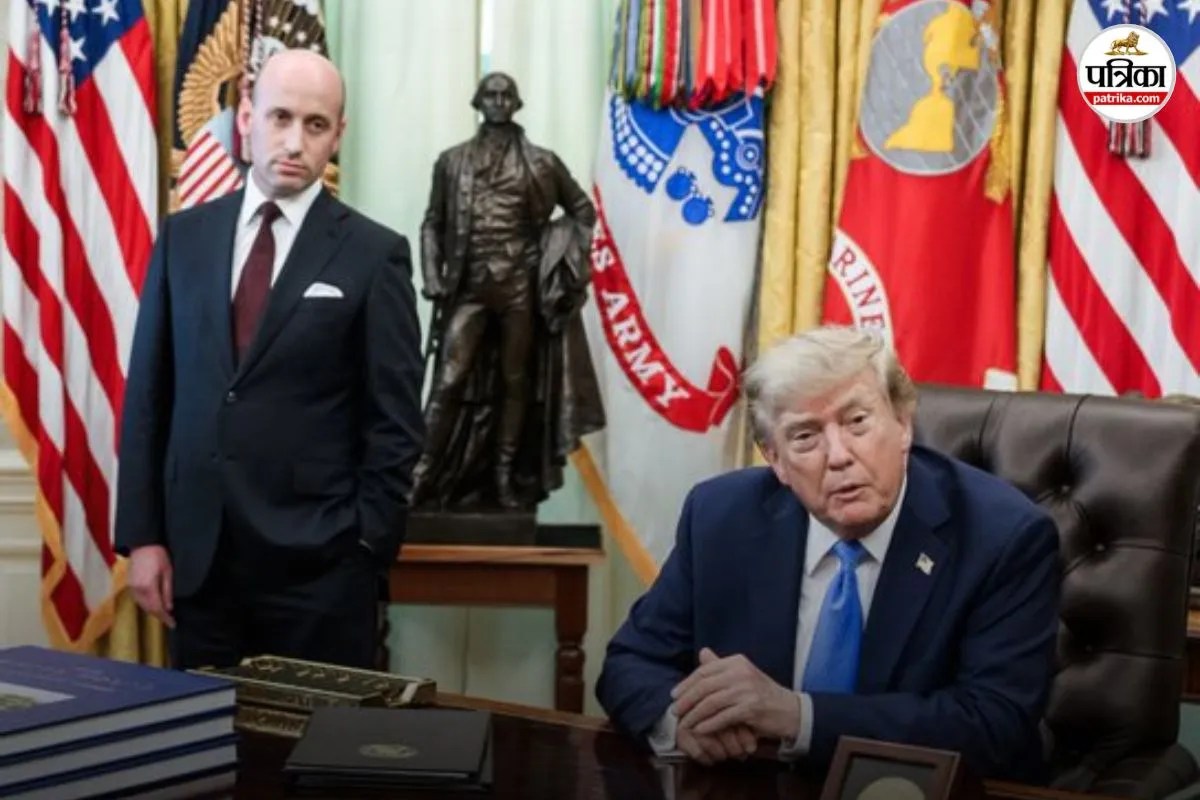
Power rarely announces itself with a trumpet. Usually, it arrives in a crisp white shirt, a stack of legal memos, and a voice that never rises even when the stakes are highest.
Stephen Miller has spent the better part of a decade turning policy memos into national fault lines. When Donald Trump tapped him for a senior White House leadership role, the headlines focused on titles, chains of command, and sweeping promises of strict immigration enforcement and mass deportation. Names like Stephen Miller, Donald Trump, and the White House tend to trigger instant reflexes—cheers from one corner, dread from another, and exhaustion from almost everyone in between.
Yet political coverage often stops at the podium. It measures speeches by decibels and bills by word count. What gets lost in that noise is how an immigration philosophy actually lands on a kitchen table thousands of miles from Washington.
I have sat across from families waiting on visa renewals for ten years while their children grew up speaking English as a first language and Spanish—or Bengali, or Tagalog—as a quiet second. I have watched fluorescent lights hum inside immigration waiting rooms at six in the morning, smelling stale coffee and damp wool coats, while grown adults stared at laminated paperwork as if a single typo could rewrite their entire history. That lived closeness to border policy makes the debate feel less like chess on cable news and more like standing on thin ice when the weather shifts.
Even for people who follow politics closely, the mechanics of immigration law and mass deportation can feel fogged in jargon. Terms like asylum backlogs, expedited removal, denaturalization, and executive authority get tossed around until they blur together. If you feel a little lost trying to separate political slogans from actual legal levers, you are not alone. Much of this system was built over decades through layered statutes and court rulings that confuse even seasoned lawyers.
To see how a single strategist shapes such massive outcomes, consider a hypothetical scenario. Imagine a man named Mateo—purely a composite character created to illustrate how policy moves from paper to pavement—who has worked construction in a mid-sized American city for twelve years. He pays taxes with an ITIN, coaches his son's Saturday soccer team, and has an open asylum case stuck in a court queue that stretches past the horizon. Under an administration prioritizing strict immigration enforcement and rapid removals, Mateo does not need to commit a new crime to feel the ground shift. A routine traffic stop, a changed court rule, or a surge in detention capacity can turn twelve years of ordinary routine into a sudden packing list.
Metaphorically speaking, immigration policy works like the plumbing inside an old house. Most days, you only notice the water when you turn the tap. Tighten the main valve hard enough, and pipes rattle behind the drywall in rooms you never thought were connected—local school districts, hospital emergency rooms, restaurant kitchens, and neighborhood churches.
Stephen Miller's central role in shaping this hardline agenda comes down to focus and endurance. While other aides cycle in and out of Washington's revolving door, Miller has treated immigration restriction not as a single campaign issue, but as the organizing spine of a broader political project. From his early days on Capitol Hill to his influence inside the Trump White House, his approach has consistently favored maximum executive leverage, narrower pathways to entry and relief, and aggressive enforcement targets.
How a Capitol Hill Firebrand Became a Policy Engine
Long before cable news panels debated executive orders, Miller was learning the architecture of Washington from the inside out. Growing up in Santa Monica, California, he came of age in a state undergoing rapid demographic and cultural change, and he gravitated early toward combative conservative politics. By the time he worked as a staffer on Capitol Hill, he had developed a reputation for sharp rhetoric, relentless message discipline, and an appetite for institutional confrontation.
When he joined Donald Trump's orbit, that style found a megaphone. Trump brought raw instinct and populist magnetism; Miller brought policy drafts, regulatory strategies, and an unyielding insistence that campaign promises on immigration be translated into concrete administrative action.
Critics view him as an ideological hardliner determined to shrink legal and humanitarian avenues while expanding detention and deportation operations. Supporters view him as a disciplined strategist willing to confront what they see as broken border enforcement, strained public budgets, and years of political gridlock. Both camps agree on one point: when Stephen Miller is in the room, immigration is never treated as a side note.
History shows that major shifts in American border policy rarely happen overnight in a vacuum. The United States has swung between open recruitment, restrictive quotas, amnesty compromises, and enforcement crackdowns across generations—from nineteenth-century state-level rules to twentieth-century statutory overhauls and post-9/11 security restructuring. Each era left behind new agencies, new court precedents, and new political anxieties.
When Donald Trump places a trusted lieutenant like Miller in a central White House command post, the leverage multiplies. A senior advisor with deep familiarity across the executive branch can press agencies to align rulemaking, staffing, litigation posture, and messaging around a single priority: strict immigration enforcement and large-scale removals.
The Invisible Stakes Behind Mass Deportation
Words like "mass deportation" sound clinical on a teleprompter. On the ground, enforcement is measured in hours, miles, and phone calls.
Consider another hypothetical example—again, a composite portrait built to show real-world mechanics rather than an individual person's case. Picture Priya, a legal permanent resident whose brother is waiting on a family-sponsored petition, or a mixed-status household where parents lack permanent status while two teenagers are U.S. citizens by birth. When enforcement expands or rules tighten around discretion and bond, fear rarely stays neatly confined to one person. It ripples into missed doctor appointments, skipped parent-teacher nights, and workplaces where wages and standards shift quietly out of sight.
At the same time, communities that favor strict enforcement point to their own set of lived pressures. A retired factory worker watching housing costs climb, a small-business owner frustrated by labor rules and regulatory costs, or a resident in an overstretched municipal shelter system may feel that prior administrations ignored their concerns. Ignoring those frustrations does not make them disappear; it only fuels sharper polarization.
That tension is what makes immigration so uniquely combustible. It sits right at the intersection of sovereignty, law, economics, and human attachment. You can draw clean lines on a map or draft neat paragraphs in an executive directive, yet human lives are messy, intertwined, and stubbornly resistant to tidy categories.
Why Who Runs the White House Matters So Much
Presidents set the direction, yet senior aides often determine the daily friction. In modern governance, real power frequently lives in the details: which regulations get prioritized, which prosecutorial guidelines are rescinded, how immigration courts are managed, and how federal agencies coordinate with state and local authorities.
Putting Stephen Miller at the center of White House operations signals a deliberate choice to keep immigration front and center. Rather than treating border security and interior enforcement as isolated issues handled solely at the southern line, a hardline strategist looks across the entire pipeline—visas, asylum standards, interior arrests, detention space, and removal speed.
For anyone trying to understand what comes next under Trump's leadership, watching Miller's fingerprints on policy is essential. Speeches tell you the mood of the movement. Administrative rules tell you what actually happens on a Tuesday morning in federal court or an agency field office.
I do not pretend to have a crystal ball about every court challenge or legislative hurdle that will test these plans. Immigration battles in the United States routinely collide with constitutional questions, funding limits, diplomatic realities, and shifting public opinion. Uncertainty is part of the terrain, and anyone claiming absolute certainty about how every policy will play out is selling simplicity where none exists.
What is clear, though, is the weight of the moment. Policy decisions made behind closed doors in Washington have a habit of walking straight through ordinary front doors—changing who stays, who leaves, who feels safe, and who feels forgotten.
Late at night, after the cameras pack up and the press briefings end, a single signature on a policy directive still has to meet the real world. Somewhere a clock ticks in a waiting room, a suitcase sits half-packed by a bedroom door, and a nation decides once again what its laws mean in practice.