Dawn in Tachikawa arrives without fanfare. The neon signs over the narrow ramen shops have long since blinked out, and the air smells faintly of wet asphalt and roasted green tea. Kenji stands by the side of his idling white kei truck, his knuckles grayed with grease, watching the digital numbers spin upward at the corner petrol station.
One hundred and seventy-five yen. Then seventy-six.
He does not need to look at his ledger to know what those numerals mean. They mean another late night cutting delivery fees. They mean the price of a head of cabbage at the morning market in Ota will creep up by three yen tomorrow, absorbed quietly by a public that has grown exceptionally skilled at absorbing quiet blows.
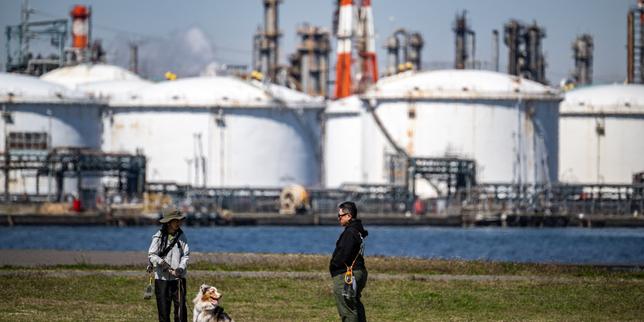
For months, the offices in Kasumigaseki have been humming with an urgent, bureaucratic hum. Behind closed doors, government officials have watched the graphs spike and dip, fully aware of a precarious truth: Japan runs on rubber, steel, and above all, refined crude brought thousands of miles across contested water. When the cost of a single barrel fluctuates in distant boardrooms, it sends a tremor straight through the crankshafts of every delivery van, fishing boat, and commuter train in the archipelago.
To understand what is happening to the price of petrol in Japan, you have to look past the official press releases and step inside the cabin of Kenji’s truck. You have to feel the slow squeeze of a modern economy attempting to insulate its citizens from external chaos without breaking the fiscal machinery that keeps the lights on.
Yoshida remembers when fuel was a background noise. In the roaring eighties, nobody stared at the pumps; you pulled in, the attendants in their pristine uniforms wiped your windshield with a practiced bow, and you paid whatever the meter asked because the yen was a heavy, confident shield.
That shield has grown thin.
Today, the Japanese government finds itself locked in a delicate dance with the global energy market. When international tensions flare or supply chains hitch, retail prices for regular gasoline climb past thresholds that trigger panic among small business owners. The state’s response has been a sprawling, multi-tiered subsidy program designed to cap the pain at the pump. Billions of yen poured from national coffers directly into the bank accounts of petroleum wholesalers, acting as a financial shock absorber.
It is an expensive peace.
Consider the mechanics of the intervention. Instead of letting market forces dictate the immediate cost at neighborhood service stations—which would instantly crush rural drivers who have no access to train lines—Tokyo steps in with heavy subventions when prices cross a specific ceiling. It keeps the retail price hovering around a politically sensitive mark, roughly 175 to 185 yen per litre.
Yet, every subsidy has a shadow. Economists shake their heads over the long-term tab, pointing out that propping up fossil fuel prices with public debt is akin to drinking saltwater when you are thirsty. It quenches the immediate burn, but leaves you dehydrated tomorrow.
We are watching a nation caught between two distinct realities. On one side stands the decarbonization mandate, a serious pledge to pivot the world’s third-largest economy toward green energy, hydrogen grids, and electrified transport. On the other side stands the immediate, gritty reality of a Tuesday morning where a bakery in Nagano cannot afford to heat its ovens if diesel costs spike another ten percent before noon.
The government’s measures are not born of sudden benevolence; they are born of survival arithmetic. If fuel prices are left unmanaged, the cascading inflation hits the elderly on fixed pensions first, then the regional transport companies, and finally the major industrial exporters whose margins are already razor-thin.
So the state pays the difference.
But walking through the narrow alleys of Tsukishima, you sense the limits of state intervention. Shopkeepers talk about the subsidies the way fishermen talk about a temporary break in the gale—useful for today, but nobody is foolish enough to leave port without checking the barometer. They know these funds are finite. They know that eventually, the bill comes due, either through higher consumption taxes, deferred public infrastructure projects, or the silent erosion of purchasing power.
There is a profound psychological weight to watching the price of fuel in a country that produces virtually none of its own oil. Every time the nozzle clicks and the total crosses a threshold, it acts as a subtle reminder of island vulnerability. Japan has always been an empire of imports, stitching together a magnificent civilization out of raw materials carried over the horizon.
When those materials grow dear, the whole structure shivers.
The policy debates in Tokyo often sound bloodless, filled with acronyms and budgetary adjustments. But behind each policy choice is a network of human consequence. It is the delivery driver deciding whether to take the toll road or the longer local route to save a few litres. It is the municipal bus line in Akita quietly trimming its evening runs because the municipal budget can no longer absorb the cost of diesel. It is the quiet resilience of a population that treats economic friction not as an excuse for outrage, but as another weather pattern to navigate with a deep bow and a tightened belt.
As the morning sun finally clears the concrete ridge of the Tokyo skyline, Kenji hangs the fuel nozzle back on its cradle. The digital display freezes, glowing red against the gray morning light. He climbs back into the cab, turns the key, and merges into the thick, orderly river of traffic heading south toward the harbor, carrying the weight of an entire nation’s energy equation on four worn tires.