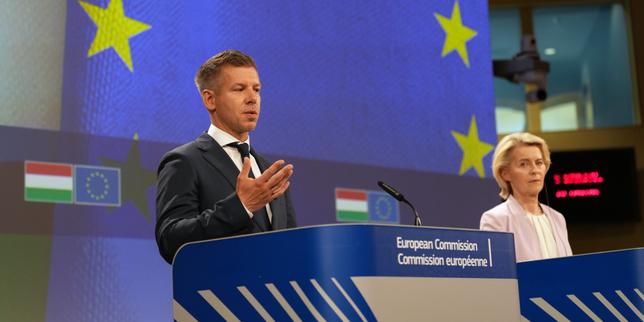
The European Union stands on the brink of releasing 4.2 billion euros in frozen funds to Hungary, a monumental financial pivot triggered by the structural dismantling of the political apparatus built during the long era of Viktor Orban. For years, Brussels and Budapest played a high-stakes game of financial brinkmanship, withholding vital cohesion and recovery money over severe democratic backsliding, institutional capture, and widespread public procurement irregularities. Now, with a new government occupying the prime ministerial office and a fractured ruling party attempting to rebrand itself, the purse strings are loosening. Yet, unlocking billions does not magically erase years of systemic decay. Fixing a compromised judiciary and rewriting corrupted tender laws requires more than passing token legislation to satisfy European Commission technocrats. It requires an exhaustive, painful institutional purge that touches every level of Hungarian public administration.
To understand why billions are suddenly flowing back toward the Danube, one must examine the mechanics of financial pressure that the European Commission deployed starting in 2022. The rule of law conditionality mechanism was an untested legal weapon when Brussels first aimed it at Hungary. Critics initially dismissed the tool as bureaucratic theater, arguing that national sovereignty would always trump budgetary discipline. They were wrong. Freezing funds hit the Hungarian state budget precisely when inflation spiked, foreign direct investment stalled, and public debt reached uncomfortable thresholds. The economic squeeze created an irresistible internal pressure cooker. When political fatigue finally caught up with the ruling elite, the financial isolation proved to be the decisive tipping point.
Yet money does not buy trust overnight. The legislative reforms rushed through the National Assembly in financial aftermath of the regime transition look impressive on paper, but the real test lies in their enforcement. Rebuilding an independent judicial council from scratch is not a matter of decree. When senior judges have spent a decade learning how to anticipate political preferences rather than interpreting the letter of the law, a change in leadership at the top does not instantly alter the behavioral patterns of district magistrates and appellate panels.
The Mechanics of Institutional Capture
Under the previous administration, state capture was not an accidental byproduct of governance; it was the core operating system. Public procurement was engineered to channel European structural funds into a tight network of loyal oligarchs. Billions of euros in infrastructure projects, agricultural subsidies, and digital modernization initiatives routinely went to a handful of interconnected corporate entities. These companies operated with near-total immunity from independent audits or competitive bidding scrutiny.
When the European Anti-Fraud Office began investigating these discrepancies, the government responded by simply defunding domestic investigative bodies or replacing career civil servants with political loyalists. The state audit office became an instrument of bureaucratic protection rather than public accountability. Consequently, the first demand from Brussels was not merely rhetorical repentance, but a verifiable overhaul of anti-corruption architecture.
The newly established anti-corruption authority holds nominal investigative powers, but its early months have revealed deep operational friction. Career prosecutors who spent years looking the other way during high-profile procurement scandals are reluctant to sign off on indictments that target powerful economic actors who still maintain vast networks of influence. Changing the institutional culture of law enforcement agencies takes generations, not legislative sessions. When an investigator knows that political winds can shift again in four years, caution often overrides courage.
Furthermore, the structure of public tenders remains deeply distorted. While new transparency rules require open bidding processes, corporate ownership registries in Hungary are still riddled with complex shell companies and nominee structures. Tracing the ultimate beneficial owner of a major construction firm often requires forensic accounting teams months of painstaking work. Brussels technocrats sitting in air-conditioned offices in the Berlaymont building may accept a signed compliance certificate as proof of reform, but lawyers and journalists on the ground in Budapest know that compliance is frequently a game of regulatory hide-and-seek.
The Fiscal Reality Behind the Numbers
The 4.2 billion euros currently heading toward Budapest represents a lifeline, but it is also a drop in the ocean compared to the long-term structural investments Hungary needs. The healthcare system is chronically underfunded, regional infrastructure outside the capital resembles a patchwork of neglect, and the educational sector is suffering from a massive brain drain as young professionals seek opportunities in Western Europe.
Injecting billions into an economy with weak institutional controls carries severe inflationary risks. Without rigorous oversight, a substantial portion of these newly unlocked funds risks leaking into inefficient projects or recurring administrative waste. The European Public Prosecutor's Office, which Hungary notoriously refused to join during the Orban years, remains a glaring omission in the new government's reform package. Without direct prosecutorial oversight from independent European bodies, local authorities retain considerable discretion over how EU money is audited and spent.
This creates a permanent tension between the desire of European leaders to declare victory for democracy and the messy reality on the ground. European Commission presidents eager to project strength and unity want to show that financial pressure works. Announcing the normalization of relations with Hungary serves a vital geopolitical narrative. It signals to other aspiring autocrats within the bloc that breaking rules carries a concrete price tag.
However, local civil society organizations offer a far more sober assessment. Independent journalists and watchdogs working in Budapest point out that while the formal architecture of repression has been dismantled, the informal networks of economic patronage remain largely intact. Media consolidation, though less overtly coercive than before, still heavily favors pro-government narratives through indirect state advertising subsidies and corporate buyouts by friendly oligarchs.
The Energy Trap and Economic Vulnerabilities
Underneath the surface of institutional reforms lies a deeper structural vulnerability that previous governments exacerbated over decades: energy dependency and unbalanced trade corridors. For years, Budapest maintained a delicate tightrope walk between Western security commitments and extensive economic entanglements with Eastern suppliers. Large-scale infrastructure contracts, particularly in the energy sector, were awarded without competitive bidding to foreign state-owned enterprises, creating long-term financial liabilities and strategic vulnerabilities that extended far beyond national borders.
Reversing this trajectory requires massive capital expenditures to diversify supply chains, upgrade electrical grids, and integrate domestic energy markets more fully with Central European networks. The newly unlocked EU funds are slated to support green transition initiatives and energy efficiency programs, yet local contractors warn that the bureaucratic hurdles attached to these European grants often slow down implementation. Small and medium-sized enterprises find themselves priced out of complex compliance processes, leaving major infrastructure projects in the hands of established conglomerates that survived the political transition intact.
Furthermore, inflation and currency volatility continue to erode purchasing power for the average wage earner. While macroeconomic indicators show a stabilizing national currency following the announcement of unfreezing funds, retail prices for basic goods remain stubbornly high. The social contract that sustained the previous political regime relied heavily on targeted price caps, utility subsidies, and protectionist rhetoric directed against external economic pressures. Dismantling these populist safety nets without triggering widespread public backlash is an extraordinarily delicate political task.
The current administration faces a narrow window to demonstrate tangible improvements in living standards before voter fatigue sets in once more. If the billions arriving from Brussels are perceived as benefiting only corporate elites and urban professionals while rural communities continue to stagnate, public disillusionment could pave the way for a resurgence of populist nationalism.
The Geopolitical Fallout Within the Bloc
Beyond domestic economics and institutional rebuilding, the unfreezing of these funds alters the diplomatic balance of power within the European Council. For years, Budapest operated as a persistent disruptor, wielding its veto power over sanctions, foreign policy declarations, and financial aid packages for Ukraine as bargaining chips to pressure Brussels into releasing cohesion money.
With the funds now flowing and a new administration at the helm, Hungary's foreign policy posture has undergone a noticeable recalibration. The reflexive opposition to joint European initiatives has softened, replaced by a more conventional diplomatic approach that seeks to negotiate within established frameworks rather than blowing them up from the outside. Yet, European partners remain wary. Trust, once broken through years of obstructionism and close alignments with autocratic regimes outside the EU, cannot be restored by a single electoral cycle.
Eastern European member states watch these developments with mixed emotions. On one hand, regional capitals welcome the strengthening of democratic guardrails, fearing that unpunished backsliding in one country creates a dangerous legal precedent for the entire Union. On the other hand, traditional beneficiaries of cohesion policy worry that the massive administrative delays in dispersing funds to Hungary have created a permanent bottleneck in the EU budget cycle, forcing smaller municipal projects to wait years for promised support.
The Road Ahead for Public Trust
The ultimate measure of success for this financial transfer will not be found in quarterly economic reports or EU compliance checklists. It will be measured by whether ordinary citizens in provincial towns feel that public institutions serve their interests rather than the pockets of a privileged few.
Restoring faith in the democratic process requires continuous public scrutiny. Independent media outlets, despite facing ongoing financial hurdles, continue to expose local corruption and administrative incompetence. Their work is the true frontline of defense for European values, far more effective than any directive issued by bureaucrats in Brussels.
As the money begins to land in Hungarian accounts, the pressure shifts from European commissioners to domestic watchdogs. The international community can provide financial incentives and legal frameworks, but the heavy lifting of maintaining an open society rests entirely on the shoulders of local citizens, civil society groups, and independent professionals willing to demand accountability every single day. The Orban era left deep scars across the institutional body of the nation, and while the bandages are finally being removed, the healing process has only just begun.