Pope Leo XIV has drawn a sharp moral line against sacred violence, declaring there is no such thing as a holy war and insisting that only peace is holy. His warning lands at a grim moment. Fresh escalations across West Asia and grinding combat in Europe have turned moral appeals into high-stakes diplomatic tests.
Words from Rome rarely stop artillery. Yet when a pontiff strips away the religious cover used by combatants, he forces political leaders and believers alike to confront what their weapons actually serve.
Why Sacred Violence Keeps Returning
Leaders reach for sacred language because brute force is hard to sell on its own. Calling a border dispute, a succession battle, or an imperial land grab a defense of faith or civilization gives soldiers a halo and critics a label of disloyalty.
Leo XIV knows this playbook well. In his October 2026 video message marking the fortieth anniversary of the Assisi peace gathering, he flatly rejected the idea that God fights on any side of a battlefield, stating that war can never be waged in God's name. Earlier in his pontificate, his encyclical Magnificent Humanity made the same argument with sharper edge, warning that fighting in the name of religion attacks religion itself.
Watch closely what happens when religion gets pulled into statecraft. A political grievance becomes a cosmic duty. Compromise starts looking like betrayal.
- Sacred framing inflates stakes: When territory or security is cast as divine mandate, negotiators lose room to trade concessions without looking weak at home.
- Moral cover masks power grabs: Invoking faith or heritage often shields strategic ambitions—resources, buffer zones, regional dominance—behind high-minded rhetoric.
- Communal divides harden: Once neighbors view one another through a sacred lens of purity versus threat, civilian neighborhoods turn into symbolic targets.
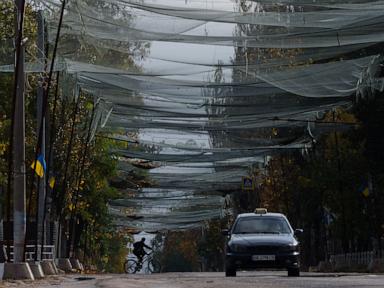
That dynamic is visible across both West Asia and Europe. In West Asia, overlapping rivalries involving Israel, Iran, Gaza, Lebanon, and outside powers carry heavy ideological and religious overtones alongside raw security calculations. In Europe, the return of large-scale war in Ukraine and rising nationalist friction test an order built on postwar exhaustion and shared rules.
"Indeed, to invoke God's name in order to justify violence or oppression is to profane that name. Nothing that disfigures human dignity can claim to be inspired by God." — Pope Leo XIV, speaking in Metz, France, September 2026
The Limits of Moral Authority in Hard Geopolitics
Moral clarity is not the same thing as diplomatic leverage. After decades covering Vatican statecraft and regional crises, I have learned to separate a pope's moral voice from the Holy See's ability to change troop movements on the ground.
Consider a hypothetical example of how that gap plays out in practice. Suppose a regional government orders a strike on a contested border post while framing the operation as a defense of sacred heritage. A papal appeal for restraint can rally aid workers, energize peace advocates, and embarrass hardliners in front of international audiences. It still cannot move a tank battalion or rewrite a military general's target list.
In real-world events of 2026, those constraints showed up clearly. When military escalation erupted involving the United States, Israel, and Iran, Tehran's ambassador to the Holy See publicly pressed the Vatican for a condemnation that never arrived in the form Iran sought. Observers noted how difficult it has been for Rome to turn moral stature into direct negotiating pull when major capitals are locked in confrontation and diplomatic channels face strain.
What Vatican Diplomacy Actually Does Well
Critics sometimes dismiss papal statements because no ceasefire immediately follows. That misses how the Secretariat of State and Catholic networks operate.
The Vatican excels at quiet channels, humanitarian witness, and long-horizon norm setting. Pope Leo XIV—born Robert Francis Prevost in Chicago and shaped by years of missionary work in Peru—brings a blend of institutional discipline and grassroots pastoral memory. His background in a society torn by guerrilla violence in northern Peru taught him what civilians endure when armed factions treat ordinary people as pawns.
At the same time, his American birth and Augustinian training give him an unusual vantage point on Western politics and Church governance. In January 2026, addressing Vatican diplomats, he criticized nations using force to assert dominion while reiterating long-standing Holy See positions, including support for a two-state solution and the right of Palestinians in Gaza and the West Bank to live on their own land.
Where the Strategy Runs Into Friction
Every diplomatic posture carries trade-offs. Caution keeps doors open with multiple sides, yet silence or measured phrasing can frustrate victims who want an unmistakable denunciation of an aggressor.
Speaking bluntly about "senseless slaughter" in Europe or warning against nationalism in Metz—as Leo XIV did alongside French leaders in September 2026—reminds European capitals of the legal and moral guardrails they risk eroding. Still, European security planners are wrestling with hard deterrence questions, defense budgets, and alliance reliability that moral appeals alone cannot resolve.
How West Asia and Europe Shape One Another
Treat West Asia and Europe as separate silos and you miss half the story. Crises in both regions feed the same global habits: arms transfers, energy and trade shocks, competing security guarantees, and hardening domestic politics.
When conflict flares in West Asia, shipping lanes, refugee flows, and diplomatic bandwidth in Europe feel the strain. When war grinds on in Europe, global attention and military stockpiles get pulled away from other flashpoints.
| Dimension | West Asia Flashpoints | European Security Strain | Role of Pope Leo XIV |
|---|---|---|---|
| Core Friction | Regional rivalry, Gaza and Lebanon crises, external military escalation | War in Ukraine, rising nationalism, eroded trust in rules | Rejecting sacred war claims and urging law and restraint |
| Main Risk | Wider regional war and severe civilian devastation | Prolonged attrition and fractured continental unity | Moral voice heard widely, yet limited direct military leverage |
| Human Toll | Displaced families, shattered infrastructure, lost lives | Civilian casualties, economic shock, social polarization | Humanitarian advocacy, interreligious contact, peace appeals |
Notice a deeper pattern beneath both arenas. Institutional erosion makes every spark more dangerous. When international law is treated as optional and political leaders reward combative posturing over patient compromise, crises spiral faster and off-ramps narrow.
Concrete Steps Beyond Rhetoric
If "only peace is holy" is going to mean more than a memorable line from Rome or Assisi, governments, religious communities, and citizens have practical work to do. High-minded speeches fade fast without concrete mechanisms behind them.
- Audit public language for sacred inflation. Politicians, commentators, and clergy should stop framing territorial or strategic disputes as divine mandates or existential holy struggles. Stripping away sacred claims makes de-escalation politically possible.
- Protect humanitarian corridors and civilians first. Parties to conflict and outside backers should enforce clear protections for medical facilities, aid workers, and non-combatants even when peace talks are deadlocked.
- Keep backchannels open during peak hostility. Cutting off every diplomatic line during a crisis leaves leaders flying blind. Even unpopular or imperfect mediation tracks help prevent miscalculation.
- Support local peacemakers across divides. Community and interfaith groups on the ground often spot early warning signs and build trust long before formal treaties are signed.
None of these steps guarantees quick peace. Wars driven by fear, pride, and entrenched interests rarely end neatly. Yet refusing to baptize violence as sacred remains one of the clearest ways to puncture the myths that keep the guns firing.
Pope Leo XIV Denounces Holy War in Assisi Message
This short video is relevant because it captures Pope Leo XIV's direct statement rejecting religious justifications for war during the Assisi peace observance.