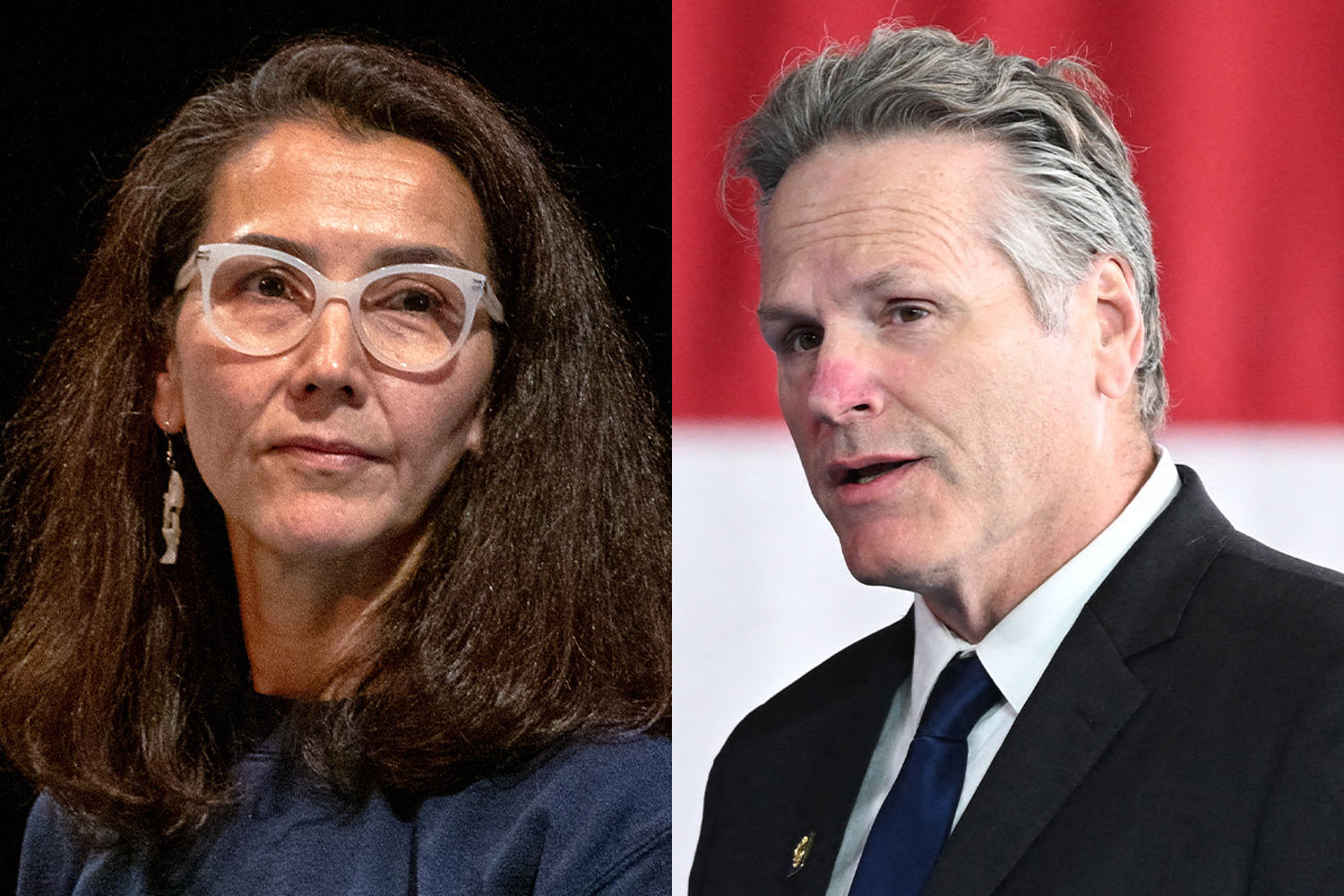
Alaska politics has always had a flair for the bizarre, but recruiting a duplicate candidate with the exact same name as your opponent takes political hardball to a whole new level. That's the exact storm currently engulfing former U.S. Representative Mary Peltola's political orbit after reports surfaced that operatives linked to her camp recruited a second man named Dan Sullivan to run in Alaska's U.S. Senate race against incumbent Republican Senator Dan Sullivan.
Alaska Governor Mike Dunleavy didn't wait around to see how the headlines would settle. He ordered a formal state investigation into the allegations, turning a viral campaign rumor into a high-stakes legal and ethical inquiry. In similar developments, read about: When a Day Hike Turns Fatal in the Colorado High Country.
If you're trying to separate actual election law from partisan noise, you aren't alone. The rules around candidate recruitment, ballot confusion, and executive investigations in Alaska are specific, messy, and widely misunderstood outside the state.
Why Governor Dunleavy Ordered an Investigation Into the Peltola Camp
Let's be clear about what triggered the state's involvement. Reports emerged alleging that individuals connected to Mary Peltola's campaign or allied political groups sought out an Alaskan resident named Dan Sullivan to file for the U.S. Senate seat. The goal, according to critics and Republican officials, was obvious: split the vote and confuse Alaskans heading to the polls by putting two candidates named "Dan Sullivan" on the same ballot. NPR has also covered this fascinating subject in extensive detail.
Governor Dunleavy, a Republican ally of Senator Sullivan, responded by directing state authorities to look into whether any Alaska election laws, campaign finance rules, or improper coordination statutes were violated during the recruitment effort.
Here's why this matters legally. Simply asking someone to run for office isn't automatically illegal in the United States. People recruit long-shot candidates every single election cycle. What crosses the line into potential illegality in Alaska involves how that recruitment happens—specifically whether undisclosed money changed hands, whether false residency or filing statements were submitted, or whether illegal coordination occurred between an official campaign and outside groups.
Under Alaska Statutes Title 15, the Division of Elections and the Alaska Public Offices Commission (APOC) enforce strict disclosure rules around campaign expenditures and candidate filings. If anyone paid a filing fee, promised financial backing, or provided campaign services to a decoy candidate without reporting those transactions properly, that triggers real statutory penalties.
The History of Decoy Candidates and Name Confusion in American Politics
Anyone acting like this tactic was invented in Anchorage yesterday hasn't paid attention to modern American campaigns. Recruiting "ghost" or "spoiler" candidates with identical or near-identical names is one of the oldest dirty tricks in the political playbook.
Look at Florida's 2020 State Senate District 37 race. In that contest, operatives recruited an independent candidate named Alex Rodriguez to run against Democratic incumbent Jose Javier Rodriguez. The spoiler candidate didn't campaign, didn't raise normal grassroots money, and didn't even hold public events—yet his name on the ballot pulled more than 6,000 votes in a race decided by just 32 votes. Prosecutors eventually filed felony campaign finance charges because dark money was illegally funneled to pay the candidate.
Alaska itself isn't immune to name-based ballot chaos either. Even without intentional recruitment, the state has dealt with multiple prominent politicians sharing similar names—most famously current U.S. Senator Dan Sullivan and former Anchorage Mayor Dan Sullivan, who even ran in overlapping election cycles in the past and forced voters to double-check middle initials and party affiliations.
When an intentional recruitment effort enters that environment, voters get cynical fast. And rightly so.
How Alaska's Ranked Choice Voting Changes the Math
Most national commentators miss the biggest strategic wrinkle in this entire story. Alaska doesn't use a standard plurality system anymore. Under Ballot Measure 2, which voters approved in 2020, Alaska conducts an open top-four primary followed by a Ranked Choice Voting (RCV) general election.
Think about what that actually means for a decoy candidate strategy.
In a traditional winner-take-all race, siphoning 2% or 3% of the vote from a frontrunner with a lookalike name can hand the election straight to the rival party. In Alaska's top-four primary, the four candidates with the highest raw vote totals advance to November. Unless a crowded field knocks the real Senator Dan Sullivan out of the top four entirely—which is practically impossible for a sitting U.S. Senator with massive statewide name recognition—a second Dan Sullivan wouldn't eliminate him in August.
Where the confusion actually bites is in November during the general election.
If two candidates named Dan Sullivan appear on the general election ballot, low-information voters who intend to rank Senator Dan Sullivan first might accidentally select the wrong Dan Sullivan. If those voters leave their second-choice bubble blank instead of ranking the other Dan Sullivan second, their ballots become "exhausted" once the decoy candidate is eliminated in an early round of tabulation.
That's a subtle mechanical difference, and honestly, it shows how sophisticated modern ballot-engineering has become. Operatives aren't just looking at raw vote totals anymore; they're modeling ballot exhaustion rates under ranked-choice algorithms.
What Investigators Will Actually Look For
Political press releases love throwing around words like "fraud" and "election interference," but investigators operate on hard paper trails. As the state review moves forward, several concrete questions will determine whether this ends as an embarrassing news cycle or turns into formal charges.
- Who paid the filing fee? Filing for U.S. Senate in Alaska requires a $100 fee and a declaration of candidacy. If a third party paid that fee or reimbursed the candidate without reporting it as a campaign contribution, APOC rules come into play immediately.
- Were there hidden financial promises? In the Florida scandal mentioned earlier, investigators busted the scheme by subpoenaing bank records and text messages showing secret payments to the spoiler candidate. Investigators look for unusual wire transfers, consulting contracts, or gift payments routed through LLCs or political action committees.
- Did the candidate actually meet legal residency requirements? Every candidate filing for federal office in Alaska must verify their constitutional qualifications and complete accurate state paperwork. Falsifying information on official election documents carries separate legal consequences under state law.
- Was there direct campaign coordination? There is a massive legal wall between what an official candidate campaign does and what independent expenditure groups do. Proving direct coordination between Mary Peltola's formal campaign apparatus and an outside recruitment effort requires concrete communications—emails, texts, call logs, or witness testimony.
Without financial misconduct or false statements on official forms, recruiting an eligible voter to run for office—even one with an identical name—usually falls into an ugly ethical gray area rather than a criminal offense.
The Political Fallout for Mary Peltola
Even if investigators find zero criminal wrongdoing, the political damage in Alaska is real. Mary Peltola built her entire statewide brand on being an authentic, bridge-building, non-traditional Democrat who could win over independents and moderate Republicans. That persona is the only reason a Democrat can win statewide in a state that regularly votes Republican at the presidential level.
Being tied to a Washington-style ballot trick cuts directly against that image.
Voters in Alaska tolerate tough campaigning, policy brawls, and aggressive attack ads. What they tend to punish severely is anything that smells like outside political consultants trying to outsmart local voters on the ballot itself. Republicans now have an easy, memorable talking point they can repeat from Ketchikan to Utqiagvik without needing to explain complicated policy charts.
At the same time, Dunleavy's decision to order a state-level investigation carries its own political risks. Democrats and legal observers will watch closely to ensure state resources aren't being weaponized for partisan messaging during an active election cycle. If the investigation drags on without producing clear evidence of statutory violations, critics will argue the governor used his office to generate campaign headlines for a fellow Republican.
How Voters Can Verify What's Real as the Inquiry Unfolds
When a political scandal breaks mid-cycle, partisan spin floods social media within minutes. Don't rely on cropped screenshots or breathless campaign emails from either side.
If you want to track the actual facts of this investigation and the race itself, go straight to primary public records:
- Check official filings directly through the Alaska Division of Elections candidate list, which publishes verified candidate names, party designations, and contact details once filing deadlines close.
- Follow campaign finance disclosures on the Alaska Public Offices Commission (APOC) database to see who is funding independent expenditures and whether formal complaints or enforcement actions have been logged.
- Inspect federal filings via the Federal Election Commission (FEC), since U.S. Senate candidates and national PACs must report contributions, disbursements, and independent expenditures at the federal level regardless of state-level inquiries.
Watch the paper trail, ignore the noise, and pay attention to whether state investigators produce documented violations rather than just press conference talking points.