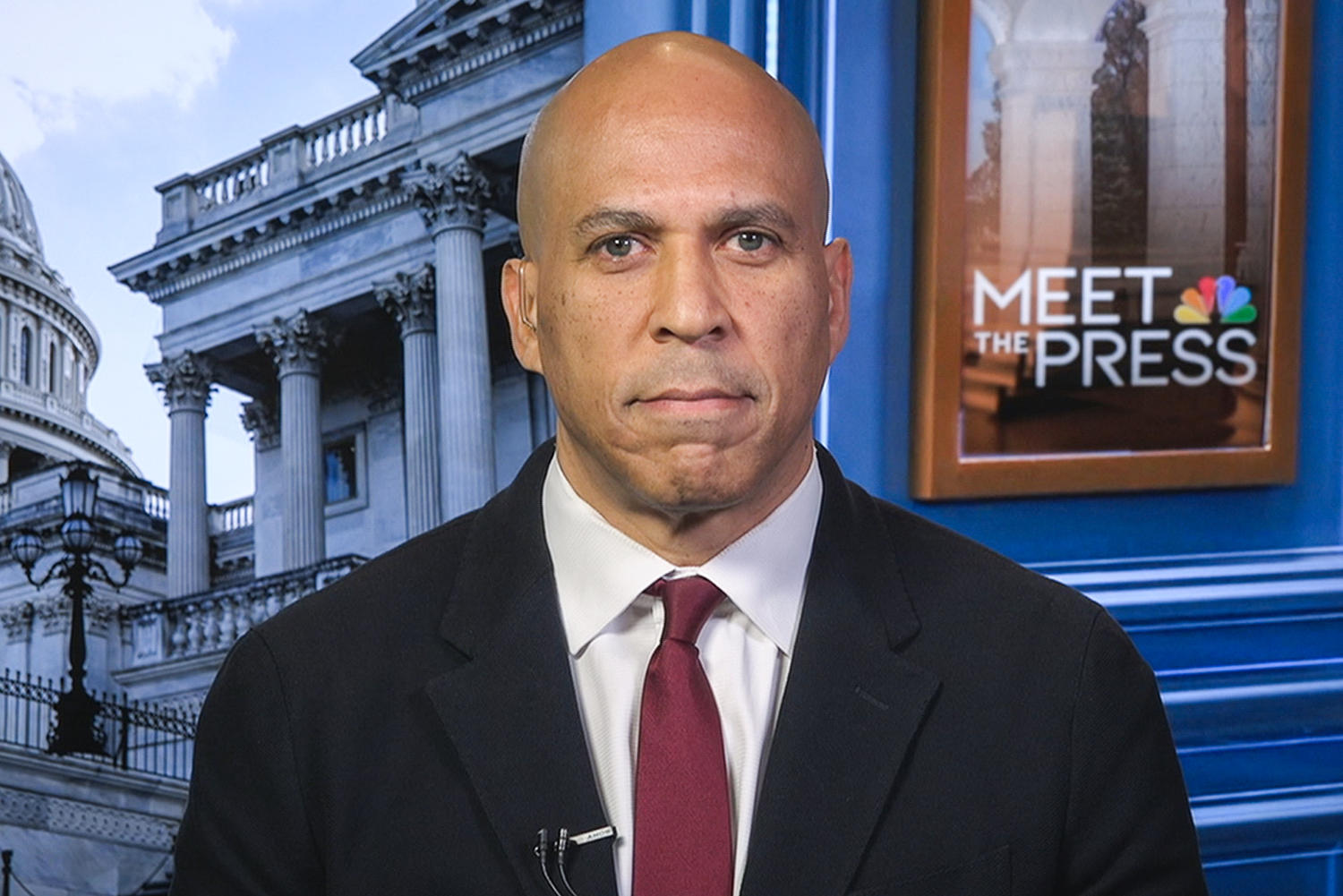
The transition from a sitting United States Senator to a presidential candidate is governed by a rigid set of structural constraints rather than mere personal ambition. When a high-profile figure like Cory Booker signals he is "not ruling out" a run, the statement serves as a strategic maneuver to preserve political optionality and maintain donor visibility. This refusal to exit the hypothetical field is a calculated response to the diminishing returns of late-entry candidacy in a modern, hyper-accelerated primary cycle.
The Calculus of Optionality
Maintaining a state of "not ruling out" a run is a defensive strategy against political irrelevance. In the ecosystem of federal politics, a definitive "no" triggers an immediate migration of three critical assets:
- Donor Liquidity: High-net-worth individuals and Political Action Committees (PACs) operate on a ROI-based model. Once a candidate removes themselves from the board, these funds are reallocated to viable alternatives to secure future influence.
- Media Gravity: News cycles prioritize potential over permanence. A Senator who is a potential president commands higher-tier media placements and more significant interview duration than a Senator who has capped their career trajectory at the committee level.
- Legislative Leverage: In a polarized chamber, a Senator’s ability to whip votes or negotiate with the executive branch is partially derived from their perceived future power. A potential president carries a different weight in caucus meetings than a career legislator.
This maneuver effectively extends the "shelf life" of a politician’s influence without committing the overhead costs—both financial and reputational—of a formal campaign launch.
The Three Pillars of Presidential Viability
A successful pivot from the Senate to the White House requires the alignment of three distinct variables. When these variables are out of sync, the "not ruling out" stance becomes a holding pattern.
1. Structural Infrastructure
This encompasses the dormant network of operatives, state-level organizers, and digital fundraising apparatus. For a candidate who has previously run, such as in 2020, the infrastructure is in a state of "warm standby." Maintaining this network requires periodic signals of intent to prevent talent from signing with rival campaigns. The primary cost here is the opportunity cost for the staff; they must believe the candidate is a "live" option to remain in the orbit.
2. The Narrative Delta
A candidate must offer a distinct value proposition that differentiates them from the incumbent or the perceived frontrunner. If the current political environment favors a "stabilizer" and the candidate is branded as an "activist," the narrative delta is too wide. The Senator must wait for a market shift or actively work to reposition their brand through legislative focus—moving, for example, from criminal justice reform to industrial policy—to close this gap.
3. Capital Reserves
This is not merely cash on hand, but the accumulation of "earned media" and polling floor. A candidate starting with a 2% polling floor faces a different cost-per-vote acquisition than one starting at 15%. If the floor is too low, the "not ruling out" phase is used to test messaging through low-stakes public appearances to see if any specific policy platform triggers a non-linear growth in polling.
The Logistics of the Primary Bottleneck
The modern primary calendar has removed the "momentum" strategy used in decades past. The front-loading of Super Tuesday requires a massive upfront capital infusion. A candidate cannot "find their feet" in New Hampshire and expect to survive the subsequent 48 hours without a national organization already in place.
Consequently, the delay in declaring—while publicly framed as "reflection"—is usually a period of intense private auditing. The audit focuses on the Burn Rate vs. Acquisition Rate of new donors. If the acquisition rate of small-dollar donors through digital channels has plateaued, a formal launch is mathematically doomed regardless of the candidate’s rhetorical skill.
The Risk of Procrastinated Entry
The primary danger of the "not ruling out" stance is the "vacuum effect." While a candidate waits for the "perfect" moment, other contenders occupy the ideological and demographic lanes. In the case of a Senator known for a specific brand of optimistic, oratory-heavy politics, the entrance of a younger or more "novel" version of that archetype can render the original candidate’s platform redundant.
The second limitation is the Incumbency Anchor. If the sitting president is of the same party, "not ruling out" a run is often interpreted as a lack of confidence in the current administration. This creates a friction point with the party’s central committee and can lead to the freezing of institutional funds. The candidate must navigate a narrow corridor: expressing support for the party’s current direction while simultaneously preparing to replace its leader.
Quantitative Thresholds for Transition
To move from "not ruling out" to a formal "Statement of Organization" with the FEC, a candidate typically looks for three quantitative triggers:
- The 5% Threshold: Reaching a consistent 5% or higher in "likely voter" polls without an active campaign. This suggests a high level of brand equity that does not require immediate, massive spending to maintain.
- The 10:1 Ratio: A ratio of at least ten prospective high-dollar donors (max-out contributors) for every one key staffer required for the initial phase.
- The Media Multiplier: A measurable increase in organic social media engagement or search volume following a specific policy speech or viral moment, indicating that the candidate’s current "message" has market fit.
Institutional Friction and the Senate Mandate
There is a fundamental tension between the duties of a Senator and the requirements of a national campaign. Every vote cast in the Senate becomes a data point for opposition research. For a Senator in the "not ruling out" phase, legislative behavior shifts toward the defensive.
They avoid "wedge" issues that could alienate primary voters in early states while seeking out "safe" bipartisan wins that bolster their "electability" narrative for the general election. This creates a legislative paralysis where the Senator is physically present but politically neutralized, as their primary goal is the avoidance of negative framing rather than the advancement of high-risk, high-reward policy.
Strategic Recommendation for Resource Allocation
For a candidate in this holding pattern, the optimal move is not a surge in public visibility, but a targeted investment in Digital Infrastructure and Data Modeling. Instead of traditional retail politics, the focus must be on:
- Micro-Donation Testing: Running low-spend digital ads on niche platforms to identify which specific policy permutations (e.g., student debt vs. green energy) yield the highest click-through rate among undecided voters in Iowa and South Carolina.
- State-Level Proxy War: Supporting local candidates in key primary states through a Leadership PAC. This "buys" loyalty and ground-level intelligence without the scrutiny of a formal presidential bid.
- Policy White Papers: Publishing dense, data-heavy frameworks on emerging issues like AI regulation or supply chain resilience to establish "thought leadership" that can be cited by media outlets, thereby increasing the candidate's perceived gravity.
The decision to run is ultimately a calculation of the Probability of Victory (Pv) vs. The Cost of Defeat (Cd). If the $Cd$ includes the loss of a safe Senate seat or a permanent reduction in national stature, the candidate will remain in the "not ruling out" phase indefinitely. The most effective play is to maintain the status quo until an external shock—such as an incumbent's health crisis or a sudden economic shift—forces the market to revalue the candidate's specific political assets.