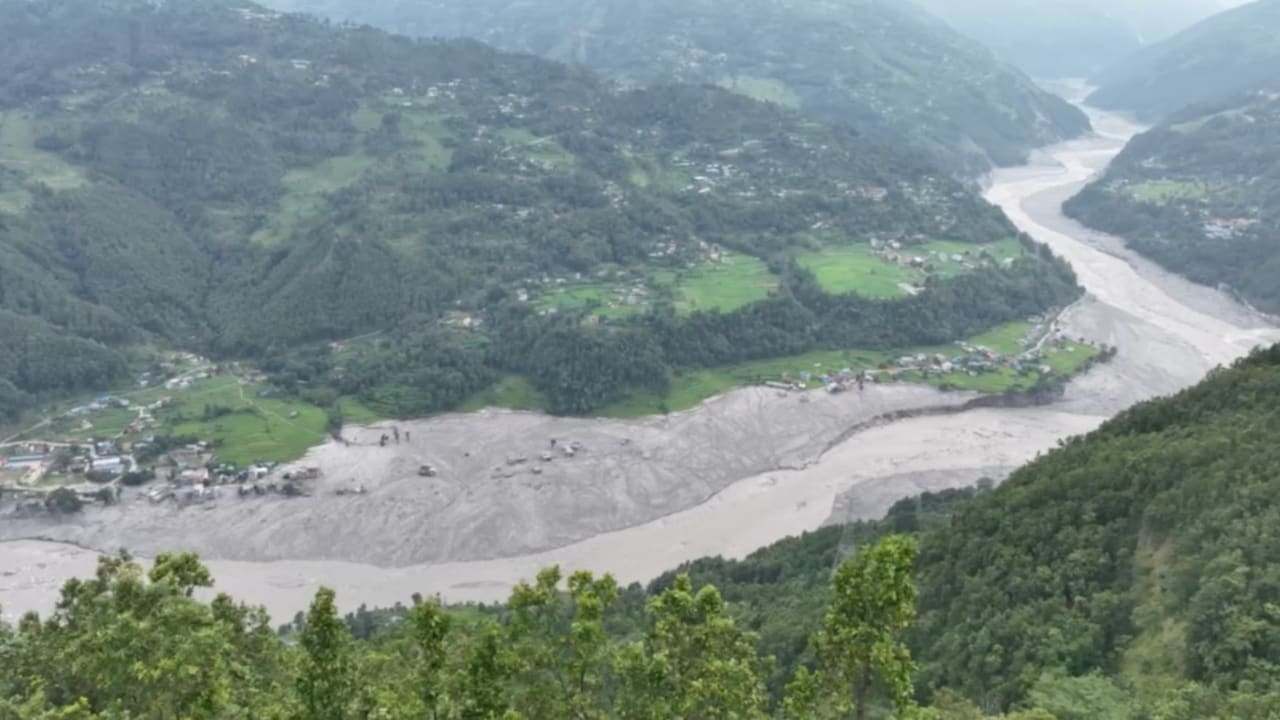
An overwhelming wave of mud and debris tore through northern Nepal without warning. Entire settlements in the Rasuwa district vanished within minutes. When a flash flood of this magnitude hits the Himalayas, television networks scramble to broadcast the devastation. Ground reports from districts like Rasuwa and Nuwakot paint a grim picture of communities buried under feet of silt. Yet, the official headlines miss the deeper ecological ticking clock driving these recurring catastrophes.
You need to look past the immediate shock value of collapsed bridges and stranded tourists. The disaster unfolding along the Bhote Koshi River isn't just an isolated weather anomaly. It's a symptom of a fragile mountain ecosystem buckling under sudden tectonic and thermal pressures.
Inside the Ground Zero of Rasuwa
Getting into the disaster epicentre requires navigating a maze of blocked roads and washed-out infrastructure. Teams reaching Rasuwa after days of darkness found a landscape completely rewritten by nature. Timure bazaar, a bustling hub near the Nepal-China border, turned into a flat plain of grey sludge.
Survivors recount a terrifying wall of water rising nearly a hundred metres, carrying boulders, trees, and entire buildings downstream. According to updates from the National Disaster Risk Reduction and Management Authority (NDRRMA), the death toll has climbed past 700, with thousands still missing.
Helicopters remain the absolute lifeline for this region. Ground transport is virtually impossible because forty kilometres of highway and multiple motorable bridges simply ceased to exist. Families gather outside military training centres in Kathmandu and local bases, frantically checking lists of survivors or hoping for an airlifted relative.
Why the Himalayas Are Breaking Down
People always blame heavy monsoon rains when rivers swell in South Asia. But this disaster had a different trigger entirely. Satellite imagery and initial geological assessments point toward an ice and rock landslide along the Lhende River in Tibet, upstream from the border. High temperatures destabilized glacial systems, causing a massive collapse that sent a tsunami-like surge down the valley.
This is the second major warning in consecutive years. Similar glacial lake overflows hit the region during previous monsoon cycles. Climate experts have warned repeatedly that warming Himalayan temperatures are creating unstable lakes held back by weak moraine dams. When these natural walls break, millions of cubic metres of water obliterate everything in seconds.
Hydropower projects bear heavy scars from this vulnerability. At least nine hydropower installations along the Trishuli and Bhote Koshi corridors suffered severe damage. Investors and planners keep building hard infrastructure in narrow river gorges without factoring in high-altitude glacial outbursts.
The Cross-Border Crisis Facing Pilgrims and Locals
The geography of the disaster complicates rescue operations immensely. Many of those missing are travelers undertaking the traditional Kailash Mansarovar Yatra or local workers stationed at remote underground infrastructure projects. Diplomatic channels between New Delhi and Kathmandu activated emergency airlift protocols, sending military aircraft laden with medical supplies, hygiene kits, and solar lamps.
Coordination with authorities across the border in Tibet remains strained. Upstream risks persist as secondary dammed lakes threaten to burst. Relief workers are racing against time before secondary diseases break out among displaced populations living in temporary makeshift shelters.
Governments must completely rethink disaster management frameworks for high-risk mountain corridors. Early warning systems tied directly to upstream thermal sensors in glacial zones can buy precious minutes for downstream evacuation. Without proactive adaptation, these mountain communities will remain perpetually vulnerable to the next sudden thaw.