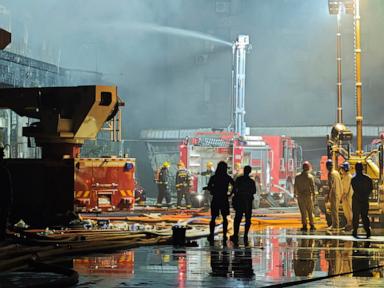
A catastrophic factory fire that claimed 28 lives at a footwear manufacturing plant in eastern China is not an isolated tragedy. It is the predictable outcome of an economic model that systematically prioritizes local revenue over human life. While state media frequently attributes these disasters to isolated corporate negligence or rogue middle managers, the reality is far more systemic. Decades of rapid industrialization have created a regulatory environment where safety fines are treated as a minor cost of doing business, and local enforcement officials are incentivized to look the other way to protect regional tax bases.
The structural failure of Chinese workplace safety regulation lies in the conflicting mandates handed down to municipal authorities. On paper, Beijing maintains stringent workplace safety codes. In practice, local bureaucrats are judged primarily on economic growth, employment metrics, and GDP contribution. When a regional enforcement officer walks into a mid-sized factory, they are acutely aware that shutting down production lines for safety violations could cripple the local economy. The result is a culture of performative compliance. Inspectors issue warnings, factory owners pay nominal penalties, and production continues unabated until the next inevitable disaster occurs.
The Illusion of Corporate Compliance
Global supply chains demand low prices. To meet these margins, subcontractors in provincial manufacturing hubs slash operational overhead, and safety infrastructure is almost always the first item on the chopping block. The 28 workers who perished in the recent footwear factory fire were trapped behind blocked fire exits and window bars, a grim recurring motif in Chinese industrial accidents.
Factory owners frequently implement a dual-accounting method for safety compliance. When international brands or provincial inspectors announce audits, facilities are temporarily retrofitted to meet basic standards. Corridors are cleared, safety gear is distributed, and maximum capacity limits are strictly observed. The moment the auditors leave, the factory reverts to its high-density, high-risk baseline. This game of cat-and-mouse is facilitated by a widespread network of third-party compliance consultants who specialize in helping factories pass inspections without making permanent, costly upgrades to their infrastructure.
The Failure of Regional Enforcement
The central government has repeatedly promised "severe punishments" following high-profile industrial accidents. Yet, the legal mechanisms deployed in the aftermath of these tragedies rarely target the root causes.
- Scapegoating Local Executives: Criminal liability is usually restricted to the immediate factory manager or the building owner, leaving the broader corporate entity and the local regulators who signed off on the facility unscathed.
- Low Financial Penalties: Statutorily capped fines mean that even catastrophic safety failures rarely threaten the financial viability of a major manufacturing firm.
- Lack of Independent Oversight: Without independent labor unions or an adversarial press to hold regional officials accountable, safety enforcement remains entirely internal, opaque, and prone to corruption.
Consider the economics of a typical mid-sized manufacturing plant. Installing a modern, automated fire suppression system and expanding emergency egress routes can cost hundreds of thousands of dollars. Conversely, the maximum statutory fine for minor code violations is a fraction of that amount. For a business operating on razor-thin margins dictated by global retail pressures, the rational economic choice under the current enforcement regime is to risk the fine.
Global Brands and the Clean Hands Myth
Western consumer brands cannot absolve themselves of responsibility. While major footwear and apparel companies trumpet their strict supplier codes of conduct in annual sustainability reports, their purchasing departments continue to squeeze subcontractors on price and delivery timelines.
When a multinational corporation demands a 20 percent reduction in unit costs while simultaneously shortening production windows, something has to give. Subcontractors cannot easily reduce the cost of raw materials, nor can they cut minimum wages without risking labor shortages. Therefore, they squeeze the invisible variables: ventilation quality, electrical maintenance, structural reinforcement, and fire safety protocols. The global brand maintains plausible deniability through outsourced auditing firms, while the factory floor becomes a tinderbox.
The Auditing Bureaucracy
The private auditing industry has become a multi-billion-dollar shield for multinational corporations. These audits are frequently checklist-driven exercises that fail to capture the day-to-day realities of factory operations. Inspectors are often underpaid and overworked, making them susceptible to bribery or manipulation by factory management. A clean audit report gives a brand the PR cover it needs, but it provides zero protection for the workers on the assembly line.
Changing the Economic Incentive Structure
To break this cycle of industrial disasters, the fundamental calculus of manufacturing compliance must change. Passing more laws will achieve nothing if the enforcement mechanism remains compromised by local economic interests.
Current Cycle:
[Global Price Pressure] -> [Factory Cuts Safety Costs] -> [Inspector Issues Nominal Fine] -> [Catastrophic Failure]

Required Shift:
[Strict Legal Liability] -> [Prohibitive Financial Penalties] -> [Independent Labor Oversight] -> [Permanent Structural Safety]
First, criminal liability for industrial accidents must extend up the chain to high-ranking provincial officials and executive board members of parent companies. If a regional governor faces career termination or imprisonment when a factory burns down under their jurisdiction, enforcement will suddenly become a priority.
Second, financial penalties must be pegged to total corporate revenue rather than fixed statutory limits. A fine must be economically devastating enough to make non-compliance a threat to corporate survival.
Finally, workers must be given a mechanism to report safety hazards without fear of immediate termination or state retaliation. Currently, employees who attempt to document unsafe working conditions are routinely silenced by management or local security apparatuses to protect the region's economic reputation. True safety cannot be achieved through top-down inspections alone; it requires empowering the people whose lives are actually on the line.
The death toll in eastern China is a stark reminder that the true cost of cheap manufacturing is often paid in blood. Until Beijing aligns the economic incentives of its local bureaucrats with the physical safety of its working class, the promises of regulatory reform will remain nothing more than bureaucratic fiction. Factories will continue to burn, international brands will continue to express shock, and the assembly lines will keep moving.