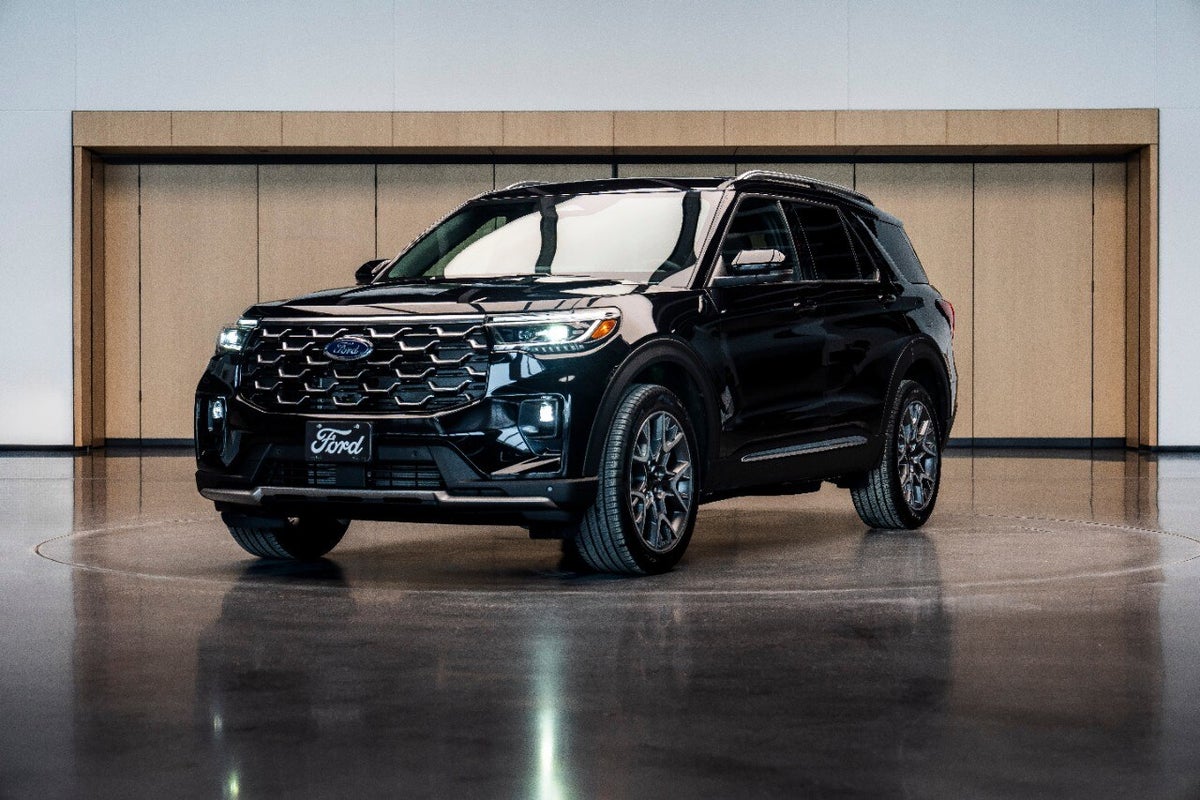
The intersection of high-security automotive engineering and Vatican diplomatic protocols creates a unique manufacturing niche where brand equity and physical safety outweigh traditional production metrics. When Ford Motor Company undertook the construction of a custom SUV for the Pope in Chicago, the project was not merely a mechanical assembly but a strategic exercise in localized supply chain management and specialized armor integration. This vehicle represents a departure from the standardized "Popemobile" aesthetic, prioritizing discreet transit and regional manufacturing ties over the typical transparent-canopy visibility required for massive public audiences.
The Architecture of Custom Pontifical Platforms
Converting a standard internal combustion engine (ICE) SUV into a vessel for the Bishop of Rome requires a fundamental recalibration of the vehicle’s center of gravity and suspension kinematics. Standard consumer SUVs are designed for a specific payload range; however, the addition of ballistic-grade glass and reinforced floor plating shifts the mass distribution toward the upper and lower extremes of the chassis.
- Ballistic Glass Integration: Utilizing multi-layered polycarbonate and leaded glass increases the weight of each window by a factor of four to six. This necessitates upgraded window regulators and high-torque motors to ensure functional reliability under stress.
- Suspension Geometry: To prevent body roll and maintain maneuverability during evasive maneuvers, the stock dampers are replaced with heavy-duty air suspension or stiffened coil-over systems. The goal is to counteract the "top-heavy" nature of armored SUVs.
- Run-Flat Systems: The wheel assemblies must include polymer or metal inserts that allow the vehicle to travel at speeds up to 50 mph even after total tire pressure loss.
The choice of Chicago as the production site is technically significant. As a primary hub for Ford’s utility vehicle assembly, the Chicago plant provides immediate access to the "white body" frames before they reach the standard assembly line. This allows engineers to weld reinforcement points directly to the frame without dismantling a finished consumer product, preserving the structural integrity of the factory welds.
Logistics of the Chicago-Vatican Supply Chain
The "secret" nature of such builds is a standard operational security (OPSEC) requirement for any head-of-state vehicle. By utilizing a domestic assembly plant, Ford minimizes the digital and physical footprint of the project. The logistical flow of a specialized papal build follows a non-linear path:
- Chassis Selection: A heavy-duty SUV platform is pulled from the standard production queue based on its Gross Vehicle Weight Rating (GVWR) overhead.
- Specialized Upfitting: The vehicle is moved to a secure, off-site facility or a restricted area within the plant for the installation of communications arrays, oxygen filtration systems, and the signature "SCV 1" (Status Civitatis Vaticanae) plate hardware.
- Vatican Compliance: Every modification must meet the standards of the Gendarmerie Corps of Vatican City, focusing on ingress/egress speeds and rear-seat ergonomics tailored to the Pope’s physical requirements.
The "SCV 1" license plate is more than a decorative element; it is a jurisdictional marker. Under international law, vehicles bearing these plates operate under the sovereign authority of the Holy See. When Ford installs custom plates in Chicago, it signals a handoff from American corporate property to a diplomatic asset even before the vehicle leaves the hangar.
The Brand Equity of Papal Mobility
For an automotive manufacturer, the ROI on a papal vehicle is rarely found in the direct sale price. Instead, the value is captured through "halo effect" marketing and the demonstration of engineering reliability.
The Trust Variable
Providing a vehicle for the Pope serves as a global testimonial for a brand's safety standards. If a manufacturer can be trusted with the highest-profile target in the world, the inference is that their consumer-grade safety tech (such as Pre-Collision Assist or Side-Curtain Airbags) is derived from a superior engineering pedigree.
Cultural Localization
By building the vehicle in Chicago, Ford leverages the city’s deep Catholic roots and its history as an industrial powerhouse. This creates a narrative of "community craftsmanship" that resonates with both the local workforce and the broader American consumer base. It transforms a global religious event into a local economic milestone.
Tactical Limitations and Engineering Compromises
Despite the prestige, these vehicles face significant operational constraints. The sheer weight of the armor often reduces the vehicle's fuel efficiency to single digits and significantly increases the braking distance. Engineers must balance the thickness of the steel plating against the engine's cooling capacity; a heavier car generates more heat, which can lead to thermal throttling or engine failure during idle periods in slow-moving processions.
Furthermore, the electronics must be shielded against Electromagnetic Interference (EMI). Modern SUVs are essentially rolling computers; however, in a high-threat environment, these systems must be hardened to prevent remote hacking or disruption by jamming devices used by security details.
Strategic Pivot for Specialized Fleet Management
Manufacturers looking to replicate this level of high-stakes custom engineering must move away from the "modified consumer car" model and toward a "modular security platform" approach.
- Weight Neutrality: Future iterations should prioritize carbon-fiber-reinforced polymers and ceramic armor to keep the GVWR within 10% of the original spec.
- Powertrain Redundancy: Integrating hybrid-electric systems provides a secondary "limp-home" mode if the primary combustion engine is compromised.
- Discreet Integration: The trend in papal mobility is moving away from the "fishbowl" Popemobiles of the 1980s toward standard-looking SUVs that offer superior protection without drawing unnecessary attention.
The Chicago-built Ford SUV represents the peak of this "stealth" philosophy. It acknowledges that in the modern era, the most effective security is often found in blending into the urban environment rather than standing above it.
The next logical step for Ford’s specialized vehicle division is the formalization of a "Sovereign Fleet" unit. This unit should bypass standard dealership networks entirely, focusing on a direct-to-government model that integrates long-term maintenance and specialized driver training into the initial contract. For the Vatican, the requirement is no longer just a car, but a total mobility ecosystem that functions seamlessly across international borders.