The headlines are screaming again. Another drone strike in the Bab al-Mandab, another spike in Brent Crude, and another round of frantic op-eds claiming the global economy is one burning tanker away from a 1970s-style collapse.
They are wrong.
The lazy consensus—the one currently being churned out by every desk-bound analyst from London to New York—suggests that Iranian-backed kinetic interference in Mideast shipping is a purely destructive force. They treat the Strait of Hormuz like a fragile glass neck that, if squeezed, kills the global organism.
I have spent two decades looking at the plumbing of energy markets. I have seen how "crises" actually function on the balance sheets of the world’s largest commodity traders. Here is the reality no one wants to admit: Geopolitical friction in the Middle East is the most effective stress test the West never had to pay for. It is not an existential threat; it is a forced evolution that is making the global energy grid more localized, more redundant, and ultimately, more untouchable.
The Myth of the "Supply Shock"
Whenever a missile splashes near a Suez-bound Aframax, the "experts" start talking about supply shocks. They want you to believe that the physical absence of those barrels will cause a systemic failure.
It’s a fundamental misunderstanding of how the modern oil market works. We are no longer in the era of physical scarcity. We are in the era of logistical inconvenience.
When the Red Sea becomes a "no-go" zone, the oil doesn't vanish. It just takes the long way around the Cape of Good Hope. This adds roughly 10 to 14 days to the transit. In the world of high-frequency trading and massive strategic reserves, a two-week delay is a rounding error, not a catastrophe.
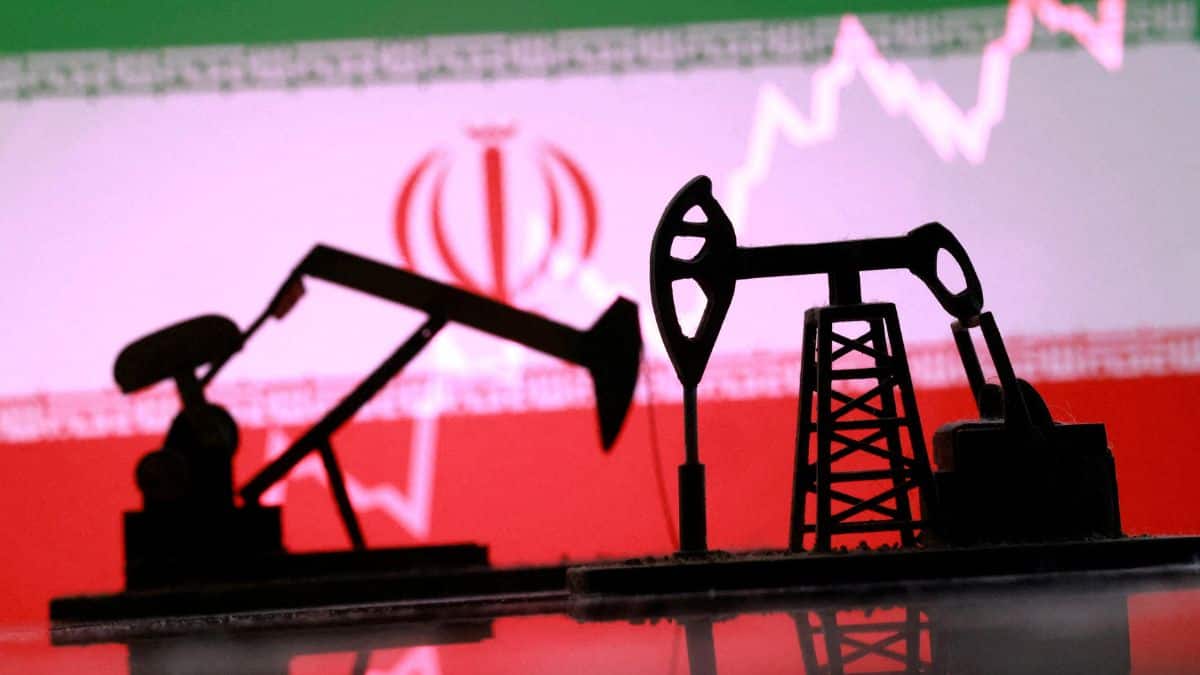
The price spikes you see on your screen aren't reflecting a lack of oil. They are reflecting the increased cost of insurance and the "fear premium" harvested by speculators. Iran isn't breaking the back of the global economy; it is merely increasing the overhead of the status quo. And in doing so, it is incentivizing every major importer to stop relying on a single, vulnerable chokepoint.
The Strait of Hormuz is a Paper Tiger
The "Armageddon scenario" always involves Iran closing the Strait of Hormuz.
Let's look at the physics of that claim. Closing the Strait isn't like closing a garage door. It is a 21-mile-wide waterway. To actually "close" it, you would need to sustain a level of naval dominance that Iran simply does not possess against a coordinated carrier strike group.
More importantly, closing the Strait is an act of economic suicide for Tehran. They need the water open to export their own sanctioned-but-flowing crude to China. You don't burn down the only bridge you use to get to the grocery store.
The attacks we see—the "unrelenting" drone swarms and limpet mines—are calculated theater. They are designed to keep the volatility index high enough to maintain political leverage, but low enough to avoid a total kinetic response that would end the regime. It is a protection racket, not a war.
Why We Should Welcome the Volatility
Most analysts view price volatility as a bug. I view it as a feature.
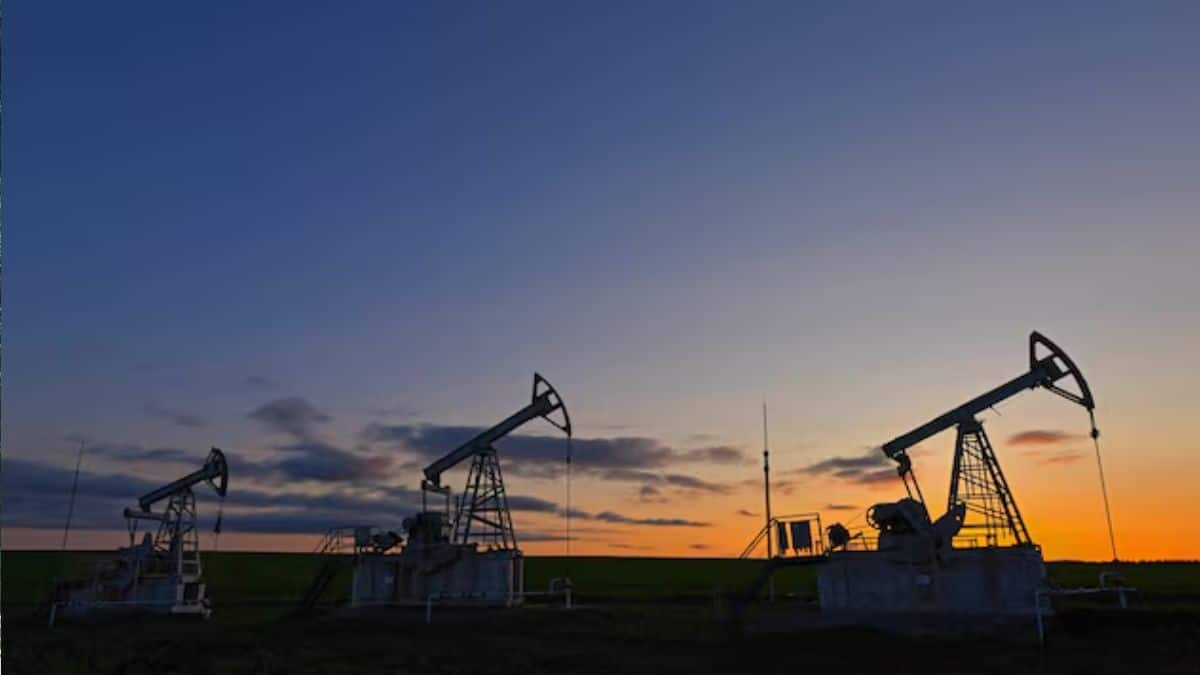
Every time a tanker is harassed, the business case for domestic energy production in the West gets stronger. Every headline about "Mideast instability" is a billion-dollar marketing campaign for Permian Basin fracking, North Sea wind, and Canadian oil sands.
Iran's aggression is the single greatest driver of Western energy independence.
If the Middle East were a boring, peaceful lake, the West would still be fat, happy, and dangerously dependent on cheap, subsidized Gulf crude. Instead, the constant threat of disruption has forced a decade of "de-risking." We have built more pipelines that bypass chokepoints, expanded our LNG (Liquified Natural Gas) infrastructure, and perfected the art of the Strategic Petroleum Reserve (SPR) release.
We are watching the "fragility" of the system be cauterized in real-time.
The Logistics Paradox: Higher Costs, Harder Systems
Let's talk about the "Shadow Fleet."
The media loves to paint the rise of unregistered, aging tankers as a terrifying development. It’s actually a masterclass in market adaptability. When the West imposed sanctions and the Middle East got hot, the market didn't stop; it went dark.
This parallel infrastructure—while environmentally risky—means that the global supply chain is now decentralized. It is no longer controlled by a few massive, easily-targeted shipping conglomerates. It is a hydra. You can't sanction or strike a ghost.
The increased cost of freight ($/tonne-mile) is essentially a "security tax" that consumers pay to fund the development of more resilient trade routes. We are paying for the privilege of learning how to live without the Suez Canal. That is a bargain.
The Flaw in the "Energy Transition" Narrative
There is a subset of the "lazy consensus" that thinks these attacks will accelerate the green transition.
They are half-right, but for the wrong reasons. They think people will buy EVs because they're tired of high gas prices. In reality, the transition is being driven by the realization that security of supply is more important than price of supply.
The "Green" movement in the EU isn't about saving the polar bears anymore; it’s about decoupling from the whims of regional hegemons. Iran isn't killing oil; it is making oil a "security-grade" asset. This means the players who can produce it safely at home (the US, Brazil, Guyana) win, and the players who rely on "unstable geography" (the EU, Japan) are forced to innovate or die.
Stop Asking if the Attacks Will Stop
The premise of the question "How do we stop the attacks?" is flawed. We don't need to stop them. We need to out-engineer them.
If you are a CEO or a fund manager crying about "geopolitical risk," you are admitting that your supply chain is brittle. A sophisticated operation shouldn't care if a drone hits a tanker in the Gulf of Aden. You should have enough diversity in your portfolio that a localized maritime skirmish is nothing more than a footnote in your quarterly report.
I’ve seen companies lose 40% of their market cap because they didn't hedge against the very thing they knew was coming. That isn't Iran's fault. That's a failure of leadership.
The Brutal Truth About Oil Prices
The "shocks" are getting smaller.
In 1990, the invasion of Kuwait sent oil prices up 100% in months. In 2024 and 2025, sustained attacks on shipping and direct missile exchanges between regional powers have barely kept Brent above $80.
The market has priced in the chaos. We have reached "Peak Geopolitical Apathy."
The world has realized that the Middle East's ability to hold the global economy hostage is a relic of the past. We have more oil in the ground, more tankers in the sea, and more alternatives in the grid than at any point in human history.
Iran is firing $20,000 drones at a $100 trillion global economy. It’s a mosquito biting an elephant. It’s annoying, it might leave a mark, but it isn't going to bring the beast down.
Stop reading the fear-porn. The next time you see a "Breaking News" banner about a tanker on fire, don't look at the oil price. Look at the shipping data. Look at the diversion routes. Look at the increasing efficiency of the Cape of Good Hope transit.
The system isn't breaking. It’s hardening.
If you can't make money in a market where the risks are this clearly defined, you shouldn't be in the market at all. Stop waiting for "stability" to return. This is the new stability. It is loud, it is messy, and it is exactly what we need to finally kill the myth of Western vulnerability.
Go buy the dip. Or don't. The elephant is moving on either way.