The silence was the first thing that felt wrong.
Dubai International Airport is never silent. It is a rhythmic, metallic heartbeat of the planet, a place where the air smells of expensive oud, jet fuel, and the frantic ambition of five continents converging in a single terminal. On a normal Tuesday, a plane takes off or lands every ninety seconds. But then, the screens changed.
Imagine a digital waterfall of crimson. "Cancelled." "Delayed." "Indefinite."
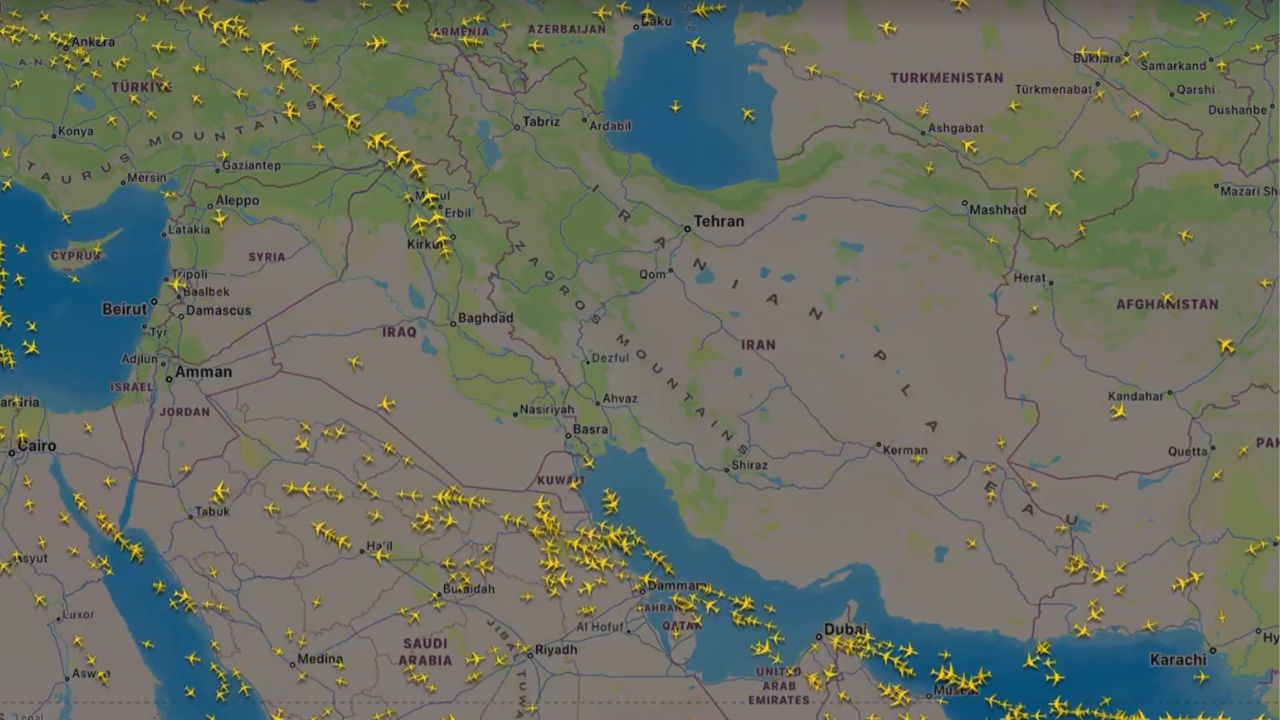
In an instant, the world’s busiest international hub transformed from a transit miracle into a high-end purgatory. The cause wasn't a storm or a technical glitch. It was the sudden, jagged reality of geopolitical gravity. As missiles traced lethal arcs across the Middle Eastern sky, the invisible corridors of the air—the highways we take for granted when we book a cheap flight to Europe or a business trip to India—simply evaporated.
The Human Toll of an Empty Sky
The data tells us that over ten major airlines, including giants like Lufthansa, Emirates, and United, pulled their wings back. They tell us that flight operations were suspended as the shadow of the Iran-Israel conflict stretched over the Persian Gulf. But the data doesn't hear the sound of a father in Terminal 3 trying to explain to a six-year-old why they won't be seeing Grandma in Mumbai tonight.
It doesn't feel the clammy palms of a solo traveler watching their connection to London vanish while their battery hits five percent.
When the airspace over Iran and Israel becomes a "no-go" zone, the ripple effect isn't just a delay. It is a fundamental severing of the world's connective tissue. For the passengers stranded in Dubai, the airport ceased to be a gateway and became a gilded cage. We often view these conflicts through the lens of maps and military briefings, but for the traveler, the conflict is a closed gate and a dial tone on a customer service line that hasn't been answered in three hours.
The Architecture of Chaos
Aviation is a game of exquisite timing. It is a delicate choreography of fuel loads, crew rest requirements, and landing slots. When a hub like Dubai halts, the choreography turns into a pile-up.
Consider the "Hypothetical Passenger," let's call her Sarah. Sarah is a freelance consultant flying from Singapore to Zurich. She chose the Dubai layover because it was efficient. Now, she is part of a statistic: one of thousands caught in a logistical nightmare. Because the Iranian airspace is a primary artery for flights connecting the West to Asia, its closure forces pilots to take the "long way around."
Taking the long way isn't as simple as a detour on a highway. It requires thousands of gallons of extra fuel. It means the plane might become too heavy to take off from certain runways. It means the crew will "time out" and exceed their legal working hours before they reach their destination.
This is why the airlines didn't just delay; they vanished. From Qatar Airways to Air India, the decision was less about policy and more about the cold, hard physics of safety and fuel. If you cannot guarantee a flight path that stays clear of a ballistic trajectory, you don't fly. Period.
The Vanishing Horizon
There is a specific kind of vertigo that comes from being stuck in a foreign country during a regional war. You look at your phone and see images of iron domes and glowing streaks in the night sky. Then you look up and see a Duty-Free shop selling gold watches. The juxtaposition is jarring. It reminds us that our modern, hyper-mobile lifestyle is built on a foundation of precarious peace.
We have spent decades believing that the sky belongs to us. We bought into the idea that for $800 and a bit of patience, we could be anywhere on Earth in twenty-four hours. We forgot that the "friendly skies" are actually a complex patchwork of sovereign territories, each with the power to blink and turn the lights out.
The suspension of operations in Dubai is a reminder of our fragility. It’s the realization that a piece of hardware launched hundreds of miles away can dictate whether a student makes it to their university graduation in New York or whether a life-saving shipment of medicine reaches a clinic in Amman.
The Invisible Stakes
Why does it matter if a few dozen flights are cancelled? Because Dubai is the "Switchboard of the World."
When the switchboard goes dark, the economic impact is a slow-motion car crash. Perishable goods rot in cargo holds. Business deals that require a face-to-face handshake wither. But more importantly, the trust we have in the "seamlessness" of global travel takes a hit.
We are seeing a return to a fractured world.
During the Cold War, flight paths were convoluted, avoided vast swaths of the globe, and were prohibitively expensive. We are staring at the possibility of that world returning. If the Middle East remains a volatile "black hole" on the aviation map, the cost of flying between Europe and Asia won't just go up in terms of dollars—it will go up in terms of time, carbon footprint, and anxiety.
The Weight of the Wait
Back in the terminal, the lights remain bright. The fountains continue to splash. But the energy has shifted from the excitement of "going" to the heavy, stagnant weight of "staying."
People are sleeping on their coats. They are huddling around power outlets like they are campfires. There is a strange, temporary camaraderie that forms among the stranded. You share a bag of pretzels with a stranger from a country your own government might be at odds with. In the purgatory of a cancelled flight, the geopolitical lines on the map matter less than the shared human desire to just go home.
We watch the news on the overhead monitors. We see the same missiles that grounded our planes. We realize that while we are inconvenienced, others are in peril. It is a sobering moment of perspective. Our "travel nightmare" is a mere shadow of the actual nightmare unfolding on the ground in the conflict zones.
The planes will eventually fly again. The gates will open. The crimson "Cancelled" text will revert to a comforting green "On Time." But the next time we buckle our seatbelts and look out the window at the vast, dark expanse of the Middle East at 35,000 feet, we will remember how quickly that darkness can rise to meet us.
We will remember that the sky is not a vacuum. It is a mirror.
And right now, that mirror is reflecting a world that has forgotten how to keep its feet on the ground and its eyes on the stars. The silence in Dubai wasn't just an absence of engines. It was a breath held in a moment of collective uncertainty, a world waiting to see if the path ahead would be cleared, or if the horizon was finally closing for good.