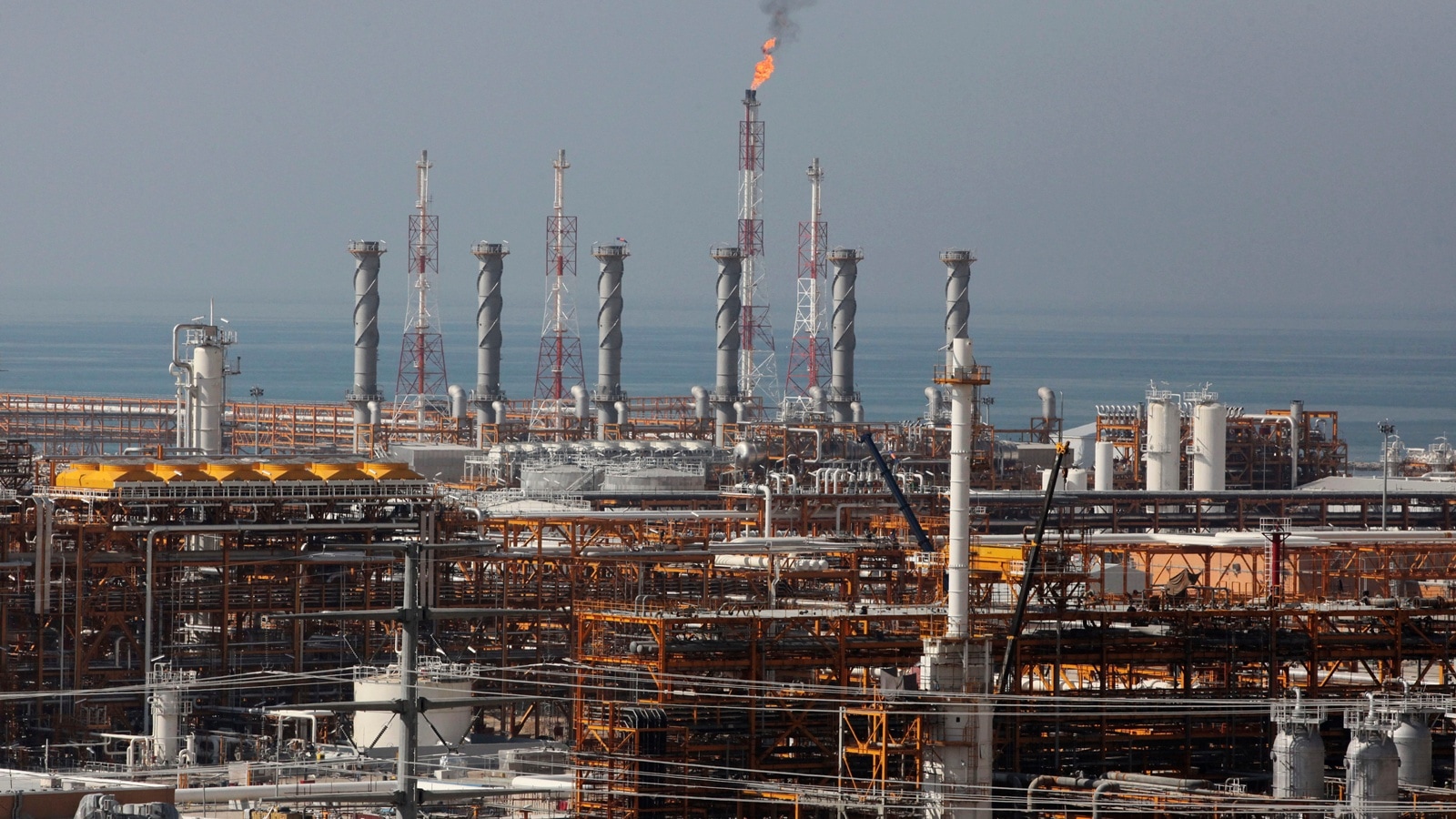
The vibration starts in the marrow of your bones before it ever hits your ears. On a clear night in the Persian Gulf, the water usually looks like liquid obsidian, broken only by the rhythmic, artificial pulse of the gas platforms. These are not just steel structures. They are the iron lungs of a nation.
When the missiles struck the South Pars field, the horizon didn't just brighten. It tore open.
South Pars is a geological fluke, a subterranean cathedral of methane shared between Iran and Qatar. It holds roughly eight percent of the entire planet’s known natural gas reserves. To the engineers living on those platforms, the field is a workplace. To the government in Tehran, it is the central artery of their survival. To the rest of the world, it is a volatile pressure cooker that just had its safety valve welded shut.
The Weight of the Invisible
Imagine a city where the lights flicker once, then die. Not because of a blown fuse, but because a piece of infrastructure a hundred miles out at sea has been turned into a charred skeleton. This isn't a hypothetical scenario for the millions of people living across the Iranian plateau.
Natural gas is the invisible ghost that runs the modern world. It heats the water for a morning tea in Isfahan. It powers the turbines that keep hospital ventilators whirring in Shiraz. When Israel targeted the world’s largest gas field, they weren't just aiming at steel and pipes. They were aiming at the very concept of civilian stability.
The strategy behind the strike was surgical. By hitting the extraction nodes of South Pars, the kinetic impact ripple travels through the economy faster than the sound of the explosion itself.
A Game of Kinetic Chess
Geopolitics is often described as a game of chess, but that metaphor is too clean. Chess has rules. This is more like a midnight bar fight where someone just pulled a knife, and the lights went out.
For years, the shadow war between Israel and Iran stayed in the darkness. It was a matter of cyberattacks on water pumps or the mysterious "accidental" combustion of a centrifuge. That era ended the moment the sky turned orange over the Gulf.
The Iranian leadership now finds itself in a corner lined with broken glass. To not retaliate is to admit that their most precious resource is undefendable. To retaliate too harshly is to invite a full-scale regional conflagration that their sanctioned, battered economy might not survive.
"We will choose the time and the place," the official statements read.
But the "time" is usually dictated by the boiling point of the public. Consider the man in a Tehran suburb who can no longer run his small plastic factory because the grid is shedding load. His frustration isn't directed at a missile battery hundreds of miles away; it’s directed at the ceiling. Tension like that has a way of rising until it finds a vent.
The Architecture of the Strike
How do you kill a giant? You don't hit its limbs. You hit its heart.
South Pars is divided into phases, a sprawling network of platforms, subsea pipelines, and onshore processing plants. The technical complexity of these facilities is staggering. They operate under immense pressure—literally and figuratively.
$P = \frac{F}{A}$
In physics, pressure is force divided by area. In the Gulf, the "area" is shrinking. When a missile hits a high-pressure gas line, you aren't just dealing with an explosion. You are dealing with a self-sustaining blowtorch. The heat is enough to melt the very alloys designed to withstand the harshest salt-water environments on Earth.
The repair timeline for these facilities isn't measured in days. It’s measured in seasons. Specialised divers, rare replacement parts, and the constant threat of a follow-up strike make "getting back to normal" a distant dream.
The Sound of Silence in the Markets
The morning after the attack, the world woke up to a different math.
Traders in London and Singapore didn't look at the human cost first. They looked at the charts. Natural gas prices are a nervous barometer of human anxiety. When South Pars goes dark, the supply chain flinches.
We live in a world of "just-in-time" logistics. We don't keep massive reserves of energy tucked away for a rainy day because storage is expensive. We rely on the constant, flowing grace of the pipeline. When that flow stops, the price of everything—from the bread baked in a gas oven to the electricity used to charge a smartphone—starts to climb.
This is the hidden tax of war. It is paid by people who have never heard of South Pars, through the slow erosion of their purchasing power.
The Human Element in the Control Room
Think about the operator on duty when the sirens began.
He is likely a man in his late thirties, perhaps with a family in Bushehr. He knows the sounds of the platform like the rhythm of his own breathing. He knows the hum of the compressors and the hiss of the glycol dehydrators.
When the first explosion rocked the structure, his first instinct wasn't political. It was mechanical. Close the valves. Vent the lines. Prevent the entire platform from becoming a localized sun.
These individuals are the forgotten variables in the headlines. We talk about "Iran" and "Israel" as if they are monolithic blocks of granite clashing in the sea. They are not. They are collections of people, many of whom are simply trying to keep the lights on for one more shift.
The vow of retaliation is a political necessity, a script written long ago. But the script doesn't account for the smoke that still hangs over the water, or the way the birds have stopped landing on the remaining rigs.
Why This Time is Different
We have seen skirmishes before. We have seen tankers seized and drones downed.
However, the targeting of South Pars represents a shift from "harassment" to "strangulation." It is a move intended to break the back of the Iranian energy sector, which accounts for the vast majority of the country's hard currency.
If the energy sector fails, the social contract fails.
The Iranian government’s response will not just be a matter of pride. It will be a matter of survival. They have spent decades building a "Ring of Fire" around Israel via proxies in Lebanon, Syria, and Yemen. The question is no longer if those assets will be used, but how many will be sacrificed to settle the score for the fire in the Gulf.
The Mirage of Security
There is a certain coldness in the way we consume this news. We see it on a screen, a grainy video of a fire at sea, and we scroll past.
But the world is smaller than it used to be. The energy extracted from that field in the Persian Gulf is part of a global ledger. When one part of the ledger is erased with high explosives, the rest of us eventually have to cover the deficit.
The "retaliation" isn't just a military strike. It's the beginning of a new, more dangerous chapter where the world’s most vital resources are no longer off-limits. We have entered an era where the thermostat in a home in Europe or the price of a commute in America is directly tethered to the accuracy of a drone over the Gulf.
The sea is quiet now, but the silence is heavy. It is the silence of a held breath.
In the coastal towns of southern Iran, the sky has returned to its natural dark, but no one is looking at the stars. They are looking at the horizon, waiting for the next sun to rise in the middle of the night.
The fire didn't just burn the gas. It burned the illusion that the world’s energy heart could remain beating while the rest of the body was at war.
Across the water, the lights of the Qatari side of the field still twinkle, a reminder of what stability looks like. But even there, the workers look toward the blackened patches of the horizon. They know that in a field this large, a fire in one corner eventually makes the whole room get hot.
The marrow in the bones still feels the vibration. It hasn't stopped. It's just waiting for the next note to play.