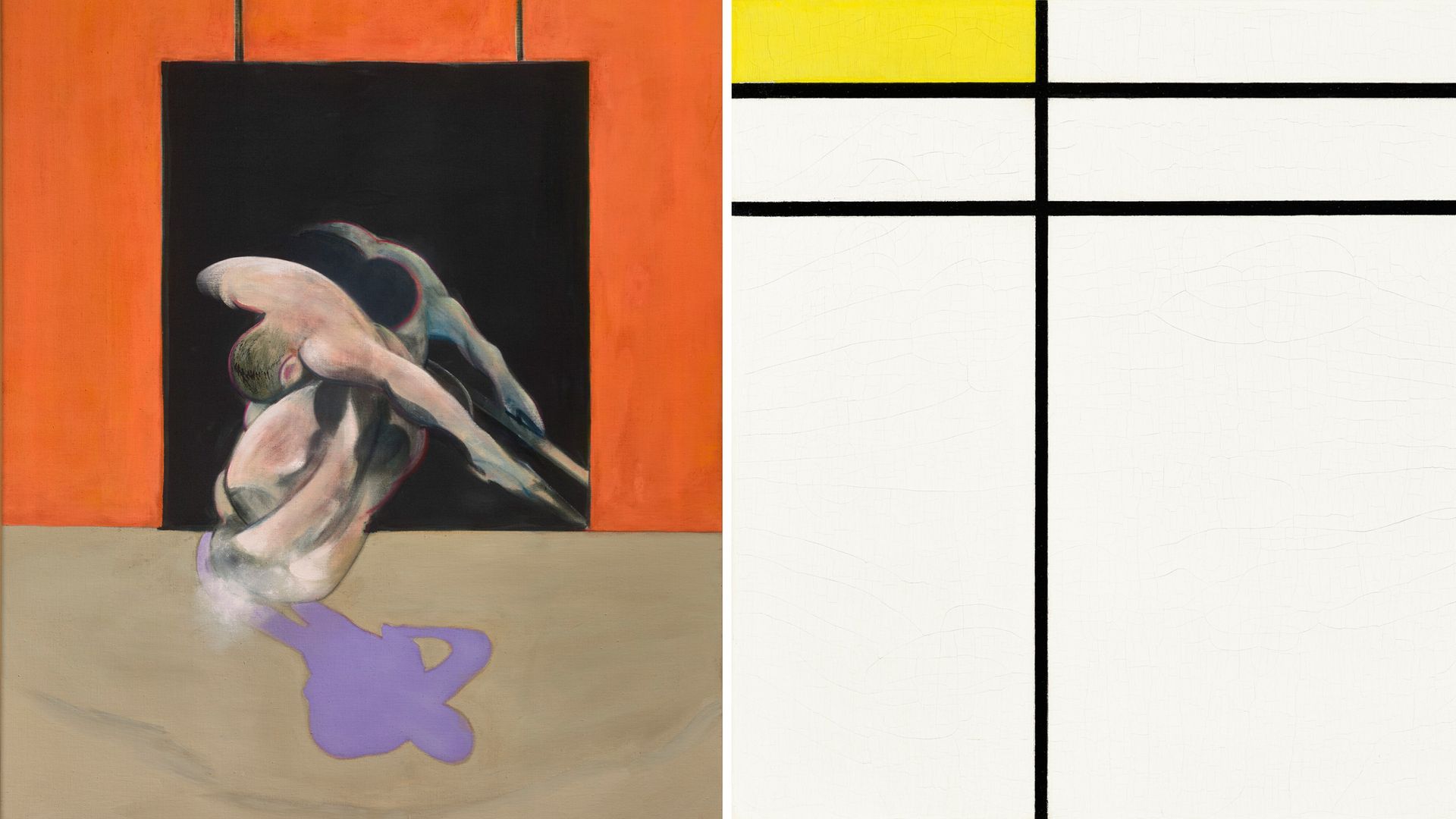
Every time a billionaire liquidates a trophy-grade art collection, financial journalists trip over themselves writing obituaries for traditional equity. They gasp at the white-glove evening sales at Christie's, treating nine-figure totals for Peter Peter Peter or Jean-Michel Basquiat as evidence of a pristine, uncorrelated asset class. When high-profile founder collections hit the block—like the staggering liquidations tied to retail titans from Monsoon and beyond—the narrative is always the same. We are told this is a sophisticated flight to hard assets. We are told art is the ultimate inflation hedge, a timeless store of value immune to the whims of Wall Street.
It is absolute garbage.
I have watched family offices and naive venture capitalists pour generational wealth into blue-chip canvases under the spell of auction house marketing departments. I have sat in private viewing rooms while advisors whispered about compound annual growth rates that would make a hedge fund manager blush. Here is the open secret nobody in the auction ecosystem wants to admit: the high-end art market functions less like a mature asset class and more like a high-stakes, illiquid musical chairs game funded by cheap debt and ego.
When a founder sells their private accumulation, the media treats it as a referendum on wealth preservation. The reality is far more mundane and cynical. It is a liquidity event for an asset that has become entirely untethered from aesthetic value and driven solely by financial engineering, artificial scarcity, and tax-advantaged positioning.
The Myth of the Uncorrelated Asset
For decades, the standard pitch from wealth managers has been that fine art moves independently of public equities. If the S&P 500 tanks, your Rothko keeps its dignity. This claim relies on a statistical sleight of hand. Public equities price every single day based on actual transactions between willing buyers and sellers. High-end art prices are published only when a work actually sells at auction or through a dealer network, leaving out the vast graveyard of pieces that failed to clear reserves or sat unsold in temperature-controlled warehouses in Geneva.
When you index only the winners—the survivor bias baked into every Artprice or Mei Moses report—of course the asset class looks stable. But try offloading a mid-tier blue-chip piece during a liquidity crunch. Try getting a major house to guarantee a floor price when macro sentiment sours. You quickly discover that the liquidity is an illusion maintained by financial guarantees, third-party backers, and confidential price-support agreements orchestrated by the auction houses themselves.
Imagine a scenario where Christie's or Sotheby's stopped offering irrevocable bids and financial guarantees to secure high-profile consignments. The entire market structure would seize up within forty-eight hours. The multi-million dollar hammer prices we celebrate as economic indicators are often little more than circular transactions where guarantors take on shares of the risk to keep the illusion of upward trajectory alive.
How Founder Capital Distorts Reality
Founders of global retail empires or tech conglomerates approach art acquisition through the lens of enterprise scaling. They treat a trophy painting the same way they treated a distribution network or an aggressive M&A play. They buy aggressively, concentrate supply in specific emerging names, and effectively corner niches of the market.
When a prominent collection from a retail pioneer hits the block, it does not prove that art is appreciating organically. It proves that a well-resourced buyer successfully played the primary market, cultivated relationships with elite gallery gatekeepers, and managed to exit before the cultural zeitgeist shifted.
The mechanics of this game are predatory to anyone outside the inner circle.
- The Primary Allocation Trap: You do not simply walk into a top-tier gallery with a checkbook and buy a masterpiece. You buy five paintings you do not want by unproven artists to earn the right to buy one piece by an established master.
- The Lock-Up Period: Galleries extract contractual promises that you will not flip the work for a specified window, usually three to five years, protecting the artist's artificial price floor.
- The Auction Arbitrage: Once the lock-up expires, the collector consigns the work to a major evening sale, often with a guaranteed minimum price negotiated in secret.
This is not investing. It is a closed-loop club where the rules are written by the people collecting the buyer's premiums.
The Tax Haven Elephant in the Room
Let us stop pretending that billionaires are buying hundred-million-dollar sculptures purely for the joy of contemplation in their minimalist living rooms. The ultra-wealthy use fine art as a sophisticated balance sheet tool. Freeports in Delaware, Luxembourg, and Switzerland are monuments to tax deferral.
Under historic rules, art could be rolled over into other physical assets via like-kind exchanges, deferring capital gains taxes indefinitely. Even with the tightening of those loopholes, sophisticated vehicles use art lending—borrowing against the appraised value of a collection—to generate tax-free liquidity without triggering a taxable sale event. You do not pay capital gains on a bank loan. You simply use your Basquiat as collateral to buy real estate, fund new ventures, or purchase more art, keeping the wheel spinning indefinitely.
When a founder collection liquidates publicly, it is frequently because the mechanics of estate planning, divorce settlements, or structural portfolio rebalancing demand a cash event that cannot be solved by another round of portfolio leveraging. It has nothing to do with whether the canvas is worth the paper its appraisal is printed on.
The Brutal Truth About Cultural Arbitrage
Art valuation lacks a fundamental cash-flow anchor. A stock is worth the discounted value of its future cash flows. A piece of commercial real estate is worth the rent it commands per square foot. A painting by a deceased abstract expressionist is worth precisely what the next billionaire with fragile self-esteem is willing to wire to a Swiss bank account to outbid their rival.
That is not a market. That is a sentiment contest backed by PR agencies.
If you want to build enduring wealth, treat art for what it is: a luxury consumption good with high transaction costs, immense storage overhead, and zero intrinsic yield. Buy what you love to look at on your walls, knowing full well that you are paying for an experience, not an investment. The moment you start viewing your living room wall as an asset allocation strategy, you have already lost to the house.