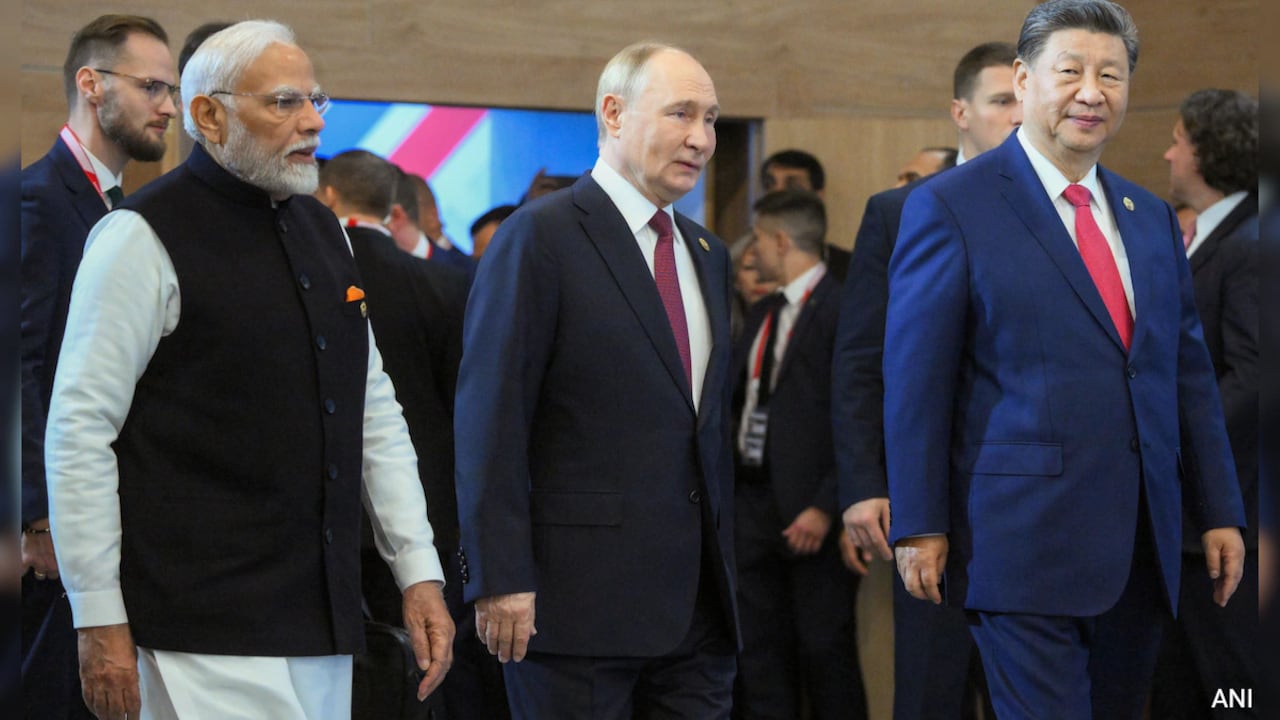
Two decades ago, a Wall Street analyst penned a catchy acronym that accidentally birthed a geopolitical heavyweight. Brazil, Russia, India, and China were grouped together in a 2001 research report not as a political alliance, but as a collection of emerging markets too large for global financial institutions to ignore. That financial shorthand transformed over time into BRICS, and eventually mutated into BRICS Plus, a sprawling coalition spanning multiple continents. Yet behind the grand summits, the expansion announcements, and the fiery rhetoric concerning de-dollarization, the bloc operates less like a cohesive superpower and more like an uneasy marriage of convenience plagued by profound structural contradictions.
Understanding the true trajectory of BRICS requires stripping away the official communiques and examining the raw mechanics of national self-interest. When Jim O'Neill coined the term at Goldman Sachs, he pointed to raw economic potential, demographic momentum, and manufacturing growth. He did not design a governance model. He observed a trend line. When politicians subsequently weaponized that analytical category into an anti-Western club, they inherited a collection of nations with competing territorial ambitions, vastly different economic models, and deep-seated mutual distrust.
The primary driver uniting these disparate capitals is an acute aversion to Washington's financial hegemony. Following aggressive Western sanctions against Moscow, emerging economies witnessed how swiftly dollar-denominated financial infrastructure could be turned into a geopolitical cudgel. Consequently, the bloc aggressively champions alternative payment frameworks, local currency settlements, and institutions like the New Development Bank.
However, translating an anti-hegemonic sentiment into a functional monetary alternative is an entirely different engineering feat. Currency stability requires trust, transparent legal systems, deep capital markets, and a willingness to run persistent trade deficits so the rest of the world can accumulate liquidity. China wants internationalization for the renminbi, but Beijing's strict capital controls and state-managed economy prevent foreign investors from treating it as a true neutral reserve asset. Other members are equally unwilling to substitute Western dominance for renminbi dominance. The friction between Beijing and New Delhi illustrates this impasse clearly. Shared membership in a multilateral summit does not erase a heavily militarized contested border or fierce competition for industrial supply chains across Asia and Africa.
The Structural Reality of Expansion
Recent waves of expansion brought in major energy producers and regional players. On paper, incorporating petroleum giants and vital maritime trade chokepoints looks like a masterstroke of economic statecraft. In practice, adding nations with conflicting domestic agendas multiplies the friction points inside the boardroom.
Consider trade dynamics. Economic think tanks frequently highlight that a significant portion of commercial friction experienced by developing nations stems not from Western coercion, but from intra-bloc competition. Chinese manufactured goods flood markets across South America and South Africa, routinely undercutting local industries and triggering protectionist pushback from governments that ostensibly stand shoulder-to-shoulder with Beijing during annual photo opportunities.
To look at this through a concrete lens, imagine a hypothetical manufacturing firm in São Paulo trying to compete against subsidized imports arriving from East Asia. The ideological rhetoric emanating from a summit in Rio de Janeiro or Kazan proclaims mutual solidarity among developing economies. Meanwhile, industrial bankruptcy filings at home tell a harsher story about the realities of unmanaged bilateral trade imbalances within the coalition.
Financial Architecture Without a Foundation
Much of the discourse surrounding the bloc centers on bypassing the greenback. Proposals for alternative messaging networks, blockchain-backed settlement rails, and synthetic currency units regularly make headlines. Yet commercial banks operate on risk assessment and liquidity depth, not political aspiration.
A cross-border transaction settled in local currencies works adequately for bilateral trade where two countries maintain roughly balanced imports and exports. If nation A consistently buys more from nation B than it sells, nation A accumulates a pile of currency it cannot easily spend anywhere else. Without a deep, liquid market for sovereign debt denominated in that alternative currency, the system stalls. The global financial architecture relies on the United States Treasury market precisely because of its unmatched depth and safety. None of the member states possess the domestic financial depth to offer a comparable global sponge for surplus capital without exposing themselves to unacceptable internal vulnerabilities.
Furthermore, economic development stages across the coalition vary wildly. A low-income importing nation dealing with severe structural deficits has very different monetary priorities than an export-heavy manufacturing powerhouse or a sanctioned commodity giant. Expecting these diverse states to harmonize monetary policy or construct a viable currency union defies basic economic history. Even the Eurozone, comprised of advanced European economies with shared legal frameworks, faced existential crises due to economic asymmetries. Replicating that feat across authoritarian states, managed democracies, and diverse legal traditions remains an uphill climb.
Beyond the Rhetoric
The endurance of the coalition lies in its utility as a diplomatic megaphone. For mid-tier powers, participation offers a useful lever to extract diplomatic concessions from traditional Western partners. It signals strategic autonomy to domestic audiences without requiring painful structural reforms at home.
Yet viewing this grouping through a binary lens—either as an imminent destroyer of Western financial supremacy or as a meaningless talking shop—misses the subtle shift currently underway. The global economy is not splitting cleanly into two rigid camps. Instead, it is fragmenting into a messy, transactional multipolarity where middle powers hedge their bets across multiple systems simultaneously.
Nations maintain security or trade ties with Washington while simultaneously attending summits in Beijing or Moscow. They sign up for alternative development banks while still relying on Western technology and capital markets. This fluidity offers individual states maximum tactical flexibility, but it severely limits the institutional durability of any single bloc attempting to write a new global rulebook.
The evolution from a clever Wall Street forecasting term into a sprawling geopolitical coalition reflects a genuine desire among emerging economies for a greater voice in planetary governance. But momentum and media attention cannot rewrite the laws of macroeconomics or dissolve centuries of geopolitical rivalry. The enduring legacy of this experiment will not be a unified alternative world order, but rather a permanent reminder that assembling a coalition against a common rival is far easier than building a cohesive system that can survive its own internal contradictions.