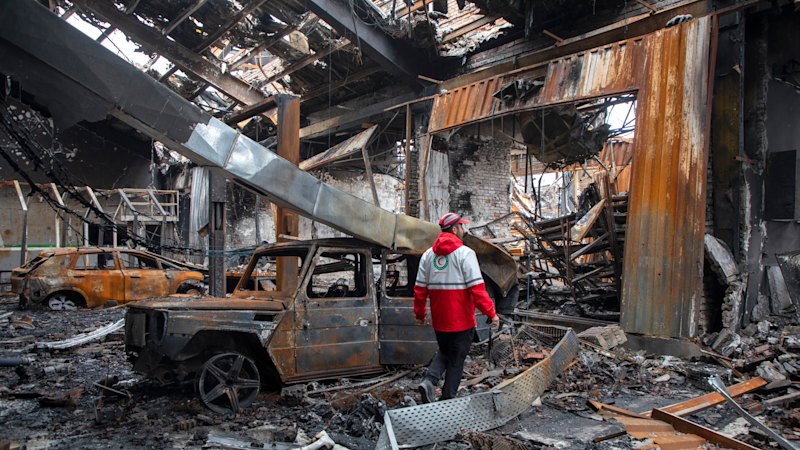
The death of journalists in active combat zones is not merely a humanitarian tragedy; it represents a systematic degradation of the information supply chain. When field reporters are neutralized, the cost of acquiring verified ground truth increases exponentially, creating a vacuum filled by unverified OSINT (Open Source Intelligence) and state-directed narratives. The recent funerals in Lebanon for media personnel killed by cross-border strikes provide a data point for a broader trend: the shifting risk-reward calculus of frontline journalism in an era of precision-guided munitions and asymmetric warfare.
The Triad of Information Suppression
Understanding the impact of these events requires breaking down the three primary mechanisms by which conflict-driven journalist fatalities alter the geopolitical landscape.
- The Observational Bottleneck: Journalism functions as a sensor network. The removal of a sensor (a reporter) from a high-tension geography like the Lebanon-Israel border reduces the resolution of the available data. This is not a linear loss; the loss of a seasoned local correspondent who possesses deep cultural and topographical context is a qualitative blow that cannot be replaced by satellite imagery or remote data scraping.
- The Deterrence Coefficient: Every funeral for a journalist serves as a high-visibility signal to other media organizations. When the physical safety of staff cannot be guaranteed—or when "Press" insignia no longer function as a de facto shield—newsrooms implement a retreat strategy. This self-censorship through geography ensures that the most volatile zones become "black holes" for independent verification.
- Narrative Monopolization: In the absence of independent media, the two primary belligerents gain total control over the situational record. Information becomes a binary output of military press offices.
The Calculus of Risk in Modern Border Conflicts
The targeting of journalists, whether intentional or incidental, follows a specific logic of kinetic engagement. In traditional 20th-century warfare, the front line was a defined geographic plane. In the current Lebanese context, the front line is a non-contiguous series of strike points determined by electronic signatures and real-time surveillance.
The Failure of the Press Vest as a Protective Asset
The blue flak jacket and "PRESS" helmet were designed for a visual era of warfare. Their efficacy relied on a human operator—a soldier behind a rifle—making a split-second decision to withhold fire based on visual identification. In contemporary conflict, where strikes are often conducted by operators kilometers away using thermal optics or autonomous algorithms, the visual distinction of a "Press" vest is frequently nullified. The data suggests that being stationary in a "marked" vehicle or position may actually increase risk by making the group a predictable target for surveillance assets looking for any localized activity in a "cleared" zone.
The Economic and Operational Toll on Independent Media
Media organizations operate on a finite budget of human and financial capital. The death of a team involves more than the loss of life; it triggers a cascade of operational failures that can bankrupt or paralyze a regional bureau.
- Insurance and Liability Escalation: Following a high-profile fatality, the premiums for "War Zone" insurance packages spike. Small and medium-sized outlets are often priced out of the field, leaving only state-funded or massive multi-national conglomerates capable of footing the bill.
- Talent Brain Drain: Field reporting in Lebanon requires a specific intersection of linguistic fluency, political nuance, and physical endurance. The attrition of this specific talent pool forces agencies to rely on "parachuting" reporters—individuals with high credentials but low local context—which invariably leads to flatter, less accurate reporting.
- Psychological Fatigue and the "Fixer" Crisis: International reporters rely on local "fixers" and drivers. When these local partners see their peers killed, the internal support network of global journalism collapses. Without a local guide willing to take the risk, the international press is effectively blind.
Categorizing the Incident: Accidental vs. Systematic
To analyze the implications of the Lebanon strikes, one must categorize the event using the framework of "Kinetic Intent."
Collateral Technical Failure
This occurs when a journalist is positioned near a legitimate military target, such as a rocket launcher or a command post. The strike is intended for the military asset, and the journalists are caught in the blast radius. In this scenario, the failure lies in the journalists' situational awareness or the military's failure to account for civilian proximity.
Targeted Signal Suppression
This is a more clinical approach where media personnel are specifically targeted because their reporting interferes with the operational security (OPSEC) of a military force. If a journalist is broadcasting live positions or documenting civilian casualties that undermine a military's "clean strike" narrative, they become a high-priority target for neutralization.
The Algorithm Problem
A third, emerging category involves autonomous or semi-autonomous targeting systems. If an AI-driven targeting system identifies "suspicious movement" or "long-range optical equipment" (cameras) in a restricted area, it may authorize a strike without a human ever confirming the "Press" status of the targets.
The Geopolitical Fallout of Public Mourning
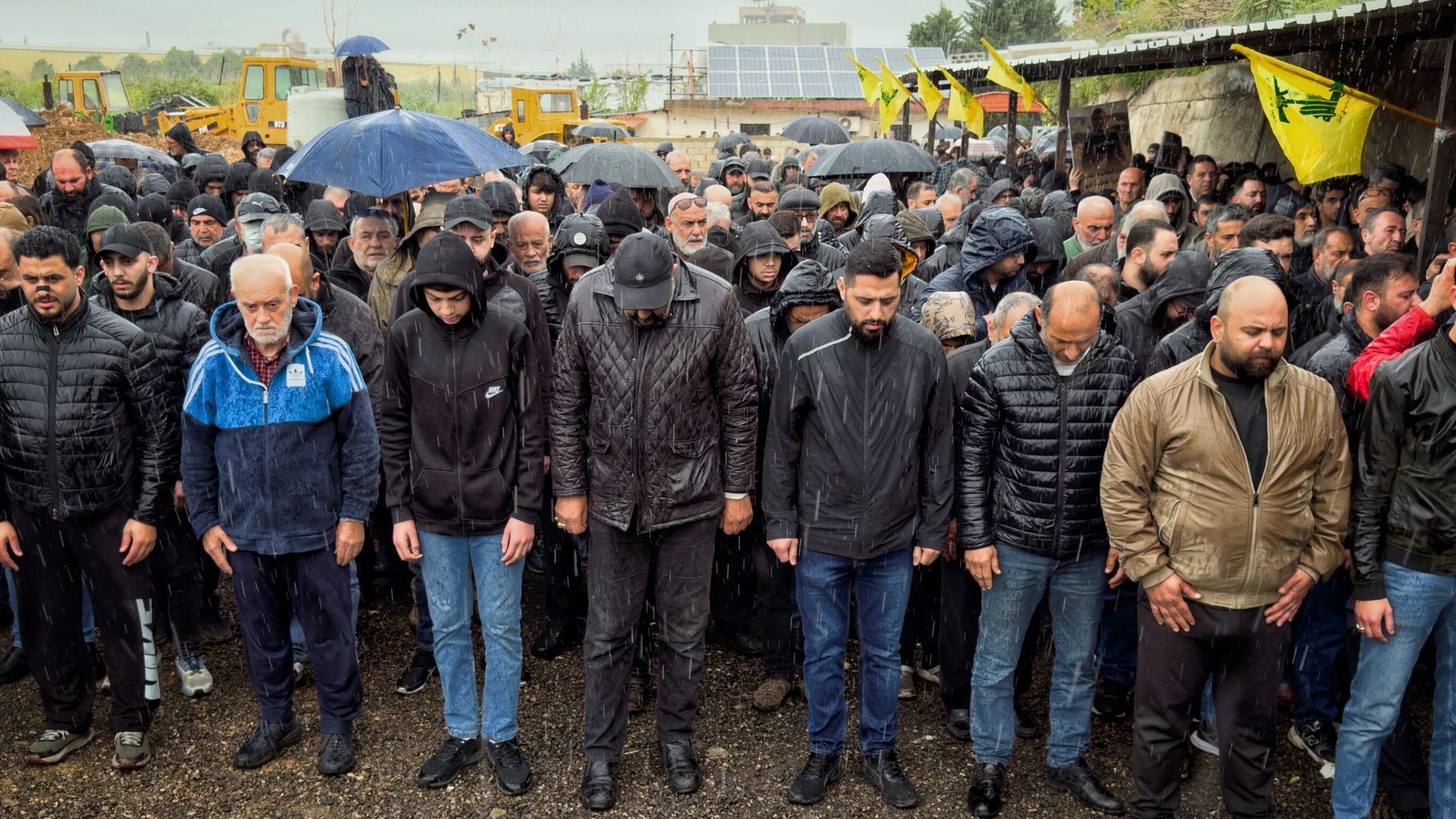
The funerals in Lebanon, held in the pouring rain with hundreds of attendees, are not just rituals of grief; they are political instruments. These events serve to solidify the internal front.
- Martyrdom as a Logic of Mobilization: In Lebanese political culture, the "journalist-martyr" is a potent symbol. It merges the intellectual pursuit of truth with the national struggle, effectively drafting the media into the broader conflict narrative. This makes it impossible for the media to remain "neutral" in the eyes of the public.
- International Pressure Points: Images of grieving families and rain-soaked processions are high-value assets in the information war. They are used to lobby international bodies (UN, ICC) for war crimes investigations. While these rarely result in immediate legal consequences, they degrade the "soft power" and international standing of the attacking party.
The Structural Inevitability of Information Decay
As the conflict persists, we can predict a predictable decay in the quality of information coming out of Southern Lebanon. This decay follows a measurable trajectory:
- Phase 1: Saturation. High numbers of international and local crews on the ground. High volume of video and eye-witness accounts.
- Phase 2: Targeted Attrition. Initial casualties occur. International outlets pull back to major cities (Beirut). Local reporters remain but reduce their mobility.
- Phase 3: Proxy Reporting. Direct observation ends. News agencies begin relying on "citizen journalists" and social media feeds. The "Fog of War" thickens as verified facts are replaced by partisan claims.
- Phase 4: Total Obscurity. The area becomes a closed military zone. The only information exiting the region is curated by the combatants themselves.
The Strategic Shift for News Organizations
To survive this landscape, media entities must move away from the traditional "Frontline Correspondent" model and toward a decentralized, tech-heavy verification model. This includes:
- Remote Sensing: Utilizing high-resolution satellite imagery and acoustic sensors to verify explosions and troop movements without placing humans in the line of fire.
- Metadata Forensics: Training local contributors to provide cryptographically signed media that proves time, location, and authenticity, reducing the need for an "official" reporter to be present at every strike.
- Hardened Infrastructure: Moving away from soft-skinned vehicles and unencrypted communications. In the modern theater, a journalist's digital signature is as dangerous as their physical presence.
The funeral of a journalist marks the end of a specific stream of truth. For every reporter buried, a window into the conflict is shuttered. The strategic response is not more "bravery" in the face of precision strikes, but a total overhaul of how ground truth is harvested. News organizations must treat information gathering as a high-stakes intelligence operation rather than a legacy observational craft. Failure to adapt ensures that the first casualty of war remains the truth, not through metaphor, but through the literal elimination of the people trained to tell it.
Establish a redundant, decentralized network of local stringers equipped with encrypted, low-burst transmission hardware to bypass the risks of centralized media convoys. Prioritize the procurement of overhead synthetic-aperture radar (SAR) data to supplement visual reporting, ensuring that even when ground access is denied by kinetic threat, the movement of heavy assets remains documented. Move the editorial desk to a "verification first" posture where the absence of on-the-ground staff is compensated by rigorous digital forensic analysis of third-party feeds.