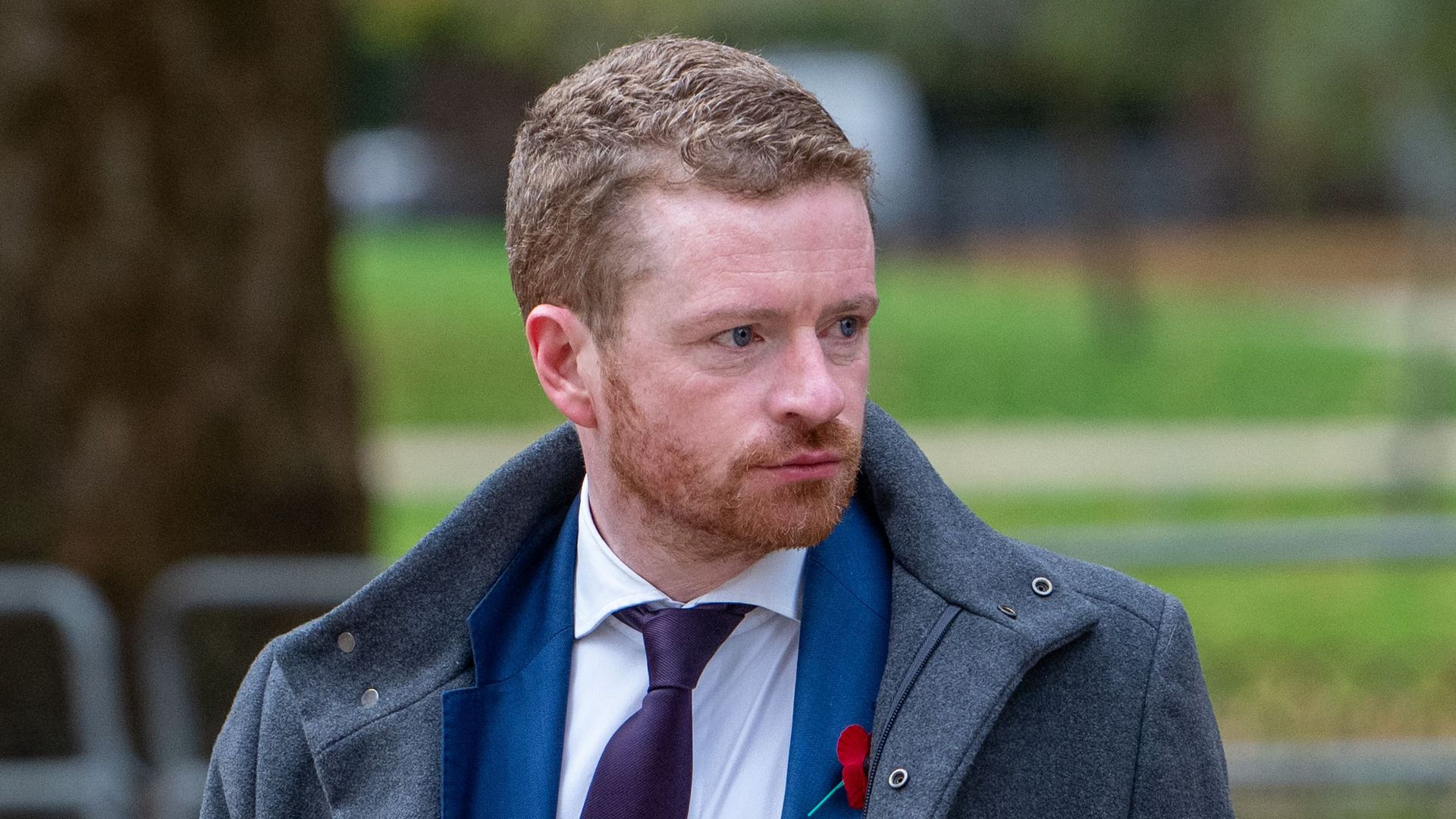
The British political machine is currently grinding against a friction point it hasn't seen in years. At the center of this storm is Morgan McSweeney, the Prime Minister’s chief of staff, and a stolen mobile phone that has become the most scrutinized piece of hardware in Westminster. While the initial reports framed this as a simple case of street crime, the narrative has shifted into a high-stakes debate over national security, government transparency, and the increasingly blurred lines between private data and public duty. Kemi Badenoch, the Leader of the Opposition, hasn't just fueled the fire; she has poured a gallon of high-octane skepticism onto the government’s version of events, labeling the timeline and the official explanation as "extremely fishy."
This isn't just about a lost handset. It is about the integrity of the communications held within a device belonging to the man who effectively runs Downing Street. If the phone was compromised, the breach goes far beyond personal photos or private messages. We are talking about the strategic architectural plans of the current administration.
The Timeline That Does Not Add Up
To understand why this has moved from a police matter to a constitutional headache, one has to look at the gaps in the story. The official line suggests a standard mugging or theft. However, the delay in reporting certain details and the shifting descriptions of what was actually on the device have created a vacuum. In politics, a vacuum is always filled by suspicion.
Badenoch’s intervention was surgical. By calling the situation "fishy," she bypassed the usual accusations of incompetence and moved straight to a more damaging implication: that the public isn't being told the full truth. This isn't a conspiracy theory born in the dark corners of the internet. It is a calculated critique of how the government handles internal crises. When a high-ranking official loses a device that likely contains encrypted communications, sensitive contact lists, and potentially classified briefings, the "unfortunate victim" narrative wears thin very quickly.
Security experts note that a targeted theft looks remarkably similar to a random one. A professional actor doesn't need to look like a spy; they just need to look like a thief. If McSweeney was followed, or if the device was specifically sought after, the implications for UK intelligence are severe. The primary concern is not just the physical phone but the "credentials" it holds—access to secure servers, two-factor authentication for government portals, and the very architecture of the Prime Minister's inner circle.
The Problem With Ministerial Silence
Silence from the Cabinet on this matter has been deafening. Usually, a government would rush to provide a clear, indisputable timeline to kill off a story. Instead, we have seen a series of vague statements and "no comment" responses that only embolden the opposition. Badenoch isn't just speaking for her party here; she is tapping into a wider public unease about how the new administration manages its own internal security.
Is it a conspiracy to ask why a chief of staff’s phone was stolen in such a convenient or perhaps inconvenient manner? Not necessarily. It is a fundamental question of accountability. If the device was encrypted to standard government levels, the breach should theoretically be minimal. But "theoretically" is a word that does a lot of heavy lifting in the world of cybersecurity.
We have seen this play out before. When private phones are used for public business, the lines of accountability are erased. The use of apps like WhatsApp or Signal for government business—often referred to as "BYOD" or Bring Your Own Device—creates a massive vulnerability. If McSweeney was using his personal device for official communications, the theft isn't just a personal loss. It is a data breach of the highest order.
Political Positioning and the "Fishy" Narrative
Badenoch’s strategy is clear: she wants to paint the current government as secretive and perhaps even deceptive. By highlighting the "fishy" nature of the McSweeney story, she is forcing the Prime Minister into a defensive crouch. This is a classic move in political theater. You don't need to prove a crime; you just need to prove that the story being told doesn't quite make sense to a reasonable observer.
The term "conspiracy" is often used to shut down legitimate inquiry. In this case, the government has used it as a shield to deflect questions about the timeline. But the questions aren't going away. Why was the phone stolen? Who was in possession of it after the fact? Was it a random crime or a targeted operation? Until these questions are answered with hard facts rather than vague dismissals, the "fishy" label will stick.
The public has a right to know if their leaders are following basic security protocols. If a chief of staff is walking the streets with a device that could compromise national security, that is a matter of public interest. The government’s refusal to provide clarity only adds weight to the argument that there is more to this story than they are willing to admit.
The Role of Digital Sovereignty
Beyond the immediate political fallout, there is a deeper issue of how government officials handle data in the modern era. We are living in a time where a single device can hold the keys to a nation’s strategic planning. The McSweeney incident highlights the fragility of our current systems. If a single theft can cause this much political upheaval, the system itself is the problem.
Digital sovereignty isn't just a buzzword. It is the ability of a state to protect its data from both foreign and domestic threats. When a high-level official’s phone is taken, that sovereignty is challenged. The "fishy" nature of the event suggests that the government might not have been as prepared as it should have been.
One has to wonder if there were backups, if the remote wipe worked, and if the data was truly encrypted. The lack of information on these technical aspects is what fuels the skepticism. In the absence of technical transparency, political speculation thrives.
Breaking the Cycle of Secrecy
The only way for the government to move past this is to provide a full, unvarnished account of what happened. This means being honest about what was on the phone, what risks were identified, and what steps were taken to mitigate those risks. Trying to brush this off as a minor incident or a "conspiracy" is a tactical error that will only prolong the crisis.
Badenoch has successfully moved the goalposts. She is no longer just complaining about policy; she is questioning the integrity of the administration’s most senior figures. This is a much more dangerous territory for the government. If they can't handle a stolen phone with transparency, how can they be trusted to handle the much larger crises that inevitably come with governing?
The "McSweeney affair" is a case study in how not to handle a security breach. It shows that in the modern political arena, the story isn't the event itself, but the way the event is managed—or mismanaged. The "fishy" smell isn't coming from the theft; it's coming from the cover-up, or at least the perception of one.
In an era of instant communication and relentless scrutiny, there is no such thing as a "private" theft for a public figure of this stature. Every action, every delay, and every vague statement is analyzed and weaponized. The government needs to realize that the old way of handling these things—quietly, behind closed doors—is no longer an option.
The next step is for the Intelligence and Security Committee to take a formal look at the protocols surrounding the mobile devices of senior government staff. If the current rules are so lax that a single theft can create a national news cycle and a potential security vacuum, then the rules need to be rewritten immediately. The focus should be on mandatory government-issued, high-security hardware with zero exceptions for personal use for official business. Until that happens, every lost or stolen phone will be another "fishy" story waiting to happen.