The strategic partnership between France and India functions as a high-yield geopolitical hedge against the volatility of unipolar and bipolar global orders. Unlike alliances predicated on shared linguistic heritage or immediate proximity, the Paris-Delhi axis is built on a specific structural alignment of "Strategic Autonomy." For India, France represents a non-interfering source of high-end sovereign technology. For France, India serves as the indispensable anchor for its Indo-Pacific strategy, ensuring that the European power remains a global stakeholder rather than a regional observer.
The Triad of Strategic Interdependence
The durability of this relationship is not a product of sentiment but of a three-dimensional framework of shared interests: defense sovereignty, nuclear energy stability, and maritime security. Each pillar operates on a logic of "no-strings-attached" cooperation, which distinguishes France from other Western partners like the United States or the United Kingdom.
1. The Defense Sovereignty Protocol
France has historically positioned itself as a "universalist" provider of military hardware. This means the transfer of technology is rarely bundled with the domestic political caveats that often accompany American or German defense exports. The acquisition of Rafale fighter jets and Scorpène-class submarines is not merely a procurement exercise; it is an integration into a French ecosystem that prioritizes the "Make in India" initiative.
The logic here is a cost-benefit analysis of long-term maintenance and upgrade cycles. By opting for French platforms, India avoids the risk of "sanction-induced paralysis." During the 1998 nuclear tests, while other Western nations withdrew support, France maintained its lines of communication. This historical data point creates a "Trust Premium" that lowers the perceived risk for Indian planners when committing to multi-decade procurement contracts.
2. The Civil Nuclear Energy Matrix
Energy security remains the primary bottleneck for India's industrial scaling. The Jaitapur Nuclear Power Project, despite its regulatory and land-acquisition delays, represents the world’s largest planned nuclear power plant. The partnership with EDF (Électricité de France) is designed to deploy six EPR (Evolutionary Power Reactors).
The mathematical reality of India's carbon-neutrality goals by 2070 requires a base-load power source that intermittent renewables like solar and wind cannot yet provide. Nuclear energy provides a density of $6.0 \times 10^7$ MJ/kg compared to coal's $2.4 \times 10^1$ MJ/kg. The France-India nuclear cooperation is the only viable path to achieving this energy density at scale, bypassing the limitations of the Nuclear Suppliers Group (NSG) through bilateral perseverance.
3. Indo-Pacific Maritime Architecture
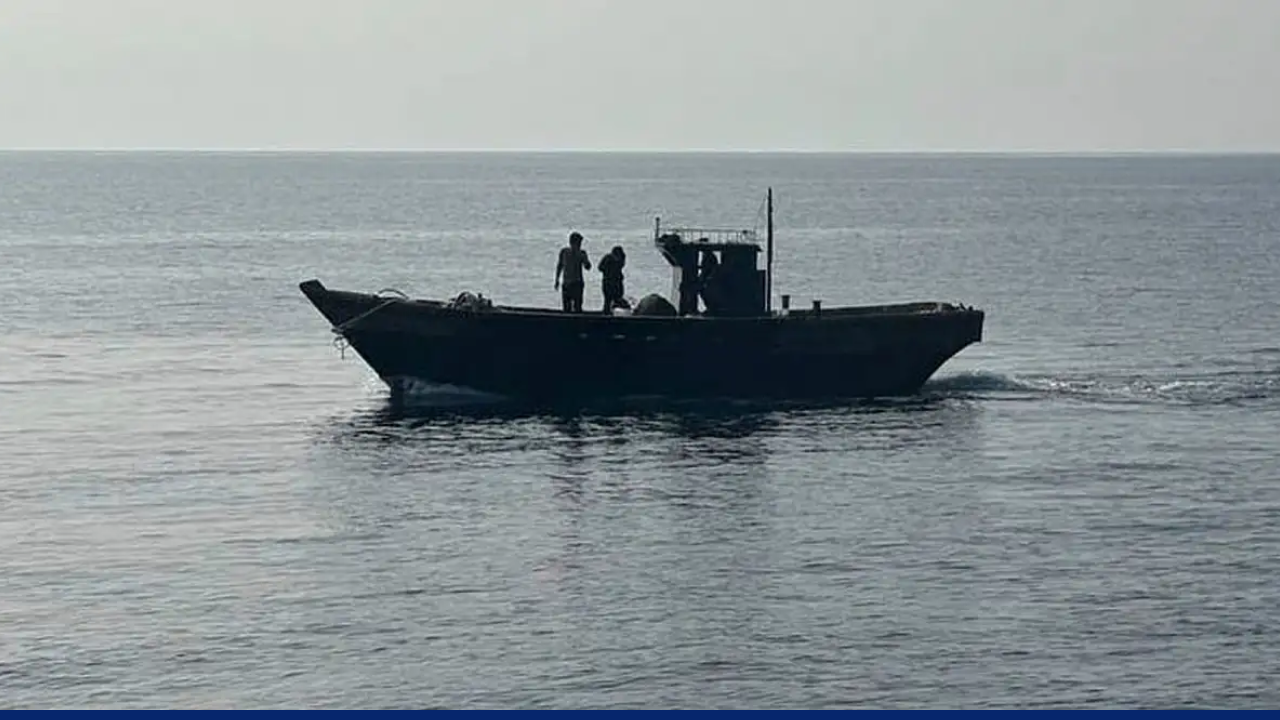
France is a resident power in the Indian Ocean, possessing territories like Réunion and Mayotte. This gives France an Exclusive Economic Zone (EEZ) that overlaps with India’s sphere of influence. The logic of their maritime cooperation is built on "Information Fusion." By sharing real-time tracking of commercial and military vessels, both nations reduce the "dark ship" phenomenon in the Indian Ocean Region (IOR).
Quantifying the Strategic Autonomy Dividend
Strategic autonomy is often dismissed as a vague diplomatic trope, but it can be quantified through the lens of "Diversification of Dependency." India's goal is to ensure that no single external power can exercise a veto over its national security decisions.
- Supplier Concentration Risk: By maintaining a significant French share in its defense basket (approximately 25-30% of recent major acquisitions), India reduces its reliance on Russian legacy systems and American conditional sales.
- Technology Transfer Velocity: France’s willingness to co-develop engines for the Advanced Medium Combat Aircraft (AMCA) represents a higher velocity of technology transfer than the restricted "Black Box" approaches of other NATO members.
The Logic of the Grand Cross of the Legion of Honour
The recent conferment of the Grand Cross of the Legion of Honour upon Indian Prime Minister Narendra Modi, as noted by Ambassador Jawed Ashraf, serves as a high-level signaling mechanism. In diplomatic theory, such honors function as "Commitment Devices." They signal to domestic constituencies and third-party global actors that the relationship has moved beyond transactional bureaucracy into the realm of institutionalized permanence.
The signal sent to the "Global South" is particularly potent. France utilizes its relationship with India to demonstrate a "Third Way" of diplomacy—one that does not force nations to choose between Washington and Beijing. This creates a multi-polar stabilizing effect.
Structural Constraints and Friction Points
High-level alignment does not eliminate ground-level friction. Several bottlenecks remain that could dampen the ROI of this partnership:
- Liability Frameworks in Nuclear Projects: The Civil Liability for Nuclear Damage Act in India remains a point of contention for French insurers. The cost of risk must be factored into the per-unit price of electricity, which currently threatens the commercial viability of the Jaitapur project.
- Defense Industrial Base (DIB) Integration: While "Make in India" is a political priority, the actual absorption capacity of Indian private sector firms for high-end aerospace manufacturing is still maturing. There is a "Skills Gap" that requires French OEMs (Original Equipment Manufacturers) to invest heavily in vocational training on Indian soil.
- Bureaucratic Latency: The procurement cycle for major defense platforms in India typically spans 7-10 years. In an era of rapid technological obsolescence—particularly in drone warfare and AI-driven cyber defense—this latency acts as a "hidden tax" on the partnership.
The Aerospace and Space Convergence
The partnership between CNES (Centre National d’Études Spatiales) and ISRO (Indian Space Research Organisation) is perhaps the most underrated component of the axis. The cooperation spans from climate monitoring satellites to the Gaganyaan human spaceflight mission.
The economic logic of space cooperation is driven by "Payload Optimization." By sharing launch capabilities and sensor data, both nations reduce the capital expenditure (CapEx) required for independent constellation management. As the space economy shifts toward Low Earth Orbit (LEO) commercialization, the France-India joint ventures in satellite manufacturing are positioned to capture a significant share of the emerging $1 trillion global space market.
Strategic Play: The Engine Development Mandate
The most critical upcoming move is the joint development of a 110kN engine for India’s future fighter jets. This is the ultimate test of the partnership. Historically, engine technology has been the "holy grail" of aerospace engineering, guarded with extreme jealousy by the US, UK, and Russia.
If Safran (France) and DRDO (India) successfully co-design and manufacture this engine, it will shift India from a "buyer" to a "co-owner" of foundational IP. This would effectively decouple India’s air superiority from foreign export control regimes forever.
The strategic recommendation for Indian planners is to prioritize this engine co-development over any off-the-shelf purchase of additional aircraft. The IP ownership provides a "Force Multiplier" effect that outweighs the immediate tactical advantage of more airframes. France, in turn, secures a captive market and a reliable industrial partner for its own Next-Generation Fighter (NGF) programs under the SCAF (Système de Combat Aérien du Futur) umbrella.
Focus must remain on the synchronization of the Joint Strategic Vision for the Indian Ocean Region. This involves transitioning from mere "coordinated patrols" to a unified "Maritime Domain Awareness" (MDA) network. The goal is a digital twin of the Indian Ocean, where every vessel's signature is cataloged and shared. This infrastructure will serve as the primary deterrent against asymmetric threats and non-state actors in the world's most critical trade corridor.