The recent diplomatic exchange between Prime Minister Narendra Modi and Amir Sheikh Tamim bin Hamad Al Thani marks a critical shift in how India secures its industrial future. While the public narrative centers on a condemnation of strikes against Qatari energy infrastructure, the subtext is far more aggressive. New Delhi is no longer just a buyer in the global gas market. It is becoming a strategic guarantor of the supply chains that keep its economy breathing.
India relies on Qatar for nearly 40% of its total Liquefied Natural Gas (LNG) imports. This is not a casual business arrangement. It is a fundamental dependency that makes any disruption in the Persian Gulf a direct threat to Indian GDP. When drones or missiles target processing plants in the Gulf, the shockwaves do not just stay in the Middle East. They vibrate through the fertilizer plants in Uttar Pradesh and the power grids of Maharashtra. Modi’s verbal intervention is a signal to the world that India views Qatari infrastructure as an extension of its own national interest.
The High Stakes of the North Field Expansion
Qatar is currently in the middle of a massive capacity hike, aiming to boost its LNG output from 77 million tonnes per annum (mtpa) to 126 mtpa by 2027. India wants a massive slice of that new volume. The urgency behind the recent high-level talks stems from a simple reality: the window for locking in long-term, affordable energy contracts is closing.
Western nations, desperate to decouple from Russian gas, are flooding the Qatari market with capital and long-term commitments. Germany and France, once hesitant to sign 20-year deals due to green energy targets, have pivoted sharply toward pragmatism. India now finds itself in a bidding war with the Eurozone. By positioning itself as a security partner and a diplomatic shield for Doha, New Delhi is attempting to jump the queue.
This is about leverage. Qatar owns the gas, but India provides the guaranteed, decade-long demand that justifies the billions of dollars in infrastructure investment required to extract it. If those facilities are under fire, the entire economic logic of the North Field expansion begins to wobble.
Why Maritime Security is the New Diplomacy
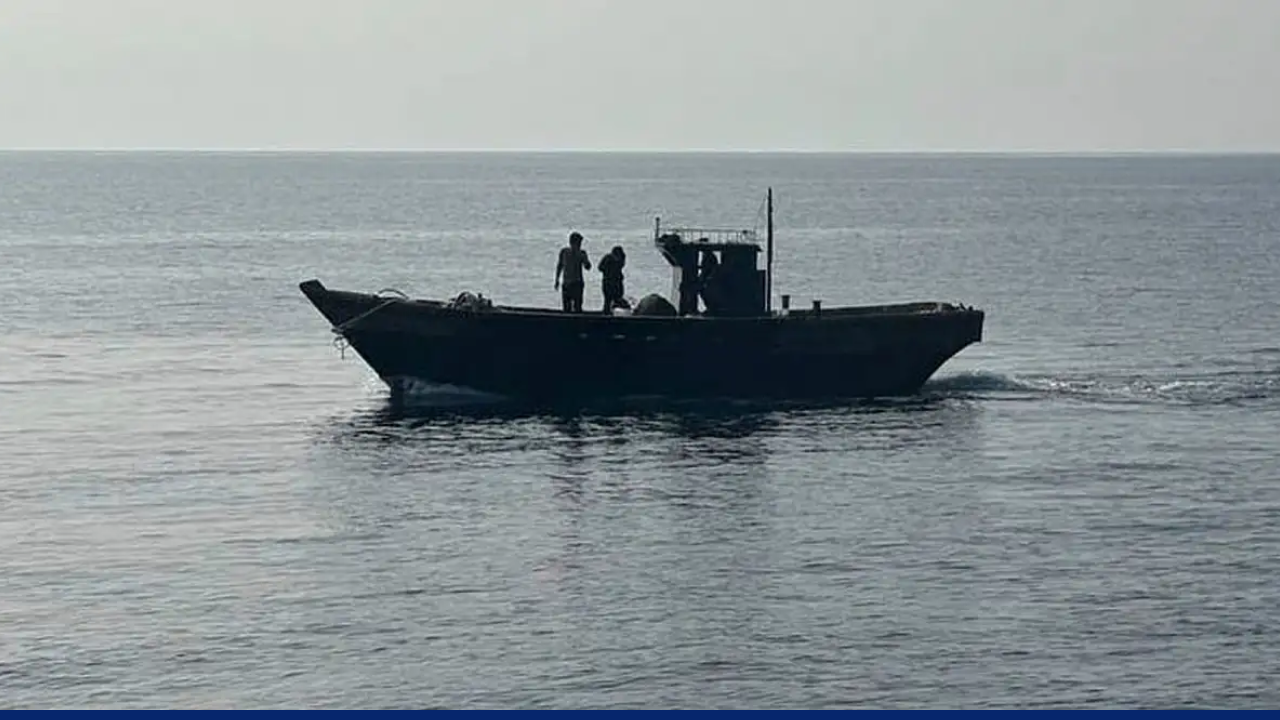
The condemnation of strikes on energy hubs is inseparable from the growing chaos in the Red Sea and the Gulf of Aden. Piracy was the old problem. State-sponsored or proxy-led kinetic strikes are the new one. India has responded by increasing its naval presence in the Arabian Sea, effectively acting as a secondary security layer for energy shipments heading east.
For years, India maintained a policy of non-interference in Gulf security matters, preferring to let the U.S. Fifth Fleet handle the heavy lifting. That era is over. The U.S. is increasingly focused on the Indo-Pacific and its internal energy self-sufficiency. India has realized that if it wants its gas to arrive on time, it must be prepared to protect the route.
The talks in Doha reflect a mutual understanding: India provides the market and the regional muscle, while Qatar provides the molecules. This creates a "security-for-supply" framework that is much more durable than a standard commercial contract.
The Pricing War and the 20-Year Bet
The financial core of the India-Qatar relationship was recently cemented by a $78 billion deal to extend LNG imports until 2048. This deal, signed by Petronet LNG, saved India an estimated $6 billion compared to current market rates. However, these savings are contingent on regional stability.
Energy markets are famously jittery. A single successful strike on a Qatari loading terminal can send spot prices up by 20% in an afternoon. For an economy like India’s, which is highly sensitive to fiscal deficits, such spikes are catastrophic. They force the government to increase subsidies or pass the costs to a population already struggling with inflation.
The Hidden Logistics of the Deal
- Vessel Scarcity: India is moving to build its own LNG carriers to reduce reliance on foreign shipping lines that flee at the first sign of conflict.
- Storage Buffers: Strategic gas reserves are being planned on the Indian coast to provide a 14-day cushion against Gulf disruptions.
- Regasification Capacity: India is doubling its terminal capacity to ensure that once the gas arrives, it can be injected into the national grid immediately.
Countering the Influence of Rival Buyers
China remains the largest looming shadow over the India-Qatar relationship. Beijing has been aggressive in securing "ultra-long" contracts, some spanning 27 years. The competition between the two Asian giants for Qatari resources is a zero-sum game in the short term. Qatar has a finite amount of gas it can export at any given time.
When Modi speaks out against the targeting of energy infrastructure, he is also speaking to the insurance markets. High-risk premiums for shipping in the Gulf make gas more expensive for everyone. By advocating for "infrastructure sanctity," India is trying to keep the operational costs of the energy trade from ballooning. It is a move designed to keep the "India Premium" as low as possible.
The Vulnerability of the Domestic Grid
The transition from coal to gas is a pillar of India's environmental policy. But this transition creates a new kind of vulnerability. A coal mine in Jharkhand cannot be turned off by a drone strike in the Middle East. A gas turbine in Gujarat can.
This reality has sparked a quiet debate within the Ministry of External Affairs. Is India becoming too dependent on a single geographic point of failure? The "all eggs in the Qatari basket" strategy is efficient, but it lacks the resilience of a diversified portfolio. While India is looking at the U.S., UAE, and Mozambique for gas, Qatar remains the cheapest and most logical partner due to its proximity.
Beyond the Rhetoric of Condemnation
Public statements about "condemning strikes" are often dismissed as diplomatic fluff. In this case, that would be a mistake. These words are a precursor to deeper intelligence sharing and potentially joint maritime exercises. India is signaling that it is ready to move beyond the role of a "passive customer."
The Amir of Qatar understands that India is his most reliable long-term customer. Unlike Europe, India’s demand for gas will not peak for decades. Unlike China, India does not have the same level of domestic production or massive pipeline access to Russia. This makes the partnership existential for both sides.
The next phase of this relationship will likely involve Indian investment in the upstream Qatari sectors. By owning the equity in the ground, India would move from being a buyer to a partner. This would further incentivize New Delhi to project power in the region to protect its assets.
The Geopolitical Cost of Energy Silence
Remaining silent during attacks on energy hubs is a luxury India can no longer afford. In the past, New Delhi could hide behind "strategic autonomy" to avoid taking sides in Middle Eastern conflicts. Today, the integration of global energy markets means that a strike on a Qatari pipe is a strike on an Indian factory.
The shift toward a more vocal, interventionist energy policy is a sign of a maturing power. It acknowledges that economic growth is not just about domestic policy; it is about the physical security of resources thousands of miles away. The talks between Modi and Al Thani were not just about friendship. They were a cold, calculated assessment of how to keep the lights on in a world that is becoming increasingly hostile to the flow of energy.
The real test will be how India reacts if a strike actually occurs. Statements provide a deterrent, but ships and systems provide security. The move toward a more "kinetic" energy diplomacy is already underway, and the Gulf is the primary theater where this new Indian doctrine will be tested. New Delhi is betting that by standing firmly with Doha, it can secure the fuel it needs to power its rise, regardless of the chaos brewing in the surrounding waters.
Investigate the feasibility of Indian naval escorts for LNG tankers traversing the Strait of Hormuz.