The air in Nuuk tastes of salt and ancient frost. It is a clean, biting sharpness that fills the lungs and reminds anyone standing on those towering granite cliffs that nature here does not negotiate. Down at the harbor, wooden fishing skiffs bob against the gray chop of the water, dwarfed by the sheer, terrifying majesty of the mountains rising straight out of the sea.
For centuries, the rhythm of life in Greenland was dictated by things humans could not control. The pack ice. The midnight sun. The sudden, violent gales that sweep down from the inland ice sheet without a whisper of warning. People lived here by respecting the margin between survival and arrogance.
Then came the drill bits.
Far away from the fjords, in carpeted corporate boardrooms where the temperature never drops below comfortable, men in sharp suits looked at satellite maps of a warming planet and saw something entirely different. They did not see a fragile ecosystem supporting ancient hunting traditions. They saw a blank canvas. An untapped vault of black liquid gold waiting beneath the seabed, unlocked by a changing climate.
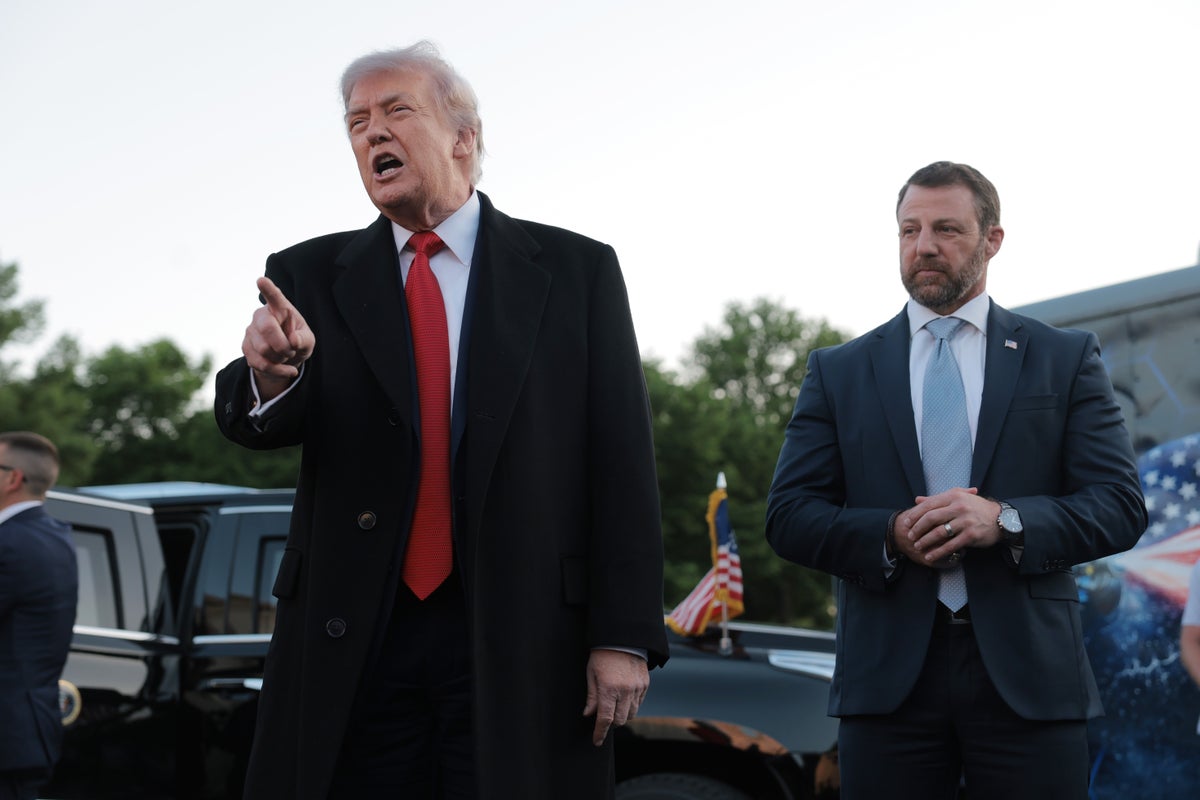
Among them was a corporate entity tethered to the ambitions of Donald Trump, a network of political heavyweights and speculative oil investors who believed that the melting Arctic was not a tragedy to mourn, but an open-for-business sign. They set their sights on Greenland's pristine waters, drafting leases, calculating margins, and whispering about billion-dollar havens of crude oil just waiting to be sucked into the global machine.
They forgot to ask the people who actually live under the shadow of the ice.
The Sharp Rebuke That Echoed Across the Tundra
When the news of the Trump-linked oil ambitions trickled north, it did not hit Nuuk as a distant political headline. It hit like a tremor.
The response from Greenland's government was not diplomatic whispering. It was a cold, hard slap. A sharp, unyielding rebuke that severed any illusions these speculators held about the island being a passive frontier ripe for exploitation. The message was simple. Greenland is not for sale, and its seabed is not an extraction zone for foreign political cronies looking to cash in on a thawing world.
To understand why this rebuke mattered, you have to understand the heavy weight of history hanging over the Arctic. For generations, Greenlanders watched foreign powers—Danish administrators, American military planners, distant corporations—treat their homeland as a strategic chessboard. Resources were extracted, promises were made, and the local population was left to manage the social and environmental fallout.
The current political leadership in Nuuk drew a hard line in the snow. They shifted their official policy away from oil exploration entirely, prioritizing a sustainable future built on fisheries, renewable ambitions, and, most importantly, self-determination. When a company tied to powerful American political figures tried to muscle its way into their maritime backyard, they found themselves staring down a government willing to protect its sovereignty with absolute defiance.
The Invisible Stakes Beneath the Surface
Imagine standing on the deck of a trawler thirty miles off the coast of Disko Bay. The water is ink-black and glassy. Beneath you lies a fragile, complex marine ecosystem that has thrived in near-darkness for millennia.
Now, imagine a blowout preventer failing.
The oil men talk about barrels and yields with clinical detachment. They use words like offshore potential and economic diversification. But beneath the antiseptic corporate presentations lies a terrifying reality. An oil spill in the Arctic is not like an oil spill in the Gulf of Mexico. There are no warm currents to help break down the sludge. There is no rapid response infrastructure when the sea is choked with multi-year pack ice and blizzards reduce visibility to zero. A single major leak could poison the fish stocks that sustain the entire domestic economy, wiping out a way of life that has endured for a thousand years in the span of a single afternoon.
This is the invisible stake. It is not just about a government saying no to a bad contract. It is about a community drawing a boundary between survival and extinction.
When the Trump-linked company pushed its agenda, it wasn't just testing Greenlandic regulatory patience. It was engaging in a dangerous game of resource colonialism, assuming that a small population of fifty-six thousand people would fold under the pressure of American political muscle and financial allure.
They miscalculated. They failed to realize that dignity cannot be bought with prospective royalties.
The Human Cost of the Great Thaw
Let us introduce a hypothetical fisherman named Minik, whose daily life mirrors the reality of modern Greenland. Minik wakes up before dawn, pulling on thick sealskin boots that his grandmother stitched by hand. His grandfather hunted polar bear on sea ice that now barely forms before January and melts by May.
Minik sits in his kitchen, smelling the rich, dark coffee brewing on the stove, listening to the radio broadcast the latest political standoff. He hears the name of the American political machine echoing through the small plastic speaker. He hears about drill ships, seismic testing, and millions of barrels of crude.
He looks out the window at the harbor. He thinks about his son, who wants to be a marine biologist, studying the narwhal populations that are already migrating earlier and earlier as the water warms.
Minik does not care about the stock market fluctuations in New York. He cares whether his son will inherit a sea full of life or a dead zone choked by petrochemical residue to fuel cars thousands of miles away.
When the Greenlandic government issued its sharp rebuke, Minik felt a rare surge of vindication. For once, the giants of the world were being told to step back. For once, the people who actually bear the consequences of climate change and industrial greed were standing up and slamming the door shut.
The Clash of Two Futures
We are living through a strange, breathless pivot in human history. On one side are the relics of the twentieth-century extraction economy—men who view the earth as a vending machine to be shaken until the last coins drop. They operate on the assumption that every crisis, including the literal melting of the polar ice caps, is merely a new business opportunity.
On the other side are communities like Greenland, standing on the front lines of a changing world, forced to become accidental philosophers of survival. They are the ones watching the glaciers calve into the sea with thunderous, tragic roars. They are the ones feeling the temperature shifts in the air.
The rebuke issued to the Trump-linked oil outfit was more than a bureaucratic rejection. It was a philosophical declaration. It declared that the age of unbridled Arctic plunder is meeting a wall of fierce, indigenous resistance.
The oil men will look elsewhere. They will scan other desolate coastlines, searching for weaker governments, poorer populations, or leaders more susceptible to the hypnotic song of foreign cash. They will pack up their seismic maps and move on to the next fragile frontier.
But the ice in Greenland will keep melting. The wind will still howl off the inland plateau. And the people of Nuuk will remain on their granite cliffs, watching the horizon, guarding a home they refused to surrender to men who only saw value in what they could tear out of the dark, freezing earth.