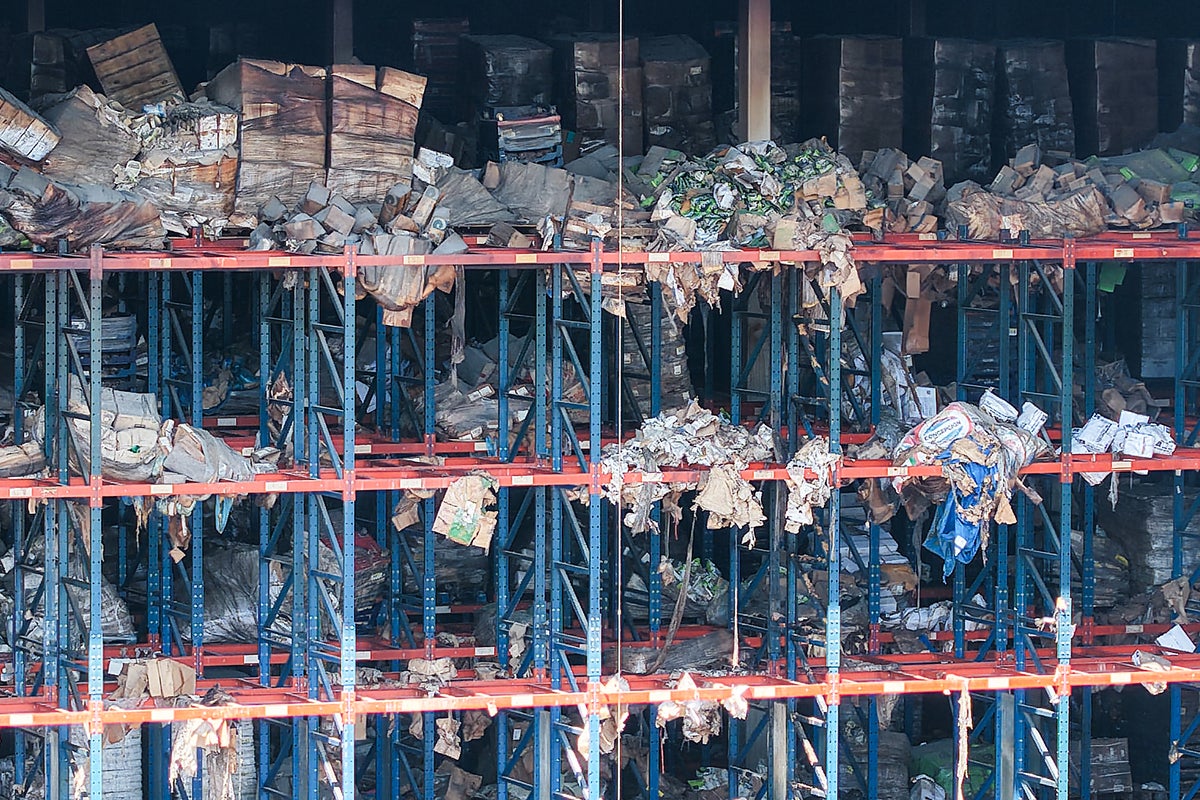
The smell hits you blocks away. It is an aggressive, heavy odor that clings to the back of your throat, a dense cocktail of decaying animal proteins, fermented produce, and trapped methane baking under the relentless Southern California sun. Residents in the affected Los Angeles neighborhoods do not open their windows anymore. They tape the seams, buy industrial HEPA filters, and pray for an offshore breeze that rarely arrives.
Los Angeles is drowning in organic waste, and the rot is exposing a systemic municipal failure that goes far beyond a single rotting pile of garbage.
This city produces millions of tons of refuse annually. For decades, the logistical strategy relied on a simple out-of-sight, out-of-mind equation. Haul the trash to sprawling landfills in the desert or local facilities, compact it, and move on. That equation broke down. California implemented aggressive environmental mandates aimed at diverting organic material from landfills to curb methane emissions. Senate Bill 1383 forced commercial kitchens, grocery stores, and municipalities to separate food scraps from general refuse.
The mandate was environmentally sound. The execution was an operational disaster.
The Logistical Black Hole of Organic Diversion
Municipal infrastructure was never designed to process this volume of wet waste at scale. When organic material is separated from dry trash, it loses the structural support and aeration that mixed garbage provides. It compacts into dense, anaerobic sludge. Without immediate processing or advanced composting technology, this sludge begins to ferment within hours.
The processing facilities capable of handling commercial organic waste are few and far between. Trucks loaded with rotting food face hours of transit delays, bottlenecking at over-capacity anaerobic digesters and open-air composting sites that are ill-equipped to manage the sheer tonnage flowing in from the metropolitan core.
"We built a mandate without building the factory floor to support it," explains a veteran sanitation engineer who spoke on condition of anonymity. "You cannot legislate biological reality. If you tell a city to stop burying food, you have to give them somewhere viable to put it before it liquefies in the truck."
The backlog creates a domino effect. Private haulers report waiting days to offload spoiled inventory. Transfer stations become impromptu, unauthorized holding zones. Piles grow larger than permitted thresholds. Fire hazards multiply because decomposing organic matter generates intense internal heat through microbial activity. Spontaneous combustion in massive waste piles is no longer a theoretical risk. It is a live hazard managed by local fire departments on a recurring basis.
Where the Money Goes
Follow the municipal budget, and you find a stark disconnect between public relations campaigns and operational funding. Billions of dollars are earmarked for high-level environmental targets, yet the boots-on-the-ground mechanics of waste management remain underfunded and reactive.
Cities rely heavily on private contractors to bridge the gap. These private haulers operate on razor-thin margins dictated by municipal bidding wars. When regulations tighten, corners are cut. Maintenance schedules on specialized sealed transport vehicles get delayed. Fleet sizes remain static while waste volume surges. The worker on the back of the truck bears the brunt of this friction, exposed to biological hazards without adequate compensation or modern protective gear.
Neighborhoods bearing the physical burden of this overflow are rarely affluent. Industrial zones, lower-income residential pockets, and communities adjacent to major transit corridors absorb the secondary impact. The geography of municipal neglect has a long, predictable history in Los Angeles. If a massive, foul-smelling mountain of refuse manifested in an upscale hillside enclave, the cleanup crews would mobilize within hours. In the industrial east side, it sits for weeks while bureaucratic agencies pass the jurisdiction hot potato.
The Technological Mirage
Silicon Valley pitches apps and smart bins as the panacea for urban sanitation. Venture-backed startups promise real-time sensor tracking and route optimization algorithms that will somehow dissolve the garbage crisis through sheer digital efficiency.
Algorithms do not break down cellulose. Software cannot accelerate the biological timeline of anaerobic digestion.
The fundamental bottleneck is physical. Los Angeles needs concrete, steel, and biological processing plants located strategically across the county to process wet waste locally. Hauling rotting food hundreds of miles across desert highways is economically unsustainable and environmentally counterproductive. Every diesel truck burning fuel to move liquid garbage across state lines offsets the carbon savings the original legislation sought to achieve.
Advanced composting technology exists. In-vessel composting systems can process organic waste rapidly, neutralizing odors and capturing methane for renewable energy production within weeks instead of months. These systems require heavy upfront capital investment, complex zoning approvals, and long-term community planning—three things modern municipal governance routinely fails to deliver.
The Regulatory Trap
State regulations demand perfection while local agencies struggle with basic competence. Businesses face steep fines if they fail to separate organic waste from general refuse. Yet, when those same businesses comply, they find the collection infrastructure unreliable or prohibitively expensive.
This creates a perverse incentive structure. Small businesses, already squeezed by inflation and high commercial rent, look at the cost of compliant organic waste disposal and seek workarounds. Some resort to illegal dumping in commercial dumpsters under cover of darkness. Others mix organic waste back into general trash bins, risking fines to avoid operational gridlock. The enforcement mechanism relies on punishment rather than enablement, treating a logistical failure as a moral failing on the part of individual business owners.
Meanwhile, the mountain of rotting material continues to grow, feeding vector populations of rats, flies, and scavengers that treat these improvised dump sites as urban sanctuaries. Public health departments issue warnings, but warnings do not disinfect a neighborhood or clear the air.
Unvarnished Realities
There is no clean pivot here. No elegant technological breakthrough will solve this crisis by next quarter. The accumulated decades of deferred infrastructure investment cannot be wished away by political speeches or updated municipal codes.
Fixing the stench over Los Angeles requires an unglamorous, capital-intensive rebuilding of the city's metabolic plumbing. It demands decentralized processing facilities, realistic timelines for industrial adaptation, and a willingness to confront the uncomfortable truth that environmental policies without operational infrastructure are just expensive public relations exercises.
The trucks will roll out tomorrow morning. The heat will rise. The organic sludge will continue to ferment in the belly of transit containers idling on congested freeways. Until city hall stops treating waste management as an administrative afterthought and starts treating it as the core public health utility it is, the residents will keep their windows shut, breathing the physical cost of municipal failure.