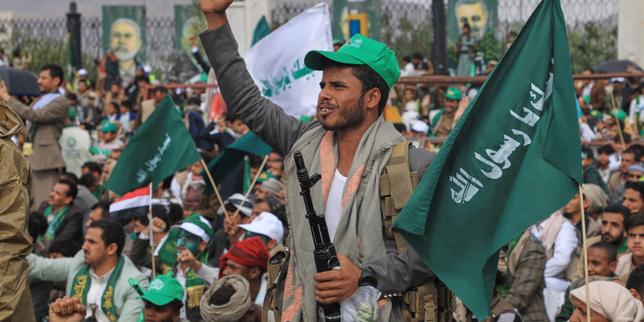
The fragile calm that held the Arabian Peninsula together for four years has officially shattered. More than 180 combatants have died within days across the rugged terrain of southwestern Yemen, marking the bloodiest escalation since the 2022 UN-brokered truce.
At the center of this sudden cataclysm is a high-stakes Houthi offensive designed to seize control of the Bab al-Mandab strait, a maritime chokepoint through which a substantial portion of global commerce flows. While conventional headlines reduce this to regional friction, the reality on the ground points toward an unmitigated descent into total war.
Military planners and risk analysts have watched the architecture of the 2022 ceasefire erode for months. When the truce collapsed following a diplomatic provocation in Sanaa, the transition from cold standoff to hot confrontation happened with alarming speed.
The Anatomy of a Chokepoint Strategy
To understand why bodies are piling up along the western coast near Mokha and Taiz, one must look at a map. The Bab al-Mandab strait is barely twenty-six kilometers wide at its narrowest point. It is the mandatory bottleneck connecting the Indian Ocean to the Red Sea, and by extension, to the Suez Canal.
The Houthi movement, backed by Tehran, recognizes that physical dominance over the adjacent high ground translates directly into geopolitical leverage. By pushing ground forces up the rugged ridgelines overlooking the coastal plain, insurgent commanders are seeking to replicate the anti-shipping dominance they have practiced against international cargo fleets since late 2023.
Control of these elevated positions means direct line-of-sight targeting for anti-ship missiles and heavy artillery. Cargo vessels navigating the strait would no longer just face asymmetric drone threats from afar; they would operate under direct terrestrial gunpoint.
The internationally recognized government, operating out of its temporary base in Aden, understands the existential nature of this threat. Backed by renewed military coordination and urgent logistical supply lines from Saudi Arabia, government units including the Giants Brigades have initiated desperate counter-offensives. Air power has returned to the skies over the Tihama plain, with dozens of sorties hammering rebel advancement corridors.
Yet air strikes alone cannot dislodge an entrenched insurgent force that has spent years hardening its defensive architecture.
The Broader Regional Trap
This localized slaughter is not happening in a vacuum. It is the direct downstream consequence of the broader Middle Eastern conflagration that ignited following the outbreak of the Gaza war.
As regional shipping lanes faced persistent disruptions, and as alternative energy transit routes faced blockades, the Houthi leadership calculated that escalation on multiple fronts would cement their status as an indispensable regional power broker. They miscalculated the breaking point of the local equilibrium.
The escalation has triggered a maritime blockade dynamic targeting Saudi maritime assets, turning the southern waters into a zone of active engagement. Riyadh, having invested heavily in extricating itself from the Yemeni quagmire through years of quiet diplomacy, now faces the nightmare scenario of its southern neighbor fracturing completely.
President Rashad Al Alimi of Yemen's Presidential Leadership Council has warned that the rebel push toward the strait will transform into a grinding war of attrition. That attrition is already consuming a generation of young fighters on both sides. Medical facilities in Taiz and Aden are overwhelmed with trauma cases, while hundreds of civilian families are fleeing the crossfire, adding to a displaced population that has borne the brunt of a decade of misery.
Beyond the Stalemate
The international community's response has been characterized by familiar expressions of deep concern coupled with an absence of effective enforcement mechanisms. Diplomatic channels that previously froze the conflict in place are currently paralyzed. The insurgents have demonstrated that they are willing to absorb heavy tactical losses in exchange for strategic positioning that impacts global supply chains.
As government reinforcements continue to roll north from Aden and heavy artillery duels echo across the western mountains, the prospect of a negotiated settlement recedes into the distance. The fighting shows no sign of abating, cementing a reality where local blood spilled on the shores of the Red Sea dictates the economic anxiety of markets continents away.
The war is back, and its architects are digging in for the long term.
More than 120 killed in Yemen's worst clashes in years: sources
This video provides comprehensive coverage of the recent escalation, detailing the heavy casualties and the strategic implications of the fighting near the Bab al-Mandab strait.