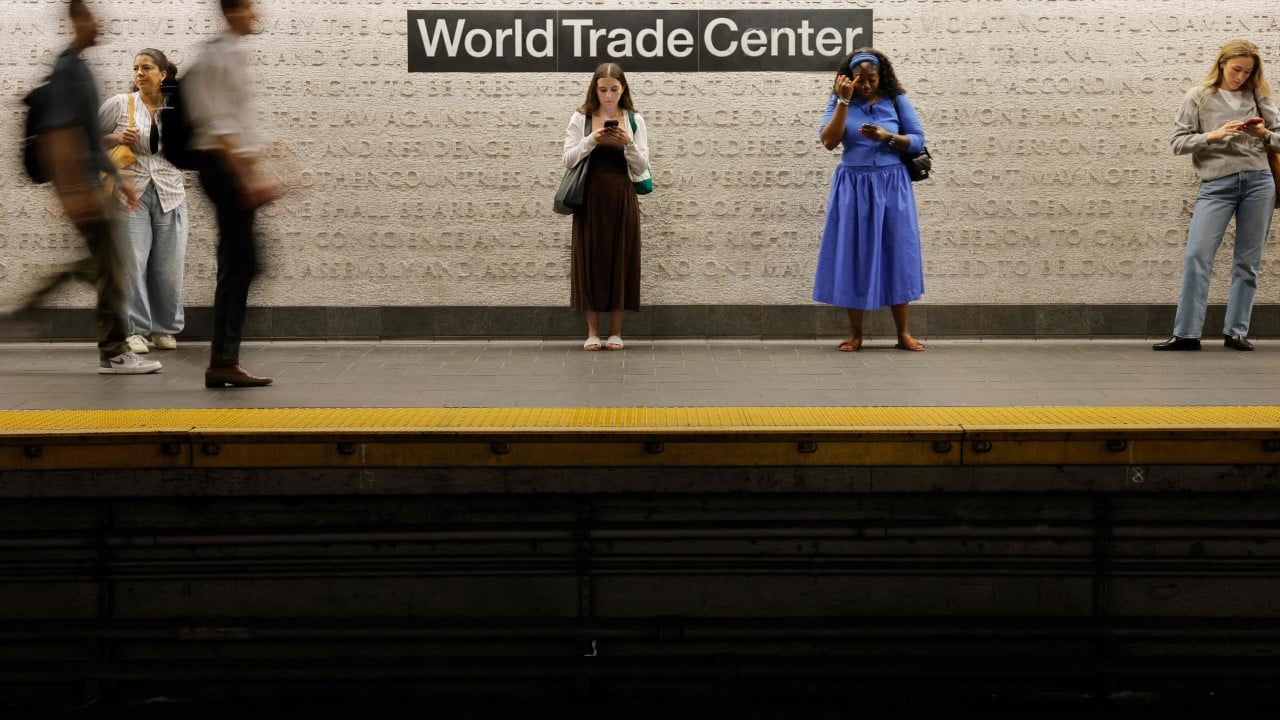
For decades, the public narrative surrounding New York City's underground transit system has focused on aggregate numbers. Officials step behind mahogany podiums to announce percentage drops in major felonies, pointing to headline figures that suggest the subterranean labyrinth is safer than it has been in years. Yet these broad strokes obscure a grim operational reality happening daily on platforms and stairwells across the five boroughs. Older New Yorkers are bearing a disproportionate physical and psychological toll from transit violence, caught in a systemic blind spot that conventional crime statistics routinely fail to capture.
When a 76-year-old man is violently shoved down a flight of concrete stairs at a Chelsea station, or a septuagenarian rider is knocked to the ground inside an East Side transit hub, the resulting trauma extends far beyond a single police blotter entry. These incidents represent an acute vulnerability that urban planners, transit authorities, and law enforcement agencies have been slow to address with targeted precision. To understand why older citizens find themselves increasingly in the crosshairs of transit aggression, one must examine the intersection of physical fragility, shifting criminal dynamics, and architectural design flaws that turn a routine morning commute into a high-stakes hazard. If you found value in this post, you should look at: this related article.
The Anatomy of Vulnerability Underground
Physical frailty is an obvious baseline, but it only explains part of the equation. The modern New York City subway environment rewards speed, situational awareness, and physical agility—traits that naturally diminish with age. Navigating a crowded platform requires rapid postural adjustments, quick reflexes, and the ability to absorb sudden physical bumps from a rushing crowd.
When an unprovoked shove or sudden assault occurs, the biological margin for error is razor-thin. For a healthy individual in their twenties, a sudden physical altercation might result in bruising or a sprained wrist. For a rider aged seventy or older, that exact same kinetic impact frequently translates to catastrophic hip fractures, traumatic brain injuries, or prolonged hospitalization. The medical consequences are steeper, recovery times are exponentially longer, and the long-term loss of independence is often permanent. For another angle on this development, refer to the latest coverage from Reuters.
Compounding this physical mismatch is a shift in the nature of transit crime itself. Historical policing models were largely built around intercepting instrumental crimes, such as pocket-picking, grand larceny, and robbery, where perpetrators sought monetary gain and actively avoided drawing attention. Over recent years, however, transit data reveals a distinct rise in non-instrumental violence—incidents driven by personal animus, erratic behavior, or unprovoked aggression rather than financial motives.
When an attack is entirely random and fueled by acute mental distress or sudden hostility, traditional deterrents lose their efficacy. A perpetrator looking for a quick wallet targets someone alert and mobile; a perpetrator driven by erratic impulse often targets the person who appears least likely to fight back. Older riders, moving deliberately and quietly through the system, fit that profile with tragic frequency.
Architectural and Operational Failures
The physical infrastructure of the underground system acts as an active multiplier of risk for aging passengers. Built largely in the late nineteenth and early twentieth centuries, the network was designed for industrial-age capacity, not an aging demographic.
Consider the distribution of vertical circulation. Many stations rely entirely on long flights of steep, unyielding staircases, with working elevators remaining a rare and unreliable commodity. Elevators are frequently out of service for maintenance, forcing riders who cannot safely manage stairs to make difficult choices. When an older commuter is funneled into narrow mezzanine corridors, crowded bottlenecks, or poorly lit exit stairs, their exposure to potential threat vectors increases exponentially.
Furthermore, the deployment of law enforcement and transit personnel has historically favored macro-level metrics over micro-level protection. Concentrating uniform patrols at turnstile banks to deter fare evasion addresses a fiscal priority for the Metropolitan Transportation Authority, but it does little to secure the deep platforms, long corridors, and moving trains where violent encounters actually unfold. A police officer stationed behind a token booth two levels up from a platform cannot prevent an abrupt, seconds-long assault on an isolated train car or a dimly lit stairwell.
Visibility and response times remain persistent hurdles. While the expansion of closed-circuit television cameras has improved retrospective investigations, real-time monitoring of every platform corner is virtually nonexistent. By the time emergency notifications are processed, officers dispatched, and trains intercepted, the assailant has usually melted back into the urban sprawl, leaving an older victim stranded on a blood-stained platform.
The Cost of Forced Isolation
The impact of this ongoing security gap ripples far beyond physical injuries. It triggers a profound, systemic withdrawal. For many older urban dwellers, the subway is not a matter of recreational travel; it is the absolute lifeline connecting them to specialized medical care, grocery stores, family networks, and community participation.
When fear takes root, mobility plummets. A string of high-profile attacks broadcast across local news channels creates an atmosphere of hyper-vigilance. Many seniors begin restricting their travel to tightly controlled windows, avoiding off-peak hours entirely, or abandoning public transit altogether in favor of unaffordable private car services. This forced confinement accelerates social isolation, which medical professionals recognize as a severe hazard to cognitive and physical health among older populations.
When public infrastructure ceases to feel safe for its most vulnerable inhabitants, the social contract binding the city together begins to fray. The issue is no longer merely a subset of transit crime statistics; it is a fundamental equity crisis. A mass transit system that cannot safely accommodate older riders fails its core democratic mission of serving the entire public equally, leaving a generation to navigate a subterranean gauntlet where every step carries an unacceptable weight of uncertainty.