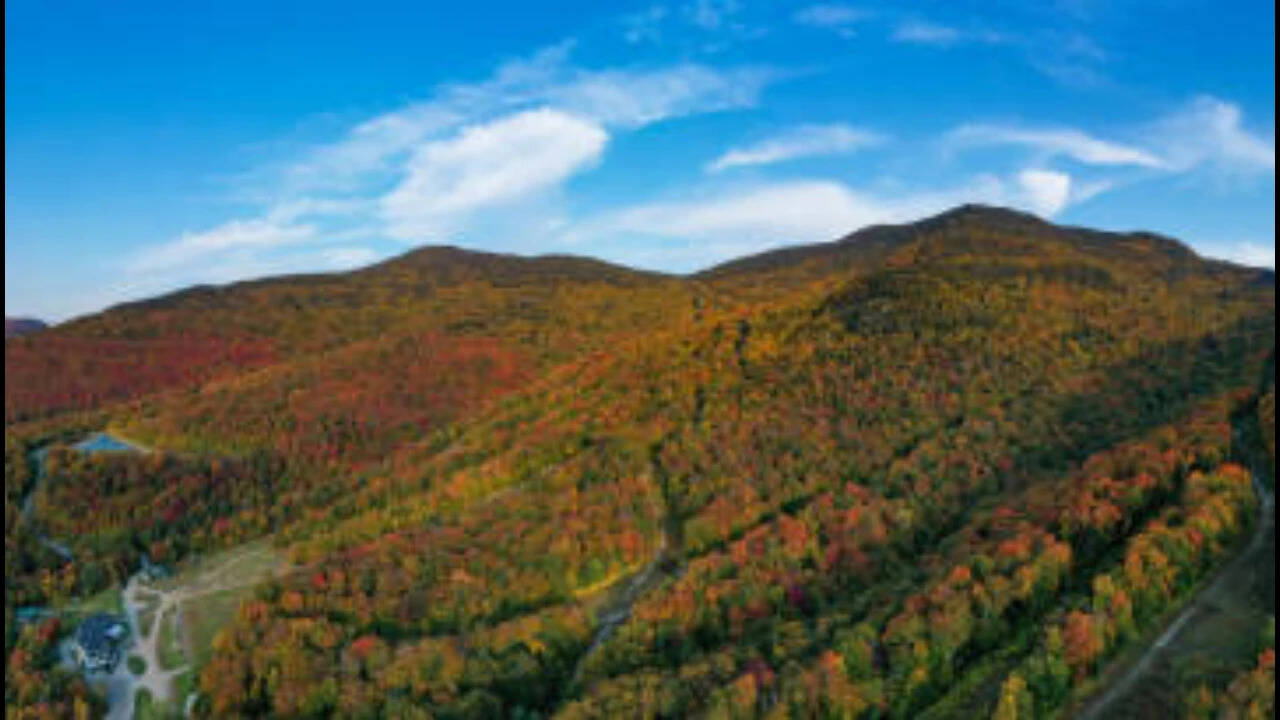
The map of Vermont conservation is littered with historical compromises. When the state purchased the core acreage of the Snake Mountain Wildlife Management Area back in 1959, officials accepted a fragmented arrangement that left timber rights in private hands. Sixty-seven years later, the Vermont Fish and Wildlife Department, alongside the Trust for Public Land, is correcting that architectural error. By securing 949 acres of commercial timber rights from The A. Johnson Co. and adding 256 newly acquired acres across Addison and Weybridge, the state is expanding the popular WMA by nearly twenty-five percent and reunifying public land ownership with forest management.
This is not merely a bureaucratic consolidation of deeds. It represents a fundamental shift in how fragile ecosystems are protected against mounting environmental pressures.
The Six Decade Severance
Splitting land ownership from timber rights is a neat legal trick that often creates long-term management friction. In 1959, the state acquired the surface rights to establish a public wildlife refuge and recreation destination, while the seller retained the legal authority to grow, manage, and harvest timber across the acreage.
For generations, this dual-track model required a delicate balancing act. While private forestry can be executed responsibly, disparate priorities frequently collide. Commercial harvesting roads, skid trails, and canopy alterations do not always align cleanly with the quiet incubation of sensitive wildlife populations or the preservation of ancient hydrological features.
The upcoming transaction, slated for completion by early 2027, erases that dividing line. State wildlife managers will no longer share jurisdiction with private commercial interests over the core forest. Every future forestry decision, habitat restoration project, and trail adjustment will flow through a single, unified lens focused entirely on ecological health and public access.
Ecological Stakes in the Champlain Valley
Snake Mountain rises sharply above the agricultural flatlands of the Champlain Valley, functioning as a forested island in a heavily fragmented region. That isolation makes its ecological integrity disproportionately important.
The WMA contains eight distinct wetland communities, anchored by a fragile glacial bog estimated to be roughly nine thousand five hundred years old. These ancient wetlands act as natural sponges, mitigating downstream flooding and stabilizing headwater streams that feed local watersheds.
Beyond the flora, the vertical cliffs and mature canopy of Snake Mountain serve as a high-value biological sanctuary. Peregrine falcons routinely nest along the rugged western precipices, utilizing the elevation for aerial defense and hunting. More critically, the mature hardwood stands provide vital summer roosting and foraging habitat for federally endangered Indiana bats and northern long-eared bats.
When a forest is managed under split authorities, protecting micro-habitats for endangered species requires constant negotiation. Unified public control eliminates those administrative barriers, allowing immediate implementation of canopy protections during sensitive breeding and roosting windows.
Financing the Conservation Package
Assembling the capital required to purchase nearly a thousand acres of commercial timber rights and a quarter-millennium-old parcel addition requires complex financial engineering. The funding coalition brings together federal, state, municipal, and private resources.
The cornerstone of the acquisition is a $1.35 million grant delivered through the United States Fish and Wildlife Service's Recovery Land Acquisition Grant program, drawn directly from the federal Land and Water Conservation Fund. This federal backing is anchored heavily by the presence of endangered bat habitat on the mountain.
Complementing the federal contribution, the Vermont Housing and Conservation Board has committed $417,500. Additional support is flowing from the Town of Weybridge Conservation Fund alongside targeted private donations managed by the Trust for Public Land.
The cooperation of the private timber holder deserves close examination. The A. Johnson Co. maintained commercial stewardship of the mountain for decades. Industry analysts note that their long-term management prevented the subdivision and residential conversion that fractured many other private woodlots in Addison County. Handing the rights back to the state marks a graceful exit from a decades-old industrial footprint, transitioning the landscape permanently into public trust.
The Broader Corridor Strategy
Public land acquisition rarely happens in a vacuum. The Snake Mountain expansion is part of a larger, deliberate effort to stitch together contiguous forest blocks across the Champlain Valley before development pressures close the window permanently.
An additional donation of eighty-eight adjoining acres from The Nature Conservancy is expected to fold into the protected boundary, further solidifying the perimeter. For the hikers, hunters, and birdwatchers who crowd the primary trailheads each autumn, the expanded boundary creates a buffer against the creeping sprawl of rural subdivisions.
Climate resilience depends heavily on unfragmented elevation gradients. As regional temperatures climb and precipitation patterns shift, lowland forests and shaded ravines serve as thermal refuges for species migrating northward or upward in elevation. Enlarging the Snake Mountain footprint by a quarter gives resident and migratory fauna the physical room they need to adapt.
The deal closes a chapter that started during the Eisenhower administration. It proves that public agencies can, given enough time and capital, correct historical compromises and stitch broken ecosystems back together.