The rapid escalation of hostilities between the United States, Israel, and Iran has forced a brutal domestic reckoning within the Gulf Cooperation Council (GCC). While missiles and drones dominate the headlines, a quieter, more invasive conflict is unfolding inside the borders of Kuwait, Bahrain, and the United Arab Emirates. Since March 2026, security services across the region have initiated a sweeping campaign of arrests targeting Shiite citizens and residents, labeling them "traitors" and "Iranian assets" in a high-stakes effort to decapitate potential sleeper cells before they can be activated.
This is not merely a localized police action. It is an existential purge. Intelligence officials in Riyadh and Abu Dhabi are operating under the grim assumption that Tehran has spent decades seeding the region with "stay-behind" operatives ready to sabotage critical infrastructure the moment the war enters a total phase. The result is a region-wide dragnet that threatens to shatter decades of fragile social cohesion in exchange for immediate tactical security. For an alternative look, consider: this related article.
The Architecture of the Crackdown
The current wave of detentions is more sophisticated than the blunt-force crackdowns seen during the Arab Spring. Authorities are now utilizing advanced signals intelligence and social media monitoring to identify individuals who have expressed even marginal sympathy for the "Axis of Resistance." In Kuwait, the discovery of a cell allegedly linked to Hezbollah led to the arrest of fourteen citizens. These individuals weren't just activists; they were accused of plotting the assassination of state leaders and mapping out vulnerabilities in the country's energy grid.
The UAE has taken an even harder line. Abu Dhabi’s security apparatus has arrested hundreds for "publishing misleading information"—a broad charge that includes filming the damage from Iranian missile strikes on hotels and airports. By controlling the narrative of the war's impact, the state seeks to prevent the psychological victory Iran gains through visual evidence of its reach. However, the heavy concentration of these arrests in Shiite-majority neighborhoods suggests a demographic profile that goes beyond mere censorship. Related coverage on this trend has been provided by The New York Times.
Sabotage and the Siege Mentality
The "why" behind this sudden intensity lies in the specific nature of the Iranian threat. Unlike conventional militaries, the Islamic Revolutionary Guard Corps (IRGC) relies on asymmetric warfare. Gulf intelligence services are terrified of the "Iraq model," where pro-Iranian militias effectively became a state within a state.
- Infrastructure Sabotage: Security forces are focused on preventing attacks on desalination plants. Because the Gulf states rely on these plants for nearly 90% of their water, a single coordinated strike by internal actors would create a humanitarian catastrophe that no amount of anti-missile defense could stop.
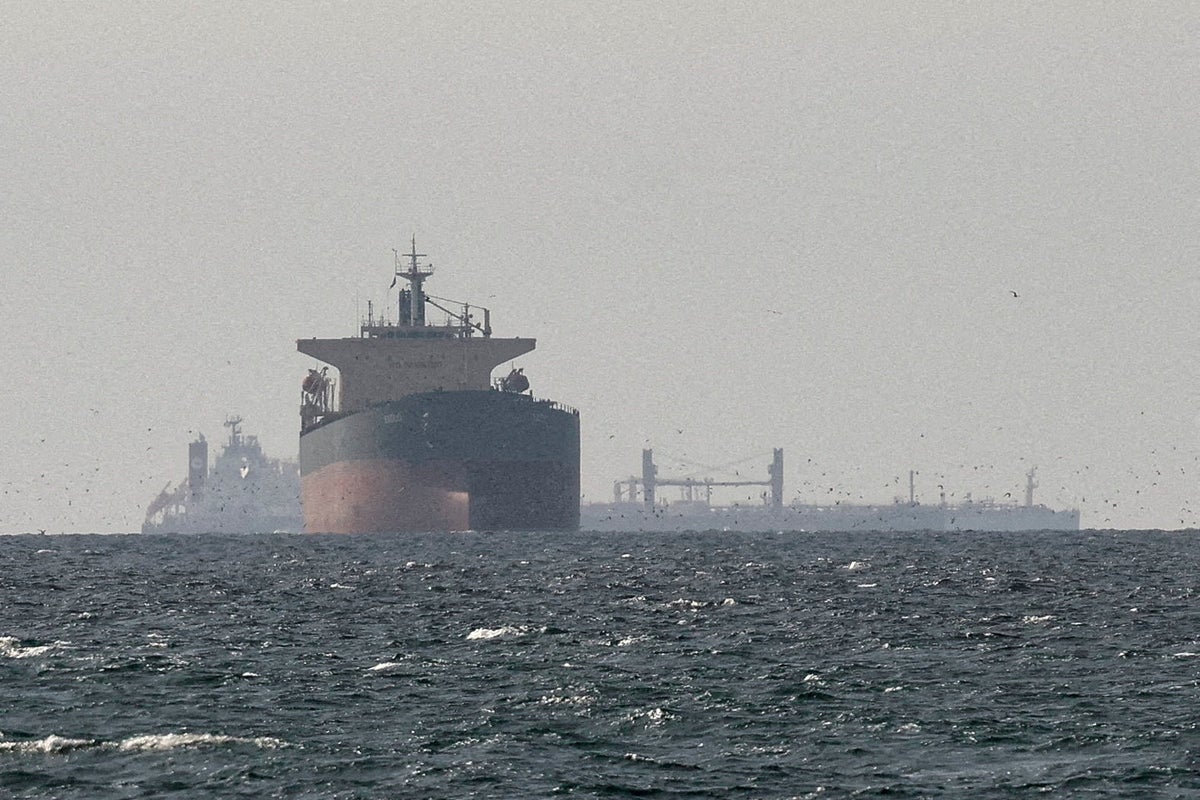
- Logistical Disruption: With the Strait of Hormuz effectively a no-go zone, land-based supply lines from the Red Sea have become the region's lifeline. Arrests in Saudi Arabia's Eastern Province are specifically targeting those suspected of sharing "geospatial data" with foreign entities.
- The Drone Factor: The rise of "unjammable" drones has changed the math. Small, locally assembled UAVs launched from within Gulf borders are harder to intercept than ballistic missiles fired from across the water.
The Cost of Scapegoating
While the security gains of these arrests are touted in state-controlled media, the long-term social cost is being ignored. By branding the Shiite minority as a permanent fifth column, Gulf monarchies are playing into Iran’s hands. Tehran’s greatest weapon has always been the exploitation of sectarian grievances. When a government treats a segment of its own population as a foreign threat, it creates the very radicalization it claims to be fighting.
In Bahrain, the situation is particularly volatile. The government has detained cultural activists and former political prisoners, charging them with "betrayal of the nation." This isn't just about espionage; it’s about preemptive neutralization. The state is terrified that the January 2026 protests in Iran might spark a sympathetic uprising at home, leading to a two-front war: one against Iranian missiles and another against their own streets.
The Intelligence Blind Spot
There is a dangerous lack of distinction in these operations. By grouping legitimate political dissenters, human rights lawyers, and social media influencers with genuine IRGC operatives, the security services are creating a massive noise-to-signal problem. If everyone is a "traitor," then finding the actual saboteurs becomes exponentially harder.
The strategy relies on the hope that fear will ensure compliance. But history in the Middle East suggests otherwise. Harsh crackdowns often act as a pressure cooker. As the war with Iran drags on and the economic impact of destroyed infrastructure begins to bite, the internal "stress test" of the Gulf states will move from the courtroom to the alleyways of Qatif, Manama, and Kuwait City. The monarchies are betting that they can arrest their way to stability. It is a bet they cannot afford to lose, but one that rarely pays out in the long run.