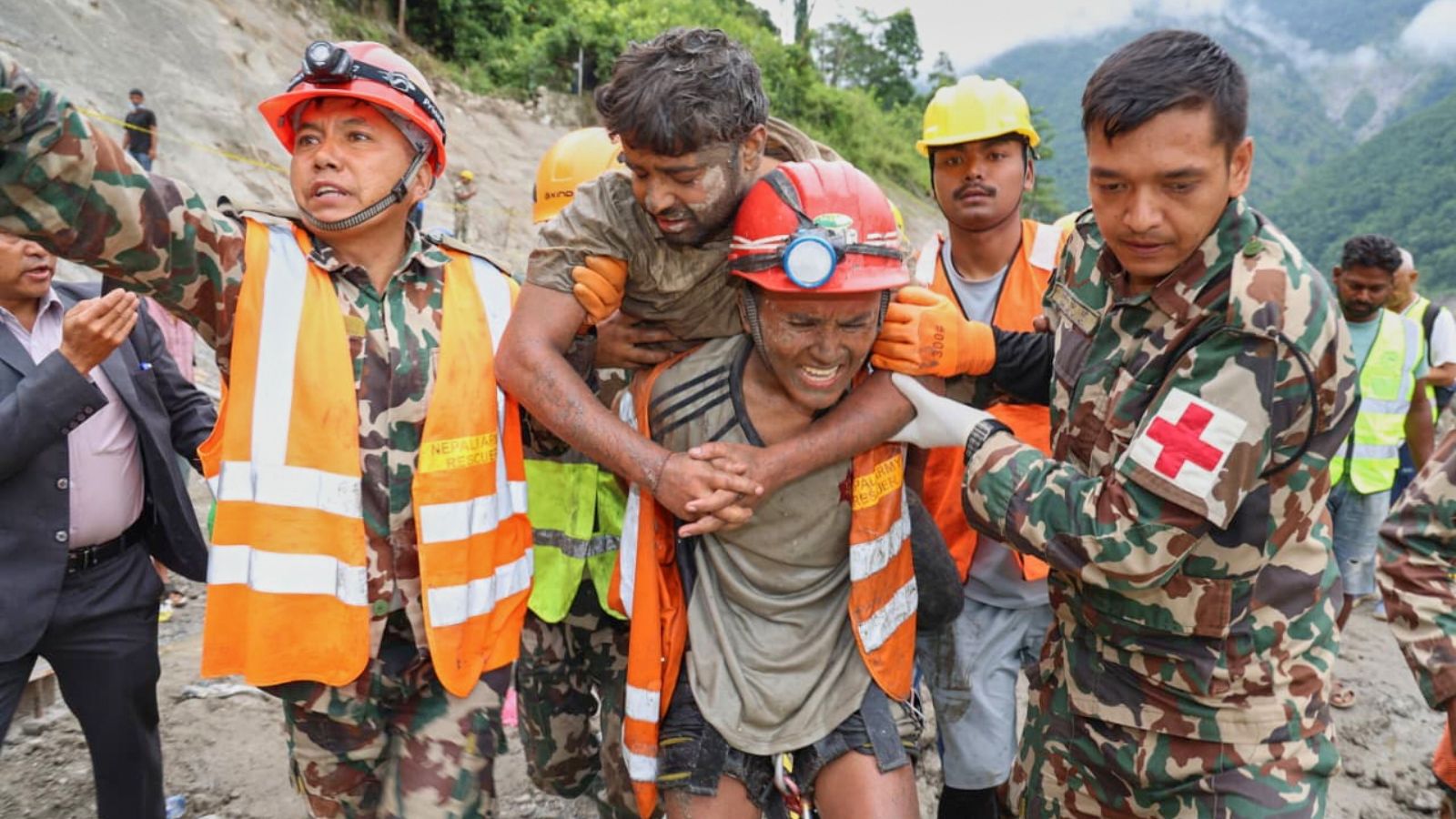
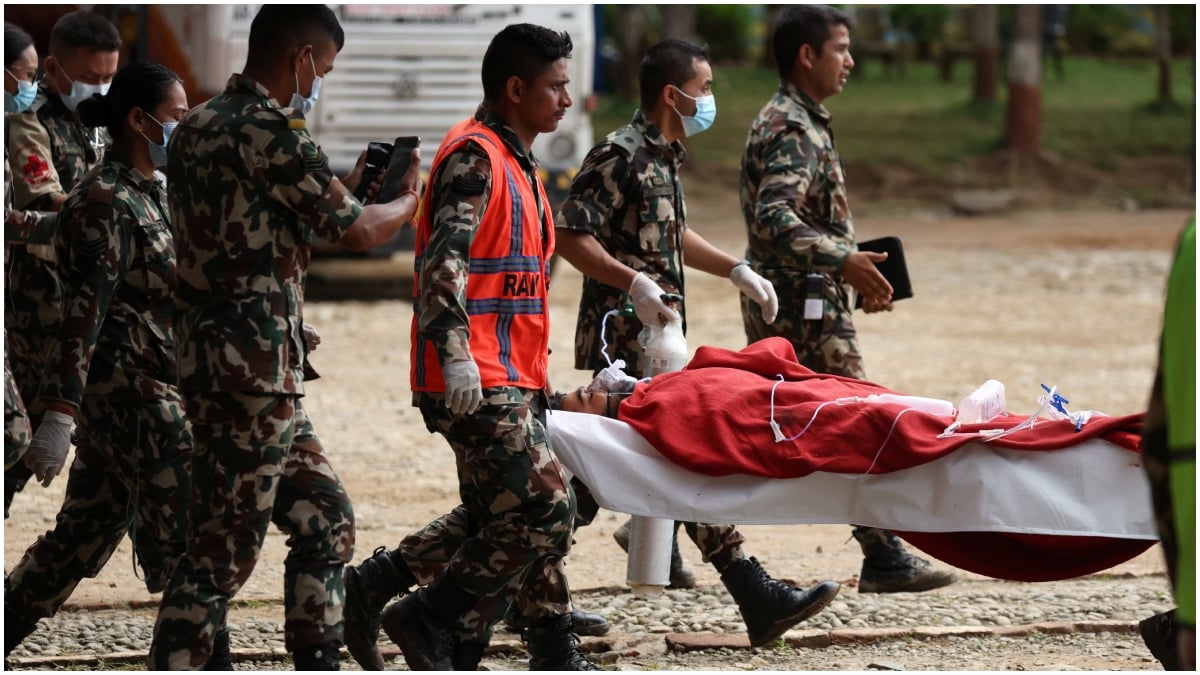
Nine days after a catastrophic flash flood sealed the underground chambers of the Trishuli 3A hydropower project, rescue teams pulled two surviving workers from the muck. Mechanical foreman Sanjay Shah and mechanical supervisor Kabir Maharjan emerged into the daylight after more than two hundred hours entombed in pitch darkness. Their survival defies standard physiological expectations, offering a fragile window of hope for the roughly five hundred workers still unaccounted for inside Nepal's flooded subterranean infrastructure. Yet this miraculous extraction pulls back the curtain on a much larger, systemic hazard born of rapid Himalayan energy development and dangerously inadequate disaster warning protocols.
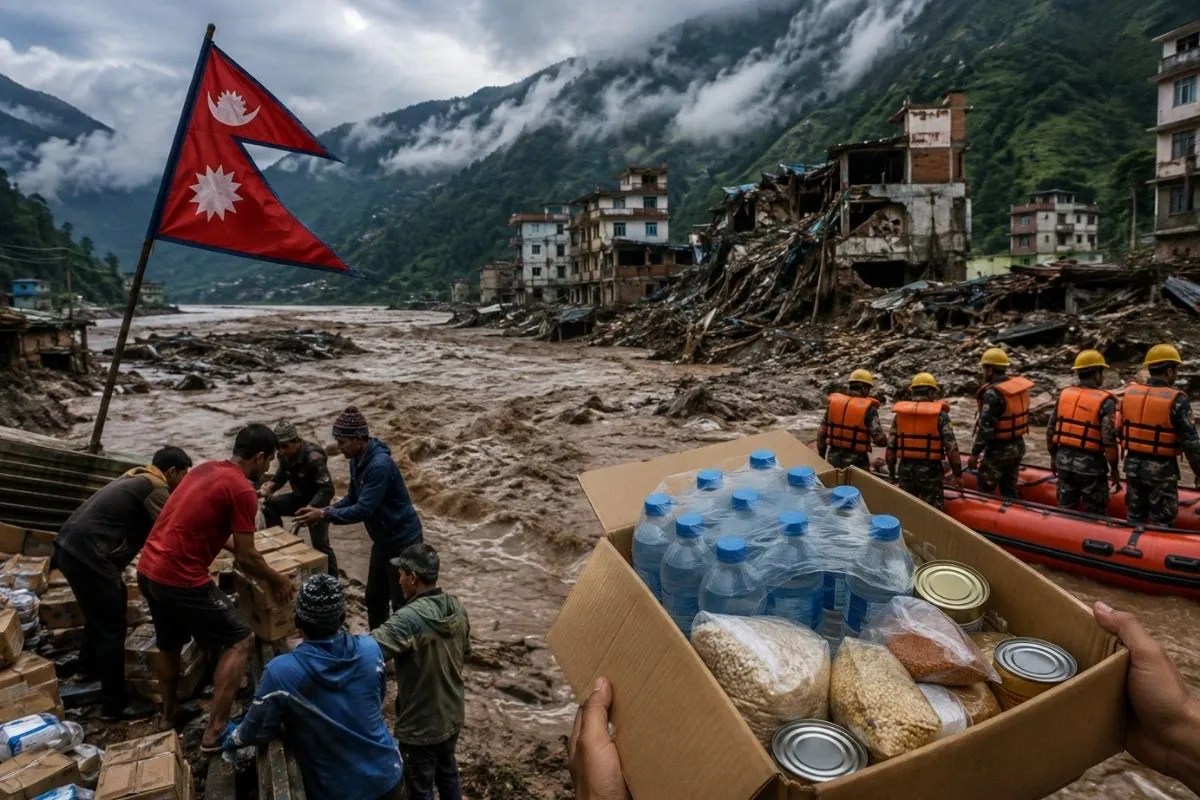
The disaster began when an ice-rock avalanche near the border triggered walls of mud, debris, and water that roared down the river valley. Hydroelectric facilities, prized for their clean energy output and promoted as economic saviors for the impoverished nation, turned into lethal traps. Unlike open-pit worksites, underground powerhouses feature long access tunnels that act as pneumatic tubes under pressure. When a surge strikes, these subterranean complexes fill rapidly, leaving workers with seconds to react. At Trishuli 3A, the sheer volume of sediment blocked the primary portals completely, forcing rescuers to spend nearly a week just locating the buried entry points.
The Physics of Subterranean Survival
How human biology manages to endure nine days without food or sunlight in a collapsed tunnel comes down to a grim combination of physical geography and pockets of trapped air. Standard emergency medical training dictates that the critical window for survival in a structural collapse rarely exceeds seventy-two hours. Dehydration usually claims lives well before starvation sets in. However, deep-mountain tunnels often maintain high ambient humidity and localized air pockets that slow moisture loss through the skin and lungs.
When Shah and Maharjan were finally reached, search teams heard faint responses after calling into a small boring hole. Communication experts note that sound travels differently through damp rock, which explains why acoustic detection gear proved more effective than thermal imaging in the initial phase. The men survived by rationing their psychological resolve against encroaching disorientation. Darkness erases spatial awareness within twenty-four hours, often triggering severe hallucinations by day three. To beat the clock, survivors must combat the primal urge to panic, which spikes oxygen consumption and accelerates asphyxiation in closed environments.
The Broader Infrastructure Vulnerability
The rescue at Trishuli 3A highlights a glaring oversight in how regional engineering projects account for extreme climate volatility. Hydropower expansion across the Himalayas has accelerated over the past two decades, driven by energy demands from neighboring economic powerhouses. Dozens of run-of-the-river projects now carve through steep gorges vulnerable to glacial lake outburst floods.
These facilities are designed to harness kinetic flow, but few incorporate blast-resistant or flood-sealed bulkheads capable of isolating underground powerhouses during a catastrophic surge. When the August 26 disaster struck, twelve separate hydel projects suffered severe damage. The absence of automated rapid-closure gates at tunnel entrances transformed multi-million-dollar energy assets into mass underground tombs.
Engineering firms often balance risk against capital expenditure, treating rare glacial collapses as statistical anomalies rather than design parameters. That philosophy is now facing an aggressive reassessment. As rising global temperatures destabilize high-altitude ice fields, the frequency of ice-rock avalanches is climbing. Building linear infrastructure in active seismic and glacial zones requires an entirely different safety paradigm, one that prioritizes secondary escape raises and remote-operated emergency chambers over simple cost efficiency.
The Logistics of Deep Recovery
Executing a rescue operation of this scale demands a complex orchestration of military coordination, heavy machinery, and specialized engineering advisory. Soldiers from the Nepal Army, alongside specialized police units, worked around the clock to clear boulders weighing several tons. They faced constant threats of secondary landslides as unstable slopes above the portal continued to shed debris with every rain shower.
International expertise quickly flowed into the region, blending local ground intelligence with remote advisory frameworks. Communication lines buzzed through engineering networks as specialists shared stabilization techniques for collapsing muck walls. Pumping out liquid mud from a subterranean tunnel without triggering a sudden shift in internal pressure requires delicate, incremental excavation. Move too fast, and the remaining ceiling collapses; move too slow, and trapped air reserves run dry.
Families of the missing continue to crowd outside cordoned zones, shifting between grief and desperate optimism. While the recovery of Shah and Maharjan proves that miracles occur in the most hostile environments, the sheer math of the disaster remains sobering. With hundreds still missing across multiple valley sites, rescue units are racing against decomposition, geological instability, and the psychological weight of an operation testing the absolute limits of human endurance.
The physical extraction of these two workers closes one chapter of the tragedy, but it opens a forensic inquiry into why workers were left inside vulnerable tunnels long after initial warnings should have triggered total site evacuations. The future of Himalayan energy generation depends entirely on how honestly the industry answers that question before the next valley gives way.