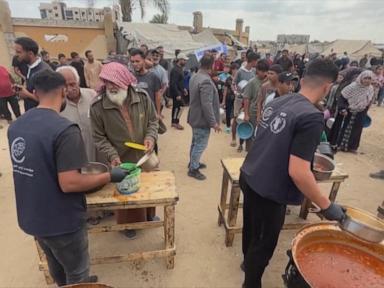
Funding shortages have forced the World Food Programme to slash food and cash assistance in Gaza from 1.6 million people to 1.1 million, cut food rations in half, and reduce daily hot meals from 250,000 to 150,000. Families in displacement camps and hard-to-reach areas now receive hot meals every other day instead of daily, while WFP faces a funding shortfall exceeding $430 million over the next six months to sustain operations across Palestine.
A standard wire report frames this story as a tragic budget squeeze: donor fatigue sets in, global crises multiply, and an aid agency trims its caseload. That explanation is not wrong, just incomplete. After decades covering emergency logistics and war economies, I have learned that when rations shrink inside an active military zone, donor spreadsheets rarely tell the whole story. Also making headlines in this space: Algorithms and Ballots The High Stakes Battle Between Meta and Brazil.
Money matters, of course. WFP received less than half the funding for its Palestine operation in 2026 compared with prior years. Yet cash alone cannot deliver flour through a single open border crossing while trucks sit delayed and local markets remain starved of basic goods.
Why Rations Are Shrinking Even When Food Exists
Hunger in Gaza today is not simply a lack of calories somewhere in a warehouse. It is a collision between depleted donor budgets, restricted crossing points, and an economy that has lost its productive base. Further details regarding the matter are covered by BBC News.
More than 80 percent of Gaza's population is unemployed. Even when vegetables, protein, or dry goods appear in local markets, jobless households cannot buy them. Commercial shipments face intermittent closures and bottlenecks, sending prices swinging wildly and making market-based relief unpredictable for agencies trying to stretch every dollar.
Meanwhile, self-reliance has been stripped away piece by piece. Israeli military forces hold control across roughly 70 percent of Gaza, leaving residents with minimal farmland to cultivate. Fishing along the coast is barred and dangerous. When local farming and fishing are shut down and wages vanish, a cut from two food parcels to one is not an accounting adjustment. It is an immediate drop in household survival.
The Border Bottleneck Behind Higher Costs
Every sack of wheat flour or carton of lentils carries a logistics price tag before it ever reaches a displaced family. With Kerem Shalom—also known as Kerem Abu Salem—serving as the sole authorized crossing point for humanitarian and commercial cargo, convoys face longer transit times, tighter queues, and higher transport expenses.
Fewer open crossings mean less competition and fewer routing options. One delay at a single checkpoint ripples across the entire supply chain, turning a tight budget into an emergency deficit faster than donors can wire funds.
The Winter Trap Turning Hunger Into Exposure
Seasonal rain does not care about diplomatic timelines. As winter sets in across Gaza, more than 1.7 million people remain displaced and nearly two million require shelter support.
Rainwater floods makeshift tents. Wet ground ruins scarce food stocks. Families who already rely on burning rubbish to cook meals face a grim practical hurdle when the fuel itself is soaked.
Cold, wet bodies burn more energy just to stay warm, while food rations deliver fewer calories and less variety.
Nutrition gaps compound the cold. Only one in five children in Gaza consumes a sufficiently diverse diet. When a child lacks micronutrients and protein during damp winter weeks, ordinary respiratory or gastrointestinal illnesses hit harder and linger longer.
Shelter equipment, heaters, water pumps, spare parts, wood, and heavy machinery face entry delays or restrictions. Without durable shelters or drainage gear, aid workers spend precious time and repurposed flour bags trying to hold back mud and water rather than expanding food distribution.
What Humanitarian Agencies Can and Cannot Fix
Humanitarian workers do heroic triage under impossible conditions, yet food parcels cannot substitute for an economy or a functioning border regime. Agencies can prioritize high-risk groups—keeping bakery support running for a share of bread needs, sustaining nutrition programs for hundreds of thousands of women and children, and sending school snacks where possible.
Those targeted lifelines still leave hundreds of thousands of people exposed. Cutting caseloads from 1.6 million to 1.1 million means choosing who gets a smaller ration and who goes without direct WFP support. No rationing formula is clean or fair when need outstrips supply across nearly the entire population.
There is also a counter-argument worth examining candidly. Some policymakers argue that aid agencies should rely more heavily on local commercial markets and cash transfers rather than imported food parcels to rebuild local trade. In theory, cash respects dignity and supports merchants. In practice, when commercial supply is erratic, crossings are restricted, and 80 percent of residents lack steady income, cash alone cannot conjure food out of empty stalls.
Why Ceasefire Promises Collide With Reality
Diplomatic agreements on paper often promise high daily truck volumes and steady relief. On the ground, reality looks starkly different. Aid groups and UN officials point to a wide gap between pledged access and actual daily deliveries, alongside ongoing military control and security restrictions.
Consider a hypothetical example of a family of six living in a flooded tent camp. The breadwinner has had no steady work for over a year. If WFP trims a two-parcel monthly ration down to one parcel and shifts hot meals from daily to every other day, the family stretches smaller portions across more days. Even if a local vendor has rice or vegetables for sale, the family has no cash to pay for them.
That is how hunger persists even when someone outside Gaza assumes aid is flowing. A single statistic—whether a headline budget gap or a daily truck count—hides the friction between money, borders, shelter, and work.
Funding Alone Will Not Close the Gap
Closing WFP's multi-hundred-million-dollar shortfall is urgent. Without fresh pledges, rations will shrink further and acute food insecurity could sweep across roughly 1.9 million people—up to 90 percent of Gaza's population—by year's end.
Still, writing checks without opening additional crossings, easing restrictions on shelter and winter gear, and creating conditions for livelihoods only treats the symptoms of a deeper structural lock. Donors must fund the immediate lifeline while governments with leverage press for predictable border access so relief is no longer bottlenecked before it even reaches the people waiting for it.