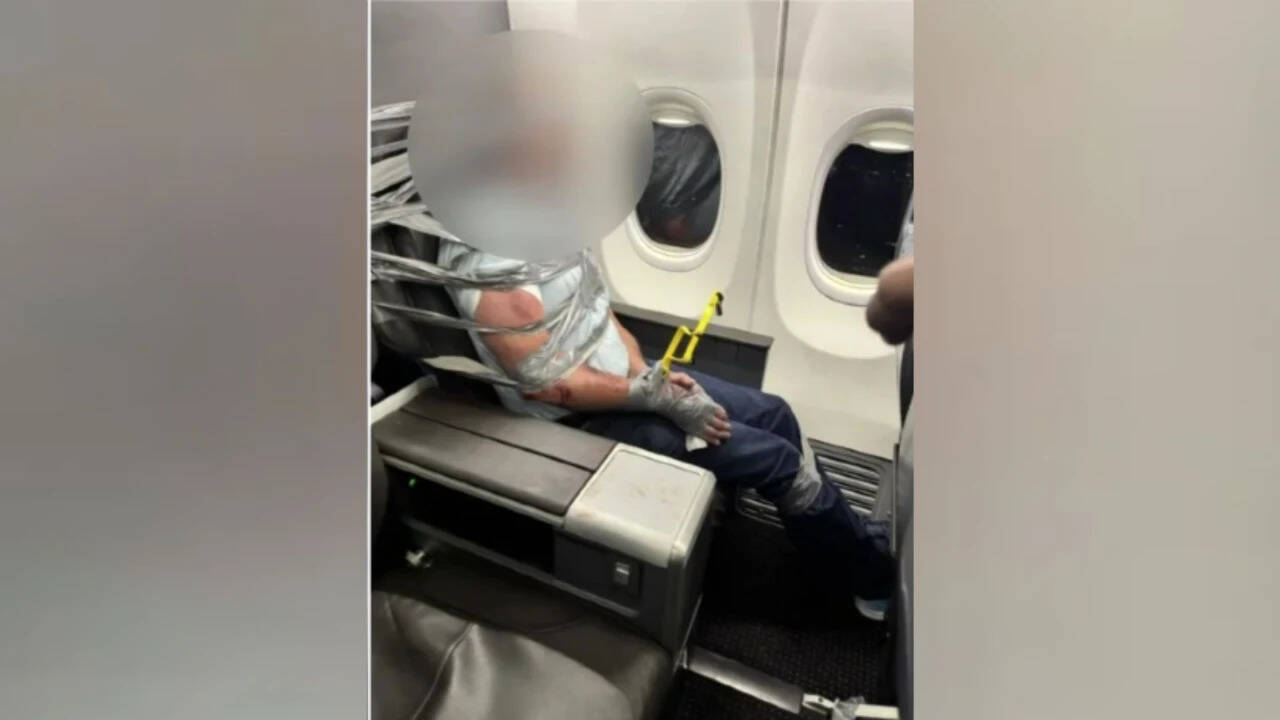
An American Airlines flight from Dallas-Fort Worth to Newark recently required an emergency diversion to Baltimore after a passenger physically attacked a seatmate, hurled explicit racial and homophobic slurs at flight attendants, and ultimately had to be bound to his seat with zip ties and heavy layers of duct tape. Viral photographs showing the disruptive individual wrapped head-to-torso in industrial adhesive provide a shocking visual of modern air travel breakdowns. Yet, treating these episodes as isolated viral anomalies misses a much darker systemic reality. The sky is turning into an unchecked zone of hostility, and aviation authorities are running out of effective deterrents.
Commercial aviation operates on a fragile social contract. Thousands of metal tubes hurtling through the stratosphere at five hundred miles per hour rely almost entirely on voluntary cooperation, mutual civility, and respect for authority. When that cooperative illusion shatters at thirty thousand feet, the cabin transforms rapidly into a high-altitude pressure cooker. Cabin crews are trained for emergency evacuations, cabin fires, and rapid decompression. They are fundamentally not equipped, nor should they have to be, to act as frontline correctional officers or bouncers for violent, volatile adults.
The Anatomy of Mid-Flight Meltdowns
Severe disruptions rarely emerge from a vacuum. Long before a traveler starts throwing punches or hurling bigotry down the aisle, a compounding sequence of stressors typically occurs. Overcrowded terminals, endless delays, shrinking seat pitches, and the ubiquitous presence of alcohol in airport concourses create an environment of chronic agitation. By the time passengers board, many are already operating at an elevated baseline of frustration.
When minor triggers happen—such as a reclining seat, a delayed beverage service, or a misplaced carry-on—the response is disproportionate. Inhibitions erode quickly at high altitudes due to mild hypoxia and dehydration. Add chemical substances or alcohol into the mix, and normal behavioral controls vanish entirely. The resulting outbursts test the physical and psychological limits of everyone on board.
When Passengers Become Security
Aviation regulations grant flight crews broad authority to maintain order, but physical intervention remains an absolute last resort. When a violent actor threatens bodily harm to travelers or crew, the responsibility to intervene frequently falls on civilian bystanders. In the Baltimore diversion incident, a retired law enforcement officer and another alert traveler stepped forward to physically restrain the attacker.
Relying on untrained passengers to manage violent threats introduces massive legal and physical liabilities. Improvised restraints like zip ties and packing tape prevent immediate disaster, but they also expose interveners to injury and potential legal blowback. The normalization of duct-taping unruly flyers to their chairs indicates a systemic failure of institutional protection. Cabin crew members face a terrifying calculus: protect the flight deck and emergency exits, or physically engage a hostile individual without proper defensive gear.
The Illusion of Zero Tolerance
Federal regulators and major airlines routinely tout zero-tolerance policies toward unruly behavior. Stiff civil penalties and criminal referrals are heavily publicized to deter bad actors. Despite these public relations campaigns, disruptive incidents persist at stubbornly high rates compared to pre-pandemic baselines.
Fines levied by transportation authorities often take months or years to collect, and many offenders slip through jurisdictional gaps between local law enforcement, airport police, and federal agencies. Local police meet the plane at the gate, but prosecution frequently stalls unless federal prosecutors decide to pick up the case. This enforcement lag signals to prospective offenders that mid-flight malfeasance carries minimal immediate consequence beyond a delayed itinerary and a temporary travel ban from a single airline.
Rebuilding Cabin Security
Fixing the aviation safety deficit requires structural changes that go far beyond punitive fines and social media shaming. Airlines must rethink airport hospitality models, starting with responsible alcohol management in terminal bars and lounges where passengers consume drinks before boarding. Furthermore, investing in comprehensive de-escalation training for all gate agents and flight attendants can help identify volatile behavioral markers before the cabin door ever closes.
Until carriers and regulators treat cabin safety with the same rigor applied to aircraft mechanical maintenance, passengers will continue to serve as the ultimate line of defense at thirty thousand feet.
For a closer look at how witnesses and passengers intervened during the chaotic events aboard the flight, watch this report on Newark flight passenger restraints.
http://googleusercontent.com/youtube_content/1