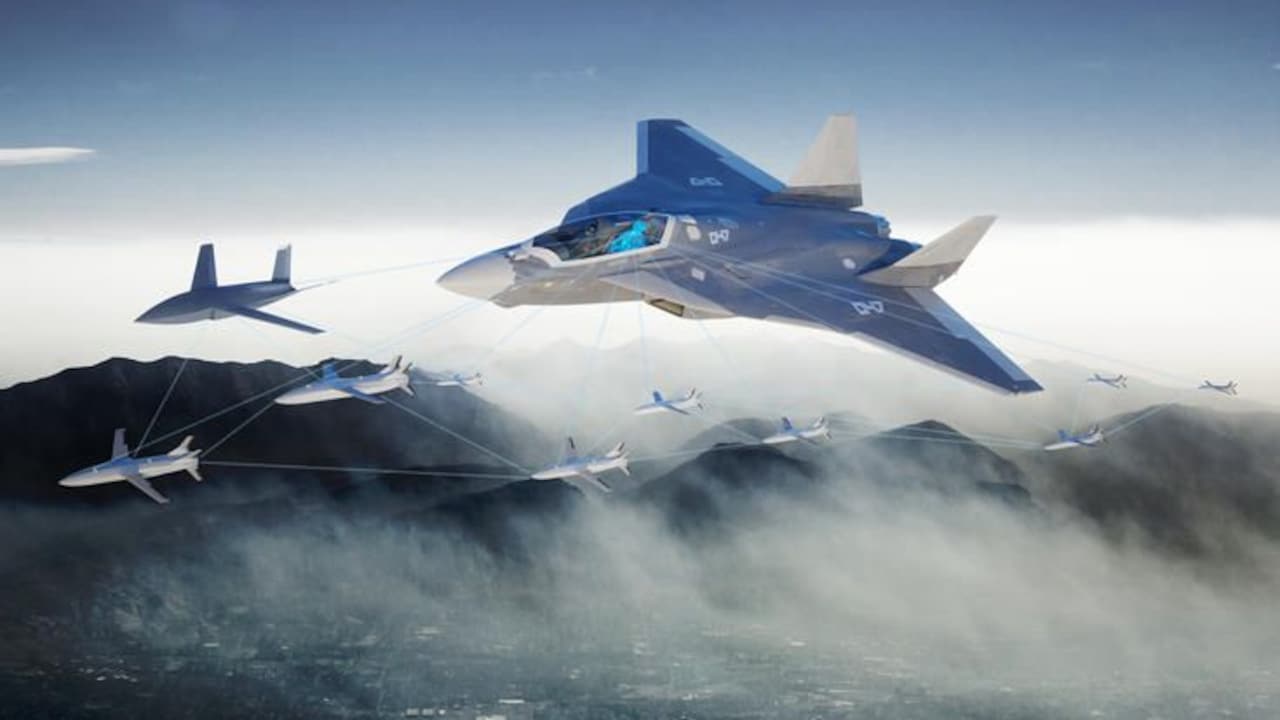
The defense commentariat loves a good cautionary tale. Mention India pursuing a sixth-generation combat aircraft program, and the armchair strategists crawl out of the woodwork to warn about budget overruns, delayed timelines, and technological hubris. The lazy consensus says New Delhi should stick to buying off-the-shelf imports or tinkering safely with light combat jets instead of punching above its weight class.
That perspective is not just unimaginative; it is strategically illiterate.
I have spent decades watching defense bureaucracies choke on their own caution. Every time an emerging aerospace power tries to leapfrog a generation, the skeptics point to the F-35 or the troubled history of European joint ventures as proof that ambition equals failure. They assume India will repeat the sins of the Tejas program's agonizing four-decade gestation, or that domestic industry lacks the institutional muscle to build a truly next-generation platform from scratch.
They are missing the entire point of what a sixth-generation initiative actually represents in the modern security architecture.
The Fallacy of the Safe Buy
The core critique against India's stealth ambitions relies on a comfortable myth: that you can simply purchase strategic autonomy from foreign suppliers. The argument goes that developing a fighter jet with advanced adaptive cycle engines, quantum-resistant electronic warfare suites, and loyal wingman integration is too hard, too expensive, and too prone to failure. Therefore, the prudent path is to keep writing checks to foreign capitals.
This is a sucker's bet.
When you buy foreign military hardware, you are not buying security. You are buying a subscription model for sovereignty. Ask any nation that operates Western or Russian high-end platforms about the source code chokeholds, the exorbitant maintenance costs, and the geopolitical leash attached to every spare part. If New Delhi listens to the Cassandras and scraps its advanced combat aircraft aspirations to buy off-the-shelf options, it condemns its aerospace sector to perpetual subcontracting. You do not build an indigenous defense industrial base by remaining a permanent consumer at the global arms bazaar.
The defense establishment fears failure more than irrelevance. That is a fatal inversion of priorities. Failure in R&D teaches you metallurgy, software architecture, and systems integration. Success in buying foreign gear teaches you how to be dependent.
Redefining the Threat Matrix
Critics love to ask whether India can afford the astronomical costs of a clean-sheet sixth-generation fighter when its immediate neighborhood features a two-front challenge requiring raw numbers today. This question is framed as pragmatic, but it contains a fundamental category error. It treats a sixth-generation program purely as an aircraft manufacturing project rather than a massive catalyst for national technology compression.
A modern combat aircraft program is not about aluminum and jet fuel. It is about gallium nitride radar modules, artificial intelligence edge-processing, high-temperature ceramic matrix composites, and distributed sensor fusion. When you force your domestic ecosystem to build these capabilities under strict military timelines, you drag your entire technology sector into the twenty-first century.
Imagine a scenario where India decides the task is too difficult and halts all indigenous advanced aviation efforts to prioritize off-the-shelf procurement. For a decade, the balance sheet looks clean. The acquisition budgets stay predictable. But twenty years down the line, the domestic scientific base has atrophied, engineering talent has migrated to Silicon Valley, and the nation is entirely locked out of the next epoch of aerial combat. That is not risk management. That is slow-motion national suicide.
The real danger is not that India will spend billions and fail to build a perfect jet. The danger is that it will succeed at building a mediocre one because it compromised on ambition to appease risk-averse bureaucrats.
The Unspoken Brutal Truth About Advanced R&D
Let us be entirely honest about what is going to happen. There will be delays. Budgets will stretch. Parliament will hold uncomfortable hearings. Defense journalists will write scathing exposés about missed deadlines.
Good.
That is the price of admission for entering the elite club of aerospace superpowers. The United States did not invent dominance by playing it safe; it burned through billions on experimental dead ends, failed prototypes, and canceled programs during the Cold War to forge the industrial capacity that underpins its current hegemony. Innovation is messy, iterative, and deeply wasteful by design. If your R&D ledger looks clean and orderly, you are not pushing boundaries; you are buying things that already exist.
India's sixth-generation initiative, often linked to concepts evolving from the Advanced Medium Combat Aircraft roadmap into true next-generation capabilities, forces a brutal reckoning across the public-private divide. It compels private conglomerates, public sector undertakings like Hindustan Aeronautics Limited, and hundreds of micro, small, and medium enterprises to upgrade their manufacturing tolerances, quality control, and cyber-security standards.
When a program demands extreme performance, it forces the entire supply chain to evolve. You cannot build a stealth skin with legacy manufacturing mindsets. You cannot program distributed neural-net avionics with twenty-year-old coding practices. The jet forces the industry, not the other way around.
Moving Past the Skeptics
The people warning you away from bold aerospace bets are the same ones who laughed at India's space program until orbiters reached Mars on a shoestring budget. They do not understand the compounding returns of engineering grit. They look at spreadsheets; they do not look at capability curves.
If the program suffers from structural friction, the solution is not to shrink the vision. The solution is to radically overhaul the procurement process, empower private sector disruptors, and strip away the bureaucratic middle management that treats innovation like an audit.
Stop treating high-end military aviation as an impossible dream for a rising economic power. The capital is there. The engineering talent pool is arguably the largest in the world. What has been missing is the institutional permission to be audaciously ambitious.
Let the critics clutch their pearls over cost overruns and timeline slips. True strategic power belongs to the nations willing to break things, build them better, and refuse to apologize for aiming at the very top of the food chain.

