When a storm packs sustained winds topping 100 miles per hour right out of the gate, local infrastructure doesn't just bend—it snaps. Hurricane Isaias slammed into the U.S. Gulf Coast near Destin, Florida, as a potent Category 2 system, leaving a staggering trail of wreckage in its wake.
If you were tracking the storm live, you already know the immediate headline: hundreds of thousands of homes and businesses across the Florida Panhandle and southern Alabama woke up pitch black. But the loss of electricity was only the opening act of a much larger regional crisis. For an alternative view, read: this related article.
The Scope of the Power Failures
At its peak intensity, power grid tracking data showed more than 900,000 customers stripped of electricity across the affected Southeast region. Florida and Alabama took the brunt of the initial blow.
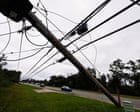
In Florida, utility hubs reported hundreds of thousands of active outages as towering pines crashed straight onto neighborhood transformers and service lines. Downed power lines tangled across streets in Milton, Pensacola, and Navarre, turning routine neighborhood blocks into hazardous obstacle courses. Mayor D.C. Reeves confirmed that Pensacola's municipal infrastructure took a direct beating, with structural damage hitting the local airport and fierce gusts peeling roofs right off commercial buildings. Similar reporting on this matter has been shared by Associated Press.
Across the state line, Alabama felt an equally brutal punch. Governor Kay Ivey declared a state of emergency spanning dozens of counties as more than 300,000 local customers lost power. Falling trees wreaked absolute havoc, blocking major arteries in Dothan and bringing emergency services to a temporary standstill.
Why This Storm Hit Harder Than Expected
Storms moving north through the Gulf often lose steam quickly, but Isaias maintained an aggressive structure right up until landfall. That meant destructive kinetic energy pushed deep inland rather than staying confined to coastal beachfronts.
Wind gusts at Pensacola City Hall hit a fierce 102 mph, testing every building code and utility pole in the vicinity. When you combine saturated soil from antecedent rainfall with winds tearing through at hurricane strength, root systems fail entirely. That's why utility crews didn't just find blown fuses; they found snapped power poles requiring complete rebuilds from the ground up.
The Flooding Threat That Outlasted the Winds
The wind eventually died down, but the water kept rising. Emergency management officials stressed repeatedly that the end of the high winds didn't mean the danger had passed.
Heavy rainfall totals exceeded 12 inches in parts of Alabama, triggering flash floods and swelling regional waterways. In mountainous regions further north, saturated slopes raised immediate concerns about landslides. Driving through standing water became the single most dangerous mistake stranded motorists could make, prompting strict local warnings to stay off compromised roadways.
Recovery and Restoration Realities
Getting the grid back online requires a massive logistical mobilization. Thousands of utility linemen and specialized repair convoys staged along the Interstate 10 corridor, waiting for the green light to roll into hard-hit communities the moment wind speeds dropped to safe working thresholds.
While major utility providers managed to restore baseline service to a percentage of customers within the first 48 hours, remote pockets in the Florida Panhandle and rural Alabama faced prolonged outages. If you live in a hurricane-prone corridor, preparation means assuming you'll be entirely self-sufficient for at least three days when a storm of this magnitude rolls ashore. Check your local utility provider's outage map directly, keep generators safely outdoors, and treat every downed line as live until crews verify it's dead.