The air inside a Senate briefing room has a specific, recycled weight to it. It smells of expensive wool, old paper, and the sterile anxiety of people who are paid to worry about the end of the world. When Tulsi Gabbard stood before the committee to map out the current state of Iran, she wasn’t just delivering a data dump. She was describing a wounded predator—one that has lost its teeth but kept its venom.
Imagine a sprawling, ancient clock tower. For decades, it has dictated the rhythm of a neighborhood. Then, a series of storms hits. The glass shatters. The brass gears are chipped by shrapnel. The pendulum swings with a violent, erratic hitch. To a casual observer on the street, the tower looks ruined. But if you step inside, you see the central iron shaft is still spinning. The weights are still dropping. The clock is broken, but the machine is alive.
This is the reality of the Iranian regime today. It is a system defined by "degradation without collapse." It is a phrase that sounds clinical in a briefing, but on the ground, it translates to a terrifying kind of volatility.
The Architecture of a Ghost
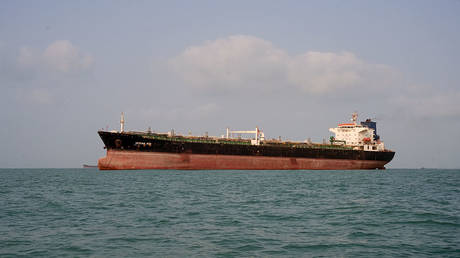
Military analysts love to count things. They count centrifuges. They count ballistic missiles. They count the barrels of oil smuggled through the "ghost fleet" in the Strait of Hormuz. These numbers are the skeleton of the Iranian threat, but they don't capture the spirit of it.
Gabbard’s testimony highlighted a crucial paradox: the regime is poorer, more isolated, and more internally fractured than it has been in decades. Yet, its shadow has never been longer. This isn't because they are winning. It is because they have mastered the art of asymmetrical survival.
Consider a hypothetical cyber-commander in a windowless basement in North Tehran. We will call him Omid. Omid doesn't have the budget for a fleet of F-35s. He doesn't have a carrier strike group. What he has is a fiber-optic cable and a deep understanding of the West’s digital fragility. While the Senate debates whether the "regime is intact," Omid is testing the pressure points of a regional power grid or a water treatment plant three thousand miles away.
The Iranian regime has shifted its weight. It no longer tries to stand toe-to-toe with giants. It has become the tripwire in the dark. It is the architect of a "Ring of Fire," a network of proxies—Hezbollah, Hamas, the Houthis—that act as the regime's external nervous system. You can strike the hand in Lebanon or the foot in Yemen, but the brain in Tehran remains shielded by layers of deniability and distance.
The Cost of the Slow Burn
We often talk about war as a binary: either we are at peace, or we are at combat. Iran has spent forty years proving that there is a third state—a permanent, low-boil friction. This is the "grey zone."
Living in the grey zone is exhausting. It forces the United States and its allies to play a perpetual game of Whac-A-Mole. One day it’s a drone strike on a commercial tanker. The next, it’s a sophisticated disinformation campaign targeting Western elections. The goal isn't necessarily to destroy the enemy in a single blow. It is to make the cost of opposition so high, so constant, and so annoying that eventually, the enemy just wants to look away.
This "degraded" state that Gabbard spoke of is actually where the regime is most dangerous. A strong regime has something to lose. A strong regime follows a certain logic of self-preservation. But a regime that feels the walls closing in—one that sees its currency devaluing by the hour and its youth protesting in the streets—becomes unpredictable.
The pressure of sanctions has hollowed out the Iranian middle class. It has turned the vibrant streets of Isfahan into places of quiet desperation. But it hasn't stopped the flow of money to the Islamic Revolutionary Guard Corps (IRGC). The elite don't feel the hunger. They only feel the need to tighten their grip.
The Invisible Stakes of Technology
The conversation in Washington often fixates on the nuclear "breakout time." How many weeks until they have enough fissile material for a bomb? It’s a vital question. But it’s a 20th-century question.
The 21st-century threat is the democratization of lethality. Iran has become the world’s bargain-bin supermarket for high-tech misery. Their Shahed drones—cheap, loud, and effective—have changed the landscape of modern warfare from the deserts of the Middle East to the plains of Ukraine.
They have figured out how to manufacture "good enough" technology. It doesn't have to be a masterpiece of engineering. It just has to work once.
When Gabbard tells the Senate that the regime is intact, she is acknowledging that their industrial base for chaos is still functioning. They can still export the tools of instability. They have turned their isolation into a laboratory for "frugal innovation" in the art of destruction. This is the part that standard news reports miss: the regime is a tech startup where the only product is leverage.
The Human Mirror
Behind every geopolitical movement is a human face. In the West, we see the regime as a monolith—a collection of bearded clerics and stern generals. But the real story is the 85 million people caught in the gears of the clock tower.
The regime survives because it has perfected the "internal security" model. It isn't just about police on the street. It’s about the digital panopticon. It’s about the fear that your neighbor is a member of the Basij. It’s about the slow, crushing realization that the world is moving on while you are stuck in 1979.
The "degradation" Gabbard describes is a physical reality for the Iranian people. It’s the crumbling infrastructure. It’s the blackouts. It’s the feeling of a country that is cannibalizing its own future to pay for its survival.
Yet, the regime remains. Why? Because collapse is messy. Collapse is a power vacuum. And in the Middle East, a power vacuum is rarely filled by a Jeffersonian democracy. It is usually filled by the person with the most guns and the least conscience. This is the terrifying calculation that keeps policymakers up at night. They want the regime to change, but they are terrified of what happens the moment it breaks.
The Ghost in the Machine
We are currently witnessing a shift in the global order. The old rules of deterrence are being rewritten. In the past, if a nation-state attacked another, the response was clear. But how do you deter a ghost? How do you sanction a regime that has already been sanctioned into the bedrock?
The Iranian regime is "intact" in the way a sunken ship is intact. It still holds its shape. It still provides a home for predators. It still creates a hazard for everyone sailing above it.
Gabbard’s warning wasn't a call for complacency. It was an admission of a stalemate. We are locked in a room with a regime that is too broken to thrive and too stubborn to die.
The real danger isn't that Iran will suddenly become a superpower. The danger is that it will continue to be a "spoiler." It is the grain of sand in the global engine. It doesn't have to build anything. It only has to survive long enough to watch the other side get tired.
The clock tower is still ticking. The gears are grinding against each other, throwing sparks into the hay. We can keep counting the sparks, or we can realize that the entire structure is designed to burn—slowly, painfully, and long enough to ensure that no one else gets to sleep.
The shadow doesn't disappear just because the light gets dimmer; it just gets harder to tell where the darkness ends and the room begins.
Would you like me to analyze the specific technological components of the Shahed drone systems mentioned in the briefing?