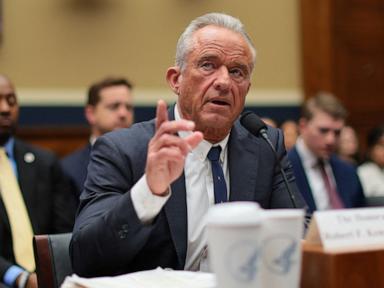
The air in the sterile halls of the National Institutes of Health used to smell like ozone and floor wax, a scent that signified the slow, grinding work of human survival. Now, that air feels thin. Robert F. Kennedy Jr. stands at the threshold of these institutions, not as a visitor, but as an architect of a radical renovation. He calls the impending cuts "painful." It is a word that suggests a surgeon’s knife, yet for the thousands of researchers whose life’s work hangs in the balance, it feels more like an amputation.
The drama isn't just about ledger lines or budget appropriations. It is about the fundamental way a nation decides to protect its own.
Consider Sarah. She is a hypothetical researcher, but she represents ten thousand very real faces currently staring at blinking cursors in Bethesda. For twelve years, Sarah has tracked a specific protein mutation that might—just might—explain why some children’s hearts fail before they can ride a bike. Her work doesn't make headlines. It doesn't produce a quarterly profit. It is a quiet, expensive crawl toward a truth that could save a life in 2034. When the NIH budget is slashed, Sarah’s lab doesn't just "lean out." It darkens. The mice are euthanized. The data is archived on a drive that will eventually fail. The thread of discovery snaps.
Kennedy argues that the system is bloated, captured by the very industries it is meant to oversee. He isn't entirely wrong about the rot. Bureaucracy has a way of calcifying, turning vibrant inquiry into a checklist of compliance. But there is a difference between pruning a tree to help it fruit and hacking at the trunk because you don't like the shape of the leaves.
The firing of the former CDC director served as the first signal flare. It was a move defended by Kennedy as a necessary clearing of the decks, a way to excise an old guard that many feel lost the public's trust during the chaotic years of the pandemic. Trust is a fragile thing. It is built over decades of consistent, boring accuracy and can be incinerated in a single weekend of shifting mandates. By defending these removals, Kennedy is betting that the American public prefers a clean slate to a flawed history.
But a clean slate is also an empty one.
The NIH is the largest funder of biomedical research in the world. It is the engine room. When you take a pill for blood pressure or watch a loved one survive a cancer diagnosis that would have been a death sentence in the nineties, you are seeing the dividends of NIH grants issued during the Reagan administration. Scientific progress operates on a time scale that modern politics cannot comprehend. A four-year term is a blink. A breakthrough is a generation.
Kennedy's vision for a healthier America involves a return to "basics"—focusing on chronic disease, environmental toxins, and the food supply. These are noble targets. The American waistline is expanding while our life expectancy shrinks, a paradox that shames a nation of such immense wealth. Yet, the irony lies in the method. To understand the "forever chemicals" in our water or the metabolic disruption caused by ultra-processed dyes, you need the very laboratories that are currently being measured for the chopping block. You cannot solve a complex biological crisis by firing the biologists.
The tension in Washington right now isn't just partisan. It is existential. It is a clash between the "Disruptors" and the "Institutionalists." The Disruptors, led by Kennedy’s ideological charge, believe the house is so infested with mold that it must be gutted to the studs. The Institutionalists warn that if you tear down the walls, the roof will collapse on everyone, regardless of their politics.
Imagine the high-stakes poker game being played with the nation’s microscope. On one side of the table, you have the demand for immediate accountability. People are angry. They feel lied to. They feel that the health "experts" became political actors. Kennedy taps into that anger with a visceral, magnetic force. He speaks to the mother whose child has unexplained allergies and the veteran who feels abandoned by the VA. He promises them that the "painful" cuts are for their own good—a bitter medicine to cure a systemic illness.
On the other side of the table sits the cold reality of infectious disease. Viruses do not care about budget cycles. They do not care about who was fired from the CDC or whether the NIH is undergoing a "transformation." They only care about hosts. While the humans argue over who gets to sit in the corner office, the next variant of H5N1 is quietly rehearsing its lines in a poultry farm three thousand miles away. When that curtain rises, the "painful" lack of a robust, well-funded scientific infrastructure will transition from a political debate to a national tragedy.
The stakes are invisible until they aren't.
We live in an age where the average person feels a profound disconnect from the "experts" in white coats. This gap is where Kennedy has built his fortress. He uses the language of the skeptic, the outsider, the man who has seen the documents. It is a powerful persona. But leadership requires more than just identifying what is broken. It requires the steady hand to fix it without destroying the patient.
If the NIH is cut by the margins being discussed, the impact won't be felt in the halls of Congress. It will be felt in the oncology wards where the "next" treatment never arrives. It will be felt in the rural clinics where the data on local groundwater contamination is never collected because the grant was canceled. It will be felt in the silence of the labs where the brightest minds of a generation decide that science is too volatile a career and move into high-frequency trading instead.
There is a certain seduction in the "burn it down" philosophy. It feels active. It feels like justice for past mistakes. But history is a graveyard of civilizations that stopped investing in the future because they were too preoccupied with the grievances of the past.
The human body is a miracle of interconnected systems. If the liver fails, the heart eventually stops. The body politic is no different. The NIH, the CDC, and the FDA are the organs of our collective safety. They are currently being told to prepare for a surgery performed by someone who hasn't yet shown us the map of the new anatomy he intends to create.
Kennedy stands before the cameras, his voice a raspy testament to his own battles with health and the system. He speaks of a New Frontier. But as the budgets are slashed and the directors are shown the door, one has to wonder if we are headed toward a frontier of discovery or a wilderness of our own making.
The scalpel is out. The patient is prepped. The lights are bright. We are all waiting to see if the surgeon knows where the vital arteries are buried, or if he is simply fascinated by the sharpness of the blade. The pain he promises is certain. The cure remains a ghost in the machine.
Beyond the press releases and the cable news shouting matches, there is a quiet, terrifying reality: you cannot fund a revolution with the ashes of your only defense. The researchers are packing their boxes. The vials are being frozen. The clock is ticking. And out there, in the dark, the diseases are waiting, utterly indifferent to the politics of the "pain."