Rain streaked the leaded glass of the Westminster office, blurring the slow crawl of red double-decker buses on the bridge below. On the desk lay a piece of heavy, cream-colored stationery. It was an official letter, but to the man staring at it, it felt more like an eviction notice.
For nearly two decades, he had walked through the Peers' Lobby, his boots echoing on the polished encaustic tiles. He had sat on the iconic red leather benches, surrounded by the quiet hum of polite dissent and the scent of old paper. He had contributed to debates on complex maritime law—his literal life's work—bringing a lifetime of dry, highly specialized expertise to legislation that the House of Commons had rushed through in a partisan blur.
Now, he was being asked to prove he still belonged.
On July 15, 2026, the House of Lords Retirement and Participation Committee released a report that quietly threatens to dismantle the culture of the world's most famous upper chamber. The headline on the morning papers was dry: Peers face new attendance rules under proposed House of Lords changes. But between the lines of parliamentary jargon lies a deeply human struggle. It is a clash between modern corporate efficiency and the eccentric, slow-moving machinery of tradition.
The Ghostly Benches
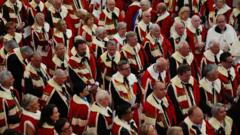
To understand the stakes, one must understand how the House of Lords actually works. Unlike the green-benched House of Commons, where politicians shout, jeer, and fight for survival in the court of public opinion, the red chamber is designed to be a place of quiet reflection. It is an unelected revisionist house, a collection of lifetime experts, retired judges, bishops, and industry titans.
But it has a math problem.
The House of Lords is bloated. With hundreds of active members, it is one of the largest legislative bodies on earth, second only to China’s National People's Congress. Yet, on any given Tuesday, a stroll through the chamber reveals vast expanses of empty red leather.
Historically, the rules of showing up were comical. To maintain your seat, your pension, and your title, you theoretically only had to turn up once per parliamentary session. You could walk in, sign a register, have a cup of tea in the peer’s dining room, and disappear back to your country estate for the rest of the year.
Taxpayers grew exhausted of the optics. The image of elderly lords, decades past their professional prime, collecting daily attendance allowances for merely existing became a symbol of a broken system.
The new proposal changes the game entirely.
The committee has recommended a hard, unyielding participation threshold: peers must attend at least 20 percent of all sitting days, averaged over two parliamentary sessions. If they fall short, they are quietly ushered out the door.
Twenty percent sounds incredibly low. In a normal job, showing up one day out of five would get you fired by Tuesday afternoon. But in the ecosystem of the House of Lords, this rule is a seismic shift.
The Specialist's Dilemma
Consider the hypothetical case of Baroness Sarah, a world-renowned pediatric neurosurgeon.
Sarah did not seek a peerage for political power. She was appointed because her brain contains highly specific, invaluable data on children's healthcare. She spends eighty hours a week in sterile scrubs, saving lives in NHS hospitals. She cannot sit on the red benches day in and day out, listening to endless, dry debates about regional transport budgets or agricultural subsidies.
Under the old rules, she didn't have to. She kept her head down, worked her hospital shifts, and only rode the train to London when a crucial bill regarding healthcare or medical ethics was on the table. When she spoke, the room fell silent. She was not a career politician; she was a practitioner.
Under the new 20 percent attendance rule, Sarah faces an impossible choice.
To keep her seat and continue advising on national healthcare policy, she must sacrifice her clinical hours to sit through debates that have nothing to do with her expertise. If she chooses her patients, the government loses one of its sharpest minds.
This is the hidden cost of treating a constitutional revising chamber like a call center. When you measure value purely by hours logged, you select for retirees who have nothing better to do than sit in a warm room and read the newspaper. You filter out the busy, active, brilliant professionals who are still operating at the cutting edge of their fields.
The committee argues that the 20 percent rule strikes a delicate balance, allowing members to maintain their outside careers while ensuring they contribute meaningfully. But for those on the ground, the margin feels razor-thin.
The Twilight of the Elders
Then comes the question of age.
The same report recommends a mandatory retirement age of 80, phased in over five years starting in 2029. Newly appointed peers will have to sign a written undertaking promising to step down on their 80th birthday.
To a public used to seeing octogenarian leaders across the Atlantic freeze at podiums, an age cap of 80 sounds like common sense. It feels like progress.
But wisdom is not a commodity that expires on a biological timer.
In the House of Lords, some of the most devastatingly sharp cross-examinations of government policy come from peers who have crossed the eighty-year threshold. These are individuals who remember the policy failures of the 1970s not as history lessons, but as lived experience. They possess a long-form institutional memory that prevents the government from making the same catastrophic mistakes twice.
Phasing out these veterans to avoid a sudden "cliff-edge" of departures is a logistical necessity, but the emotional weight of this transition is heavy. It is the systematic retirement of an entire generation of public service.
With the historic removal of the remaining hereditary peers earlier in 2026, the chamber has already undergone its most radical transformation in a quarter of a century. The old world is being systematically scrubbed away.
The corridors of Westminster are quieter now. The long, slow march toward a streamlined, professionalized senate is well underway. But as the clock ticks toward the implementation of these new boundaries, one cannot help but wonder what is lost when we exchange the eccentric, irregular brilliant mind for the reliable, average clock-watcher.
The red leather benches will certainly be more crowded in the years to come. Whether the debates will be any wiser remains to be seen.