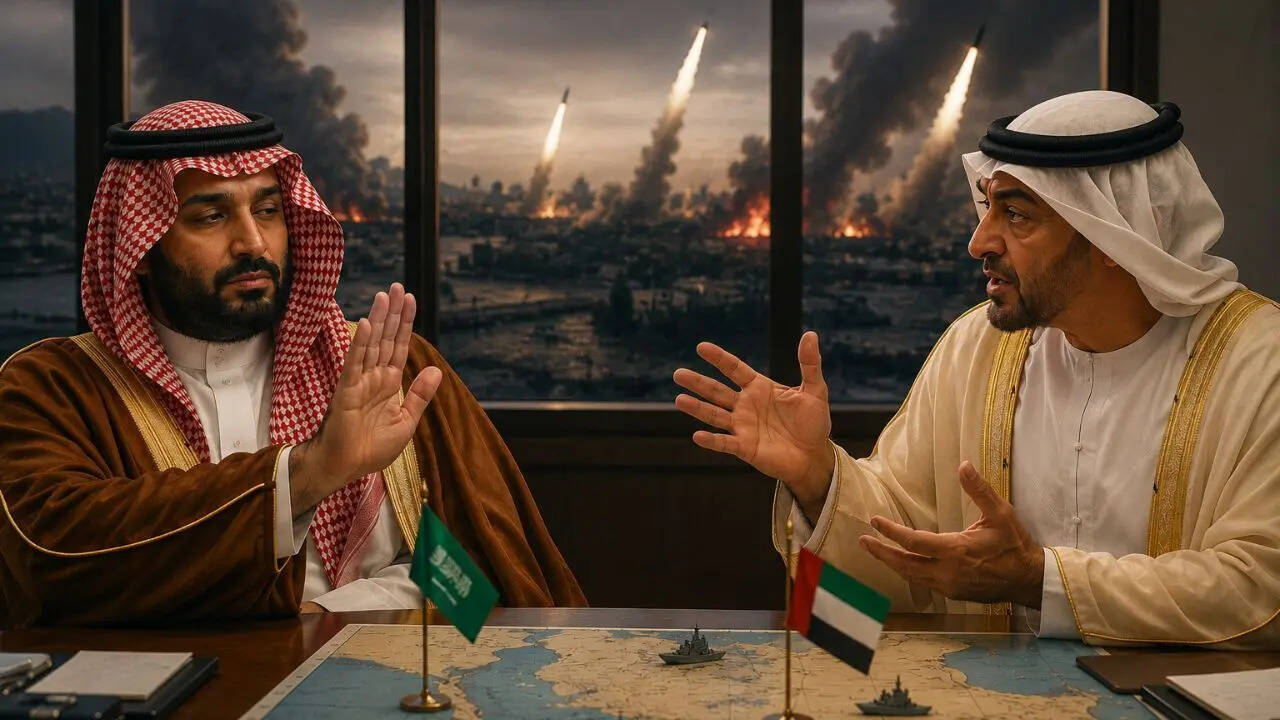
The assumption that a shared existential threat automatically guarantees collective military action is a recurring flaw in regional alliance architecture. This vulnerability became clear following the February 28, 2026, joint United States and Israel military campaign against Iran, which triggered a massive, asymmetric retaliatory strike by Tehran across the Gulf Cooperation Council (GCC). Despite a common vulnerability to Iranian ballistic missiles and drone salvos, the regional response split along lines of economic self-interest and asymmetric threat exposure. While the United Arab Emirates attempted to organize a unified, multilateral military counteroffensive, Saudi Arabia and other Gulf states rejected the initiative, revealing a deep divergence in how regional powers calculate deterrence and manage risk.
The failure to build a coordinated front cannot be attributed to a simple lack of diplomatic willpower. Instead, it stems from a fundamental mismatch in the strategic cost-benefit equations of Abu Dhabi and Riyadh. By breaking down the specific mechanics of this diplomatic breakdown, we can see the structural flaws that are rewriting the economic and security landscape of the Middle East.
The Asymmetric Attrition Function
The primary driver of the strategic split between the UAE and Saudi Arabia is the uneven distribution of damage during the conflict. Although Iran targeted critical infrastructure across the entire region, the physical and economic costs were not shared equally.
[Threat Exposure] ---> [UAE: High Density / Proximity] ---> Solitary Retaliation
                      ---> [Saudi: High Depth / Calibration] ---> Localized Defense & Mediation
The UAE operated under a much higher threat concentration. During the active phase of the conflict leading up to the April 8 ceasefire, Iran launched roughly 3,000 drones and missiles at Emirati territory. This concentrated bombardment severely tested local air defense networks and directly struck key logistics hubs, including the critical oil export port of Fujairah. The UAE’s economic model relies heavily on its reputation as a safe, highly stable global destination for logistics, finance, and tourism. A sustained aerial bombardment threatens the core of this business model. As a result, Abu Dhabi viewed a decisive, collective military counteroffensive as the only way to re-establish long-term deterrence.
Saudi Arabia, by contrast, operated under a different risk calculation. The kingdom's vast geography provides a layer of strategic depth that the UAE lacks. While Iranian strikes hit several energy facilities, a large portion of Saudi Arabia’s critical infrastructure sat outside the effective range of Iran’s high-volume, short-range missile arsenals.
Furthermore, Riyadh calibrated its actions to avoid full-scale escalation. While Saudi forces did execute targeted, independent retaliatory strikes against Iranian assets in March to prove their defensive capabilities, they explicitly told Tehran these actions were strictly defensive and independent of the broader US-Israeli campaign. By keeping its military response limited and predictable, Saudi Arabia successfully protected its core economic diversification projects from sustained kinetic attacks.
The Strategic Choice: Retaliation vs. De-escalation
The diplomatic gridlock among GCC states highlights a deep division between two opposing strategies for managing regional threats: collective military deterrence and diplomatic containment.
The Deterrence Framework
The UAE’s strategy is built on the classic principle of collective defense. During emergency discussions, Abu Dhabi reminded its neighbors that the GCC was founded in 1981 specifically to pool resources against the regional export of Iran's Islamic Revolution. Under this view, allowing Iran to strike deep into Arab Gulf territories without a unified military response destroys the credibility of regional deterrence. The UAE argued that failing to act collectively would signal weakness, leaving individual states vulnerable to piecemeal coercion. This rationale also drove the UAE's close, tactical cooperation with the US and Israel on intelligence sharing, early warning detection, and target coordination within Iran.
The Containment Framework
Saudi Arabia, Qatar, and Oman operated under a containment strategy that prioritizes economic preservation over military deterrence. Their primary goal was to prevent a temporary conflict from turning into a permanent regional war. The calculation relies on a clear economic reality: the massive infrastructure investments required for Qatar’s liquefied natural gas (LNG) expansion and Saudi Arabia’s Vision 2030 projects require long-term regional stability to attract international capital.
This calculus remained firm even when Iranian strikes caused billions of dollars in damage to Qatar’s Ras Laffan LNG facility. While Doha briefly weighed a military response, it ultimately chose to prioritize de-escalation to protect its long-term export capacity. Similarly, Oman used its traditional diplomatic ties with Tehran to advocate for an immediate political off-ramp.
This dynamic created a clear strategic bottleneck. The UAE viewed military inaction as a long-term security risk, while its neighbors viewed military escalation as an immediate economic threat.
The Breakdown of Regional Alliance Architecture
The fallout from this strategic disagreement has permanently damaged the institutional unity of the Gulf. The lack of a unified response during the crisis proved to Abu Dhabi that regional security pacts offer little protection when interests diverge.
This realization explains the UAE’s sudden decision to exit the Saudi-led OPEC cartel in late April, along with its ongoing review of its GCC membership. For years, membership in these organizations was seen as essential for regional stability. However, the crisis revealed that these institutions could not protect the UAE's core security interests during a conflict, while still imposing restrictive oil production quotas that limit Abu Dhabi's ability to monetize its energy reserves.
Institutional Disalignment Matrix:
+-----------------------------------+-----------------------------------+
| UAE Strategic Mandate             | Saudi / GCC Strategic Mandate     |
+-----------------------------------+-----------------------------------+
| • High-intensity kinetic defense  | • Calibrated local retaliation    |
| • Deep US-Israeli integration     | • Backchannel mediation (Pakistan)|
| • Rapid monetization of assets    | • Long-term production management |
+-----------------------------------+-----------------------------------+
The split has also triggered intense geopolitical competition across secondary theatres. A clear example occurred during the diplomatic fallout from the Pakistan-led mediation initiative. After Saudi Arabia encouraged Islamabad to broker talks between Washington and Tehran, the UAE felt cut out of the diplomatic process. In response, Abu Dhabi canceled a scheduled $3 billion loan extension to Pakistan in early April. Seeking to protect its diplomatic leverage and solidify its position as the leader of the regional economic order, Saudi Arabia stepped in to provide the replacement capital.
This financial maneuvering highlights a deeper shift: the old model of unified Gulf cooperation has been replaced by intense economic and geopolitical rivalry. The UAE and Saudi Arabia are now actively competing for foreign investment, logistics dominance, and regional influence.
Future Strategic Positioning
The current regional layout makes a return to the old GCC security model highly unlikely. Moving forward, regional security and economic policy will be guided by three distinct trends.
First, the UAE will likely deepen its bilateral security partnerships outside of traditional regional frameworks. Frustrated by the limits of multilateral Gulf cooperation, Abu Dhabi is shifting toward a strategy built on direct, transactional security arrangements with Washington and advanced technology sharing with Israel. This approach prioritizes immediate defensive capabilities, such as advanced integrated air defenses, over fragile regional political consensus.
Second, Saudi Arabia will continue to position itself as the primary diplomatic weight and economic hub of the Middle East. By using backchannel diplomacy, financing regional mediators, and maintaining communication with Tehran, Riyadh aims to keep regional conflicts within predictable limits. This strategy allows the kingdom to protect its massive domestic economic investments from the direct fallout of wider geopolitical conflicts.
Finally, the fragmentation of OPEC and the GCC will likely lead to more independent energy and economic policies across the region. As individual states prioritize their unique national security and economic recovery timelines, collective consensus will take a backseat to national interest. This shift will likely result in highly independent decisions regarding oil production capacity, infrastructure development, and international trade alliances.