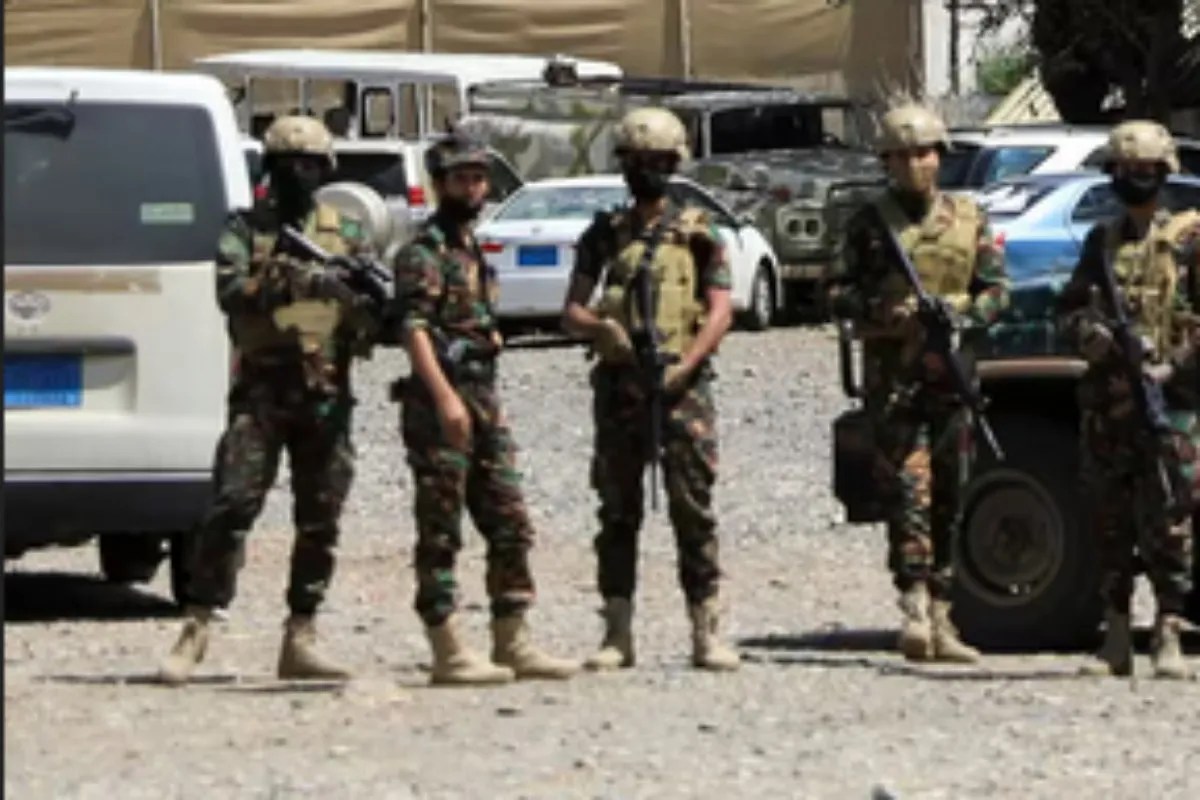
Modern asymmetric conflict relies heavily on positional leverage, resource control, and the manipulation of strategic chokepoints. Recent military escalations across Yemen, particularly centered around the Taiz governorate and the maritime artery of the Bab al Mandeb Strait, reflect a structural shift from a protracted stalemate to high-tempo localized attrition. Analyzing these developments requires moving beyond surface-level reporting to examine the underlying mechanics of force deployment, logistical bottlenecks, and strategic repositioning by both the internationally recognized Yemeni government forces and Houthi factions.
The Structural Anatomy of the Taiz Theater
Taiz functions as the primary tactical linchpin in the broader Yemeni theater. Geographically positioned as the gateway between the western coastal plains and the central highlands, control over Taiz dictates lines of communication, supply mobility, and artillery dominance.
The recent campaign, designated by government forces as Operation Dawn of Yemen, utilizes a multi-vector strike doctrine. Rather than relying solely on traditional ground engagements, government military reports indicate a heavy reliance on a distributed kinetic model comprising conventional warplane airstrikes, loitering drone munitions, rocket-launcher barrages, and massed field artillery. This distributed approach aims to neutralize mobile command-and-control nodes and suppress Houthi infiltration routes across multiple contested axes.
The mechanical nature of these engagements highlights distinct tactical evolutions. Houthi forces have increasingly integrated unmanned aerial systems to harass government positions and logistical supply lines, mirroring patterns observed in contemporary mechanized warfare. In response, government forces have attempted to systematically dismantle entrenched firing positions through synchronized artillery saturation. However, the dense urban topography of Taiz creates severe friction, limiting the efficacy of pure kinetic volume and resulting in high tactical drag for both sides.
The Economics of Chokepoints and Territorial Redundancy
At the macro-strategic level, the friction points in Yemen are defined by maritime geography. The Bab al Mandeb Strait handles a critical percentage of global commercial transit, linking the Red Sea to the Gulf of Aden. Control over the littoral fringes and adjacent administrative zones directly translates to economic coercion leverage.
Recent tactical adjustments underscore a painful calculus of resource allocation. While government-aligned coalitions launched ambitious offensives to reclaim coastal territory, logistical strains and the necessity to secure administrative strongholds like Aden have forced strategic contractions. When extended supply lines outpace defensive depth, military units face a stark choice: maintain overextended forward posts or consolidate along defensible inner rings.
The shifting control around key western approaches illustrates the fragility of territorial gains in asymmetrical terrain. Houthi forces leverage internal lines of communication, allowing them to mass forces rapidly at localized pressure points despite facing heavy aerial and artillery bombardment. Conversely, the fragmented nature of the coalition forces introduces coordination latency, reducing the speed at which tactical victories can be converted into permanent strategic territory.
The Attrition Cost Function
Evaluating the intensity of the current phase requires examining the reported metrics of engagement. Official military disclosures frequently quantify operations in terms of total kinetic strikes—ranging into the hundreds across rolling operational windows—and estimated personnel neutralization figures.
From an analytical perspective, these metrics illustrate an attrition-based cost function. The objective of high-volume artillery and drone strikes is not immediate territorial conquest, but the systematic degradation of opposing operational capital—specifically armor, localized supply depots, and mid-tier field leadership. Yet, attrition warfare in densely populated governorates exacts a severe secondary cost. Urban centers like Taiz host hundreds of thousands of displaced persons, turning civilian infrastructure into collateral buffers. Humanitarian access bottlenecks compound the strategic stalemate, as civil immobility restricts economic recovery and hardens local populations against external administrative control.
Strategic Trajectory
The reversion to active kinetic operations after a prolonged baseline lull signals the structural instability of frozen conflicts. As long as the Bab al Mandeb corridor and regional urban hubs remain contested, neither faction can achieve a decisive monopoly on state legitimacy or resource distribution. Future operational capacity will be dictated entirely by logistical sustainability, external material support networks, and the ability to maintain cohesive multi-front command structures without triggering catastrophic rear-guard vulnerabilities.