Cold.
That is the first thing you notice when the power grid goes down in Kyiv during a late autumn freeze, long before the air raid sirens finish their mournful wail. It is not a dramatic, cinematic cold; it is a slow, creeping dampness that settles into the marrow of your bones while you sit in the dark, listening to the radiator tick as the water inside it loses its warmth. You wrap yourself in two coats, hold a lukewarm mug of tea between stiff fingers, and stare at the black rectangle of your television screen.
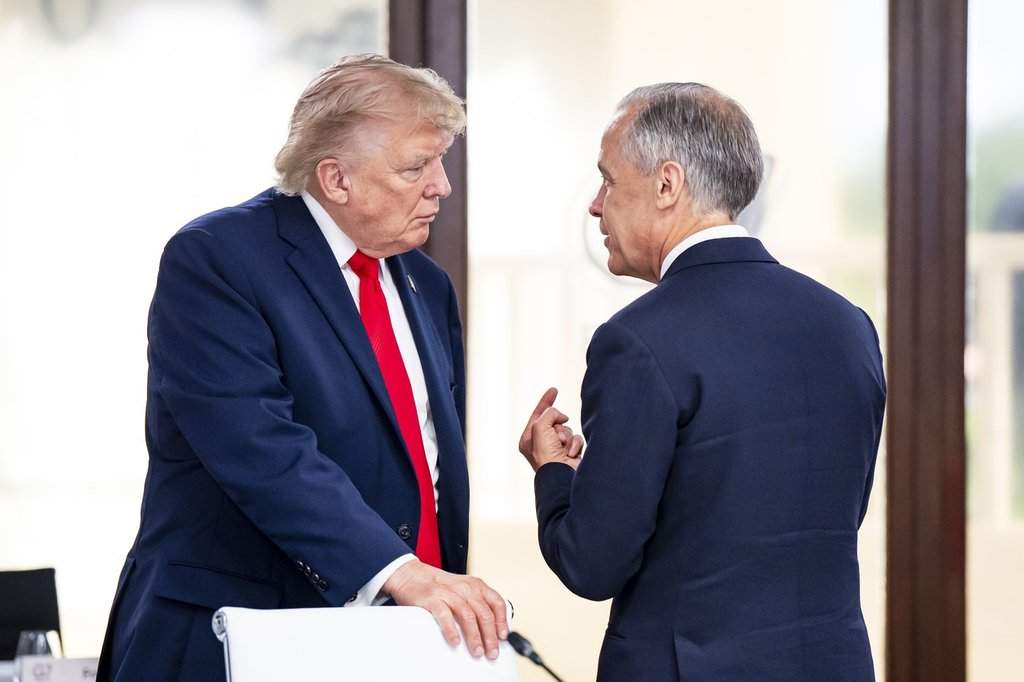
Three thousand miles away, in a fluorescent-lit conference room in Geneva, or Brussels, or a sleek glass tower overlooking the East River in New York, a man in an impeccably tailored suit is explaining why peace is just around the corner. He speaks in the velvet cadence of international diplomacy, using words like de-escalation, compromise, and security guarantees. He smiles warmly at the cameras, offering a cease-fire that sounds entirely reasonable to anyone sitting in a heated room.
To understand what happened when Ukrainian President Volodymyr Zelensky stood before the leaders of forty-seven nations and accused Russia of "deception and tricks," you have to hold those two images in your mind at the exact same time. You have to feel the creeping frost in that Kyiv apartment while listening to the smooth, reassuring baritone of the diplomat in the warm room.
Because the war in Ukraine is no longer just being fought with artillery shells, glide bombs, and fiber-optic drones. It is being fought with calendars, ink, and the weaponized exhaustion of the Western world.
The Anatomy of a Diplomatic Mirage
To make sense of the geopolitical chess match unfolding across Europe right now, let us step away from the headlines and look at a hypothetical scenario—a small, everyday betrayal that we all understand instinctively.
Imagine you own a house on the edge of town. One night, your neighbor breaks down your back door, occupies your kitchen, and claims it has always belonged to him. When the neighborhood watch arrives to intervene, your neighbor does not put down his crowbar. Instead, he pulls out a neatly typed contract. He tells the neighbors that he is a man of peace, that he is tired of the fighting, and that he is willing to stop breaking your windows—provided he gets to keep the kitchen, and provided you agree never to install a deadbolt on your front door again.
Meanwhile, while the neighbors are standing on your front lawn debating the merits of his generous offer, you can hear him through the drywall, quietly sawing through the floorboards to get into your living room.
This is the precise mechanism Zelensky was trying to expose when he addressed the European Political Community—a gathering of forty-seven countries stretching from Iceland to the Caucasus, assembled to discuss the fragile security of the continent. On the surface, the headlines spoke of warnings, diplomatic friction, and stalled negotiations. Beneath the surface, Zelensky was fighting a desperate battle against human nature itself.
We want wars to end. That is a deeply decent, fundamentally human impulse. When a conflict drags on into its third and fourth years, the daily drip of casualty figures and destroyed substations induces a kind of moral fatigue. People in Paris, Berlin, Madrid, and Washington look at their own rising grocery bills, their own domestic crises, and they begin to wonder: Why not just make a deal? Why not freeze the lines where they are and let everyone go home?
Moscow knows this. In fact, Moscow is counting on it.
When Zelensky warned those forty-seven leaders about Russian "deception and tricks," he was not offering vague political rhetoric. He was pointing to a documented, historical pattern of behavior that dates back centuries, refined to a razor's edge in the modern era. Look at the timeline of the last decade alone. In 2014, Russia annexed Crimea while officially denying that the "little green men" in unmarked uniforms were Russian soldiers. Then came the Minsk agreements—two separate cease-fire deals brokered by France and Germany, signed in good faith to stop the bloodshed in eastern Ukraine.
Russia violated the Minsk cease-fires within hours of signing them. Not days. Hours.
For eight years, while European diplomats praised the "fragile peace" of the Minsk framework, Moscow used the quiet intervals to rotate troops, build fortifications, stockpile ammunition, and prepare the massive, full-scale invasion of February 2022. The ink on those treaties did not buy peace; it bought Russia time to reload.
The Invisible Stakes in the Room
Think about what it takes to stand in front of forty-seven heads of state when your country is bleeding, and tell them that the easy exit they are eyeing is actually a trapdoor.
It is an agonizing position. If you reject talks outright, you are painted as an obstacle to peace—stubborn, uncompromising, addicted to war. If you accept a flawed cease-fire without ironclad enforcement, you are signing your country's death warrant on a delayed timer.
Let us ground this in the harsh, unyielding math of the battlefield. Modern warfare is an industrial meat grinder. Every day that a freeze is negotiated without real consequences, a massive war economy continues to churn out shells, refurbish Soviet-era tanks, and recruit tens of thousands of soldiers from impoverished regions. A cease-fire without teeth does not stop the war machine; it merely allows the machine to cool down, undergo maintenance, and prepare for a heavier offensive twelve or eighteen months later.
Consider what happens next if those forty-seven nations fall for the illusion of a quick diplomatic fix.
First, the sanctions regime—already leaky, bypassed through shell companies in Central Asia and shadow fleets of aging oil tankers—begins to crumble. European businesses, eager to reclaim lost markets and cheap energy, lobby their governments to normalize trade. Second, the flow of air defense interceptors and artillery shells to Kyiv slows to a trickle. Why send expensive Patriot missiles to a country that is supposedly at peace? Third, Ukraine is left in a state of permanent, paralyzing limbo: too unsafe for foreign investors to rebuild its shattered cities, too unstable for millions of refugees to bring their children home, and forbidden from joining defensive alliances like NATO because of its "unresolved border disputes."
Russia gets everything it wants without firing another shot. It strangles Ukraine economically while resting its own army for the final blow.
And the danger does not stop at the Ukrainian border. Among those forty-seven leaders listening to Zelensky were the prime ministers of Estonia, Latvia, and Lithuania—tiny nations tucked against the Baltic Sea, acutely aware that their populations are smaller than that of a single major European city. Beside them sat the leaders of Moldova, a country that already has Russian troops stationed illegally on its territory in Transnistria, and Georgia, which watched Russian tanks roll toward its capital in 2008.
For these leaders, Zelensky’s warning was not an abstract lecture on foreign policy. It was a survival manual. They know that if the architecture of international law collapses in Kyiv, the debris will land on their doorsteps next.
The Psychology of the Trap
Why do smart, seasoned leaders fall for this kind of deception over and over again?
To understand that, we have to be honest about our own vulnerabilities. Even those of us who follow global affairs closely feel the pull of wishful thinking. When we hear rumors of back-channel talks or read about a new peace initiative, our brains release a tiny hit of relief. We want to believe that the worst is over. We want to believe that the men ordering the missile strikes on apartment buildings and children’s hospitals are ultimately rational actors who can be reasoned with across a mahogany table.
I remember sitting in a cramped café in Lviv two winters ago, talking with a woman named Olena. She was a former university professor who had fled Kharkiv after a missile sheared the front wall off her apartment building, leaving her living room exposed to the open sky like a dollhouse. She was sixty-two years old, wearing a borrowed wool sweater, stirring a cup of black coffee she had been nursing for two hours because she had nowhere else to go.
"People in the West ask me when we will compromise," she said, looking out the window at the wet cobblestones. "They think land is just lines on a map. They think if we give them a few provinces, they will be satisfied and leave us alone. They do not understand that for Moscow, our existence is the provocation. You cannot negotiate with someone who believes you do not have the right to breathe."
Olena’s words strip away all the diplomatic jargon. When you look at the conflict through her eyes, the idea of "meeting in the middle" reveals its fatal flaw. If someone demands your life, and you offer them half of it, you do not have a compromise. You have a slow execution.
This is the core of the "tricks" Zelensky warned against. Russian diplomacy operates on a principle known in intelligence circles as reflexive control—the art of feeding an opponent specially prepared information to incline them to voluntarily make the predetermined decision desired by the initiator.
It works like this: Moscow escalates brutally, bombing power grids and threatening nuclear retaliation until Western capitals are terrified of a wider war. Then, at the exact moment of peak anxiety, the Kremlin whispers through intermediaries that it is ready to talk. The relief in Western capitals is so profound that diplomats rush to accept terms they would have rejected as absurd six months earlier. Russia pockets the concessions, waits for the West to lower its guard, and repeats the cycle.
It is a confidence game played on a continental scale, and the stakes are measured in millions of human lives.
Breaking the Spell
If the trap is so obvious once you see the blueprint, how do forty-seven nations avoid walking straight into it?
The answer requires a fundamental shift in how Europe and its allies view power. For thirty years after the fall of the Berlin Wall, the West operated under the comforting delusion that history had ended—that economic interdependence had made major land wars in Europe obsolete, and that every conflict could be solved through trade deals, summits, and strongly worded resolutions.
That era is dead. The sooner democratic leaders mourn it and move on, the safer their citizens will be.
True peace—the kind that lasts for generations rather than months—is never built on trust when dealing with an aggressor. It is built on deterrence. It is built on the cold, undeniable reality that the cost of continuing the war is higher than the cost of ending it.
Zelensky’s message to the forty-seven nations was a demand to replace hopeful words with hard leverage. That means three concrete things, stripped of all diplomatic fluff.
First, it means decoupling peace talks from Russian permission. When Moscow demands that Ukraine disarm or abandon its allies as a precondition for a cease-fire, the answer cannot be a polite counter-offer. It must be an immediate acceleration of military aid, proving that blackmail produces the exact opposite of its intended result.
Second, it means choking off the financial arteries that keep the Russian war machine alive. Right now, billions of dollars still flow into Moscow’s war chest through loopholes in energy sanctions and the sale of dual-use technologies—microchips, optics, and machine tools manufactured in Western factories that somehow end up inside Russian cruise missiles via third-party middlemen. Closing those loopholes requires political courage, because it means penalizing companies and banks at home.
Third, and most importantly, it means offering Ukraine real, irreversible security guarantees—not vague promises of future support, which failed tragically after the Budapest Memorandum of 1994, when Ukraine gave up the world’s third-largest nuclear arsenal in exchange for empty assurances that its borders would be respected. History has already shown what paper promises are worth when tanks cross the border.
The Weight of a Closed Door
Walk down the corridors of power in any European capital today, and you can feel the tension between two competing futures.
In one future, the forty-seven nations look at the mounting costs, listen to the siren song of a quick cease-fire, and convince themselves that a bad deal is better than no deal at all. They shake hands, pose for photographs, declare that diplomacy has triumphed, and turn their attention back to their domestic economies. And in the darkness of a Ukrainian winter, the radiators stay cold, the sirens keep wailing, and a ruthless regime quietly sharpens its knives for the next chapter.
In the other future, those leaders remember why their union was forged out of the ashes of the twentieth century in the first place. They recognize that appeasement does not buy peace; it merely rents a temporary illusion of quiet at an astronomical interest rate. They lock the doors, reinforce the walls, and refuse to flinch when the liar knocks and asks to come inside.
Late at night in Kyiv, when the grid fails and the city plunges into darkness, you can still see tiny pinpricks of light moving along the streets. They are people walking home from work, guiding themselves with the flashlights on their phones, stepping carefully over cracked pavement in the freezing mist. They are not waiting for a diplomat in a warm room to rescue them with a clever piece of paper. They are enduring, waiting to see whether the forty-seven doors of Europe will hold fast—or swing open to let the winter in.