The press treats casualty numbers from modern state confrontations like baseball statistics. Daily tallies roll across screens, official spokespeople step up to podiums with updated spreadsheets, and editorial boards parse the delta between yesterday's figures and today's updates as if they represent an exact accounting of human loss. It is a comforting illusion. It gives shape to chaos and turns the grinding, opaque machinery of geopolitical conflict into an orderly ledger.
It is also entirely detached from reality.
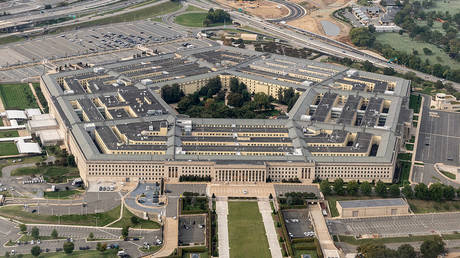
When the Pentagon or any other bureaucratic apparatus releases a revised death toll for an engagement like the ongoing friction involving Iran, the media treats the new number as a correction. The subtext is always that the previous figures were merely premature, and now, thanks to better reconnaissance or post-action reviews, we have the truth.
That is wrong. The baseline error is assuming that a centralized military command possesses both the ability and the incentive to track human loss in real-time with objective accuracy. Neither condition holds.
I have spent years watching defense analysts and intelligence contractors wrestle with battlefield metrics. The dirty secret of modern force accounting is that precision munitions and advanced sensors have not made body counts more accurate; they have made them more abstract. When a strike hits a subterranean installation or a contested logistics hub three hundred miles inside hostile territory, nobody is walking through the rubble with a clipboard. What follows is a messy cocktail of satellite imagery analysis, intercepted communications, local informant reports filtered through three layers of bias, and algorithmic estimation models designed to satisfy congressional committees.
The lazy consensus in mainstream reporting is that these numbers are simply lagging indicators. Give them a few weeks, the theory goes, and the fog of war clears.
That view ignores how institutional incentives work. A military public affairs office operates under structural pressures that have nothing to do with academic historiography. Underreporting risks domestic political blowback if independent investigators uncover the discrepancy later. Overreporting risks undermining strategic messaging or handing an informational victory to adversaries who can weaponize inflated numbers to prove disproportionate destruction. The resulting figure is not a measurement of fact; it is a negotiated compromise between legal liability, public relations, and whatever telemetry analysts can salvage from grainy thermal feeds.
Consider how the mechanics of attribution actually function on the ground. In a theater saturated by proxy networks, decentralized militias, and dual-use infrastructure, distinguishing between a combatant and a non-combatant is rarely a neat binary. A technician maintaining a radar site for an Islamic Revolutionary Guard Corps logistics node wears civilian clothes on the commute and carries an ID card that doesn't list a rank. When a cruise missile flattens that building at 3:00 AM, is that casualty military or civilian? The answer depends entirely on which handbook the assessing officer opened that morning, and whether the primary directive is minimizing civilian casualty optics or demonstrating maximum degradation of enemy capability.
This is why chasing the official tally is a fool's errand. You are measuring the output of a bureaucratic guessing game and treating it as physics.
To understand why these revisions happen at all, you have to look past the press releases and examine the structural lag of modern intelligence collection. Modern reconnaissance relies heavily on signals intelligence and overhead optics. You can count the secondary explosions. You can measure the square footage of a collapsed structure. But converting crater diameters into a head count requires assumptions about shift changes, shelter occupancy, and structural reinforcement that border on science fiction. When the Pentagon revises a toll upward weeks later, it usually means a political necessity has shifted, or an internal audit has forced a reconciliation between conflicting intelligence cells that had been arguing over the same satellite photos since the initial strike order.
The public wants closure. The public wants a final score. War does not work that way, and pretending it does only deepens the fog.
Stop treating casualty updates as news. They are symptoms of a system trying to quantify the unquantifiable for an audience that demands certainty where none exists. The next time a headline breaks about a revised toll, remember that you are looking at an
Why Obsessing Over the Official Death Toll in Modern Conflict is a Total Waste of Time
news
The headlines scream about numbers. Every time a new casualty count drops from Washington or any other capital regarding engagements in places like Iran, the media industrial complex turns into an accounting firm. Journalists rush to microphones to debate whether the Pentagon undercounted by fifty or five hundred bodies, treating war like a messy quarterly earnings report where the only real sin is a bad spreadsheet.
Stop falling for the trap.
Fixating on the raw tally of dead soldiers is a lazy intellectual shortcut. It lets politicians manage optics while actual power dynamics shift entirely out of view. I have spent years tracking how modern states project force, and I can tell you that the official death toll tells you almost nothing about who is actually winning, losing, or reshaping the global order.
The Accounting Illusion
When a government releases a casualty figure, they are not offering a window into objective truth. They are managing domestic political risk.
Think about how modern military engagements actually function. We are long past the era where massive infantry divisions clash across static European fields, with clerks meticulously tracking every helmet left in the mud. Today, power projection relies on cyber warfare, economic strangulation, proxy networks, and precision infrastructure strikes. If a cyberattack on an electrical grid shuts down water treatment plants and hospitals, causing thousands of indirect civilian fatalities weeks later, those names never show up on the Pentagon's official roster of direct military losses.
Yet, those numbers matter infinitely more to the outcome of the conflict than a dozen tactical adjustments on a battlefield.
By reducing a complex geopolitical struggle to a grim arithmetic problem, analysts create a false sense of control. They imply that if we just get the math right, we can somehow quantify the horror and make rational choices. That is entirely backwards. Modern asymmetric conflicts do not end when one side runs out of troops. They end when the economic cost, the political will, or the institutional integrity of a state collapses under the weight of friction.
Why the Lazy Consensus Fails
The standard media critique follows a predictable script. An institution drops a revised number, independent watchdogs scream foul, and talking heads spend three days arguing about whether the discrepancy proves malice or incompetence.
Both sides of that argument miss the forest for the trees.
Malice and incompetence are constants in statecraft. The real story is the structural irrelevance of the data itself. When an economy is crippled by secondary sanctions, or when a regime's legitimacy erodes because its youth can no longer access stable internet or basic medicine, counting battlefield casualties is like measuring the health of a sinking ship by counting the number of wet sailors on deck.
Consider the logistical reality of the region. Modern military operations involving major state actors do not depend on massive troop deployments that generate predictable casualty curves. They rely on capital-intensive technology, intelligence dominance, and deterrence architectures. When casualties occur, they are often designed to send a signal rather than capture territory. Treating those casualties as standard attrition metrics is a category error of the highest order.
The Metrics That Actually Matter
If you want to understand where a conflict is heading, stop looking at the casualty boards. Look at the balance sheets, the supply chains, and the domestic tolerance for inflation.
Track the cost of replacing precision munitions versus the cost of maintaining regional alliances. Look at how intelligence sharing shifts behind closed doors. When sovereign states engage in high-stakes confrontation, the real attrition happens in bank accounts, manufacturing capacity, and diplomatic leverage.
The next time a major report drops with revised figures, ask yourself what narrative the publisher is trying to protect. Usually, it is the comforting fiction that war can still be understood through the neat, quantifiable lens of industrial-era bookkeeping.
It cannot. We are playing a completely different game now, and keeping score with a broken calculator is a luxury we can no longer afford.