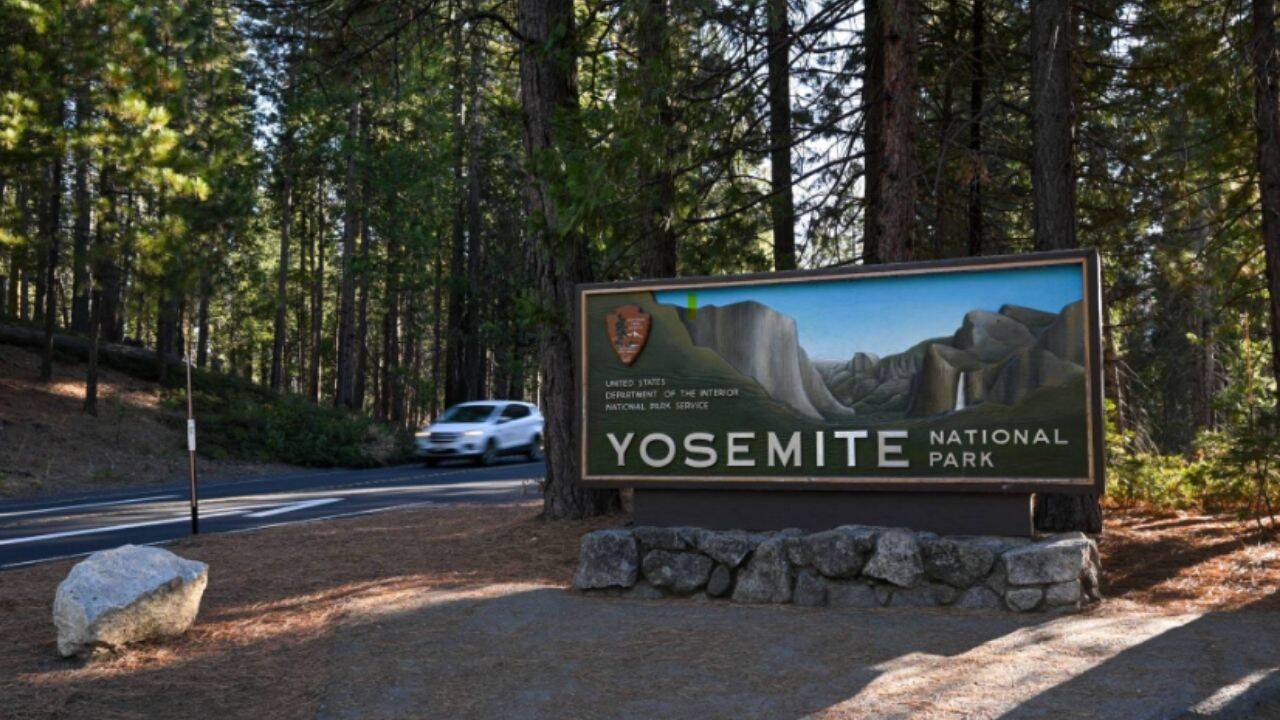
Public land management operates on a delicate equilibrium between statutory preservation and private concession economics. When a commercial entity initiates a property exchange proposal involving federal jurisdiction, the transaction ceases to be a simple real estate trade and transforms into a complex restructuring of public asset rights. The Yosemite land swap proposal involving private holdings adjacent to park boundaries exposes the structural tension between statutory conservation mandates and commercial infrastructure optimization. Analyzing this transaction requires evaluating the underlying mechanics of public-to-private land exchanges, the operational value of exclusive road access, and the long-term precedent such agreements establish for national park administration.
The Structural Anatomy of Federal Land Exchanges
Federal land exchanges derive their authority from legislative frameworks designed to consolidate public land ownership, protect ecological corridors, and eliminate administrative inefficiencies caused by inholdings—private parcels situated entirely within public boundaries. The statutory baseline requires that exchanged properties maintain an equal appraised market value. However, market valuation frequently fails to capture the strategic utility of specific access corridors.
A private holding located at the periphery of a protected ecosystem possesses asymmetrical leverage. While its absolute acreage might equal a remote forest tract offered by the federal government, its spatial positioning can unlock commercial potential that would otherwise remain legally inaccessible.
The Valuation Disconnect
- Acreage Parity: The quantitative metric measuring surface area equivalence often masks qualitative discrepancies in ecological or commercial utility.
- Access Monopoly: A corridor connecting private infrastructure to federal thoroughfares functions as a tollbooth on public access, vastly inflating the economic value of the holding.
- Precedent Risk: Approving a swap that prioritizes commercial convenience over strict conservation invites recurring petitions from adjacent landowners seeking similar infrastructural concessions.
Evaluating the economic fairness of the Yosemite proposal demands a shift from standard real estate appraisal models to network theory. When a developer trades isolated timber or brush acreage for a strategic foothold granting vehicular transit routes through federal territory, the exchange rate must account for the perpetual impairment of the surrounding wilderness asset.
The Economics of Park Access Corridors
Transportation infrastructure inside protected areas functions as a constrained public good. Road capacity, wildlife mortality rates, and visitor congestion metrics dictate the operational limits of park management. Introducing private vehicular access nodes into a saturated ecosystem generates negative externalities that standard economic models rarely price into the transaction.
Commercial entities seek road access primarily to reduce logistical friction for hospitality or residential developments situated outside park boundaries. By securing a direct route through federal property, a developer internalizes the benefits of shortened transit times and scenic routing while externalizing the cost of increased traffic density, acoustic disruption, and habitat fragmentation onto the public trust.
Operational Externalities of Private Transit Routes
- Capacity Degradation: Every commercial vehicle utilizing a restricted service road incrementally reduces the lifespan of the roadbed and increases maintenance liabilities borne by the National Park Service.
- Wildlife Corridor Severance: Roadways act as impermeable barriers to migratory species; increasing vehicular volume directly correlates with elevated wildlife mortality and genetic isolation.
- Enforcement Strain: Park rangers and administrative staff must absorb the burden of monitoring compliance, managing gate access, and resolving disputes arising from mixed public-private infrastructure use.
When the National Park Service evaluates proposals that grant infrastructural favors, the agency engages in a zero-sum allocation of wilderness integrity. The economic gain realized by the private developer is directly offset by a permanent depreciation of the wilderness resource.
Governance and the Precedent Effect
Public land policy relies heavily on administrative consistency. Bureaucratic decisions establish precedents that shape future negotiations between federal agencies and private commercial interests holding real estate assets adjacent to federal boundaries.
If the Department of the Interior approves a transaction where the primary consideration involves granting private roadway access through a national park, it signals to the real estate market that federal conservation boundaries are permeable to well-capitalized developers possessing strategic inholdings. This alters the risk-reward calculation for speculators acquiring land at the edge of protected zones. Rather than developing land within the constraints of local zoning and external infrastructure, investors are incentivized to acquire isolated parcels specifically to pressure the federal government into granting transit easements through land trades.
The regulatory review process must therefore separate short-term administrative convenience from long-term institutional vulnerability. Environmental Impact Statements and public comment periods serve as the primary defensive mechanisms against administrative capture, ensuring that the monetization of public access corridors remains politically and legally constrained.
To mitigate the systemic risks inherent in boundary-adjacent land exchanges, the administrative review must enforce strict valuation of the access rights themselves, independent of the underlying land parcels. If an access corridor yields a quantifiable commercial advantage, the federal government must extract proportional public benefits—such as the permanent surrender of high-priority ecological inholdings elsewhere in the ecosystem—at a multiplier that reflects the permanent nature of the concession. The transaction must not merely balance the ledger on paper; it must demonstrably enhance the ecological resilience of the park by consolidating vital habitats rather than fracturing them for the benefit of private logistics.