Dust does not settle in the Hindu Kush. It hangs. It suspends itself in the thin, biting air like a permanent gray memory, coating the leaves of stunted walnut trees and settling deep into the creases of old men's hands.
Listen. Can you hear it?
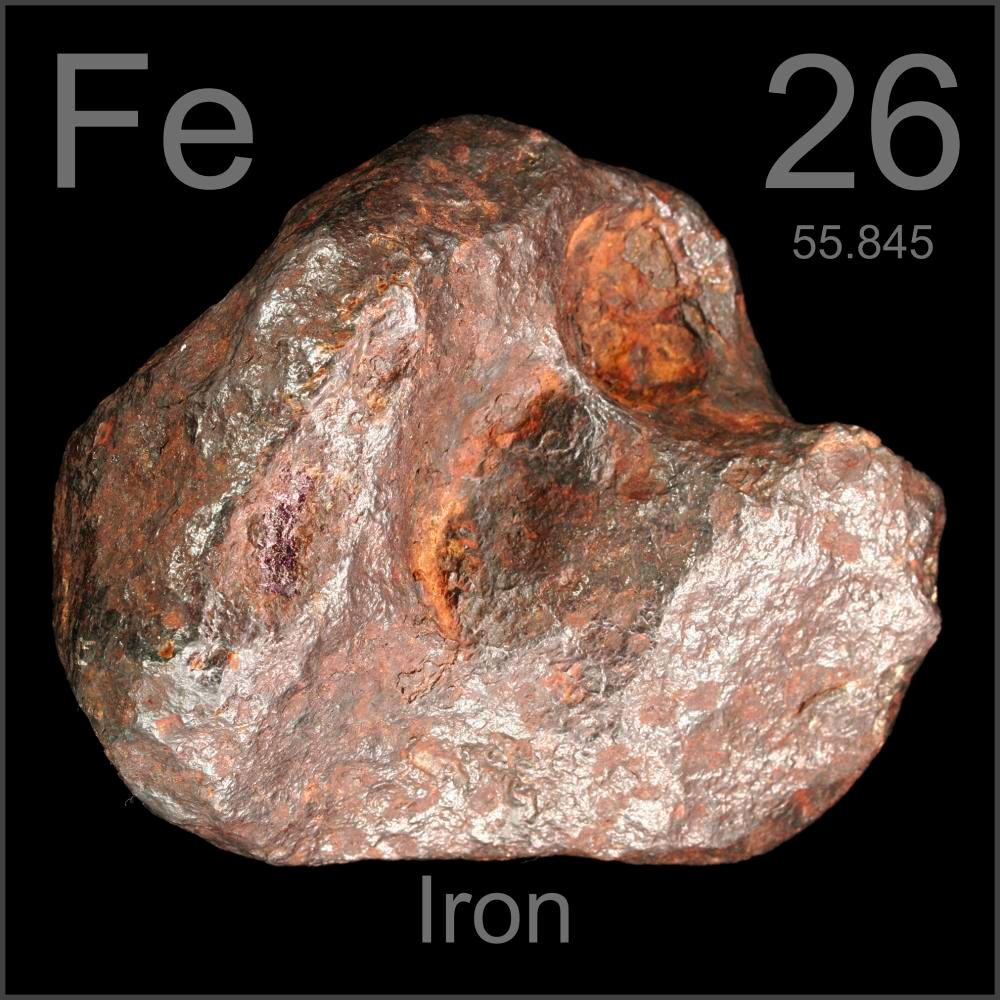
That is the sound of a billion-dollar silence. Beneath the ridges of jagged rock, in provinces where the map bleeds out into names few outsiders can pronounce, lies something the modern world is desperate to consume. Copper that has never known a wire. Lithium that has never powered a single dashboard. Iron ore packed so densely into the earth that entire peaks bleed a dull, rust-red against the slate-colored sky.
For decades, the mountains kept their secrets. Empires came with drums beating and banners flying, stumbled through the passes, bled in the valleys, and left behind rusted tanks that now serve as playground equipment for children who have never known a day without war. The empires wanted glory. They wanted buffer states, democratic experiments, ideological victories. They wanted everything except the ground itself.
Now, the math has changed.
The men who currently hold the keys to Kabul are looking at a different kind of scoreboard. They do not wear Western suits, and they do not speak the language of international finance committees. But they understand scarcity. They understand a treasury that sits empty while the winter wind howls through broken windows. They look north, south, east, and west, and they see a global hunger for the raw ingredients of the future.
Enter the overture.
In quiet diplomatic channels, through back-room whispers and emissaries sent to test the waters, messages are being sent across the ocean. The target is Washington. Specifically, the incoming administration of a leader who views the world not through the lens of traditional alliances, but through the hard, transactional glare of a real estate ledger.
The proposition is remarkably simple, dressed in the oldest language on earth: We have what you need to build your future. You have the capital and the machinery to pull it from the dark. Let's make a deal.
Consider what this means.
To understand the weight of this moment, you have to step away from the cable news chyrons and stand on a ridge in Logar or Bamiyan. Imagine a hypothetical engineer named Rahim. He is fifty years old, with eyes the color of weathered shale and lungs that have tasted wood smoke and dust his entire life. Rahim does not care about geopolitical leverage. He cares about whether his youngest daughter can get medicine, whether the well in the village will run dry before the spring thaw, and whether the men with the rifles will knock on his door tonight.
Rahim has walked over ground that geological surveys valued at upwards of a trillion dollars. He has tripped over green-tinted stones that modern laboratories would classify as high-grade copper ore. To Rahim, the stones are just obstacles that ruin the plow.
When he hears that distant capitals are talking about mineral deals, he feels a cold knot in his stomach. Because he knows how this story goes.
Resources do not save a country. Resources curse it.
Historians call it the resource curse, or the paradox of plenty. It is a cruel law of economic gravity. When a patch of earth is suddenly blessed with unfathomable wealth beneath its topsoil, the people living on that topsoil rarely see the harvest. Instead, money pools at the top. Foreign powers extract the bounty. Corruption hardens like concrete. The guns get bigger, the borders get tighter, and the dust simply turns to smoke.
Yet, the current administration in Kabul is desperate. Isolation is a slow poison. An economy cannot run on ideology alone, and bread cannot be bought with fiery rhetoric. The sanctions bite. The international community looks away. And so, pragmatism—cold, unyielding, and terrifyingly practical—begins to whisper in the ears of the leadership.
They are signaling a willingness to talk to the United States. Not about human rights. Not about women's education. Not about the bitter twenty-year withdrawal that left Kabul in chaos on an August afternoon.
They want to talk about business.
They are dangling the bait of massive extraction rights, hoping to tempt American corporations back into the Hindu Kush. They are betting that the global thirst for electric vehicle batteries, microchips, and renewable energy infrastructure will override geopolitical revulsion. They are betting that capitalism has no memory, only an appetite.
And they might be right.
Look at the global board. China is already circling, eyeing the copper mines of Aynak with hungry patience, signing preliminary agreements and positioning itself as the primary benefactor of a pariah state. But Beijing’s embrace is heavy, conditional, and ultimately transactional in a way that leaves little room for local agency. American involvement, from the perspective of Kabul's strategists, would introduce a rival bidder. It would drive up the price. It would create leverage.
What does Washington do with this?
That is the question hanging in the humid air of the capital, echoing through the neoclassical hallways of power thousands of miles away. To engage is to invite a storm of moral condemnation. How do you sit across a negotiating table from a regime that has systematically erased half its population from public life, rolling back two decades of hard-won progress, and sign a contract for copper and lithium? How do you explain that to voters, to activists, to history?
And yet.
The energy transition requires raw materials on a scale that defies imagination. The race for technological supremacy between superpowers does not pause for moral alignment. If the United States stands entirely aloof, the wealth of the Hindu Kush flows eastward, locked into supply chains that will power the next half-century of geopolitical dominance for its chief rival.
The tension is exquisite. It is agonizing. It strips away the comforting illusions of foreign policy and lays bare the raw machinery of survival.
Back in the mountains, the wind picks up.
Rahim watches a hawk circle lazily over the valley floor, riding the thermal currents up toward the peaks where the iron ore sleeps. He does not know what a supply chain is. He has never heard of a stock market index. But he knows that when the big powers start looking at the mountains with greedy eyes, it is the people living in the shadow of those mountains who pay for the extraction with their sweat, their land, and their blood.
The overtures have been made. The message has crossed the digital wires and the secret channels. The leaders in Washington are looking at the reports, weighing the moral hazard against the strategic necessity, calculating the cost of action and the price of absence.
The mountain waits. It has been there for millions of years. It will still be there long after the deals are signed, the ink is dry, and the first trucks roll down the winding passes, heavy with the stolen bones of the earth.
The horizon turns the color of a bruised plum. A single lantern flickers in a stone house down the valley, small and vulnerable against the vast, indifferent dark.