The myth of the empty war chest is officially dead. When Treasury Secretary Scott Bessent declared that the United States possesses "plenty of money" to fund a prolonged conflict involving Iran, he wasn't just offering a geopolitical reassurance. He was signaling a fundamental shift in how the American empire views its balance sheet. For decades, the specter of the national debt was used as a political cudgel to suggest that foreign entanglements had a hard ceiling. Bessent’s admission reveals the reality behind the curtain. The United States does not fund wars through savings accounts or surplus tax revenue. It funds them through the unique, nearly infinite elasticity of the dollar as the world’s reserve currency.
While the public frets over inflation and the price of eggs, the Treasury is operating on a different plane of existence. The cost of a full-scale regional conflict in the Middle East is no longer measured against the federal deficit in any meaningful way. It is measured against the endurance of the global bond market and the willingness of the world to continue buying American debt. As long as the U.S. remains the primary guarantor of global maritime security and the dollar remains the "cleanest shirt in the dirty laundry" of global fiat, the printing press stays warm. This is the era of the permanent war economy, where the constraint isn't the availability of cash, but the capacity of the industrial base to turn that cash into kinetic energy.
The Mechanics of an Infinite Credit Line
To understand how a nation with over $34 trillion in debt can claim to have "plenty of money" for a new war, you have to look at the plumbing of the Treasury. Modern warfare is an exercise in liquidity. When the Pentagon needs to surge assets into the Persian Gulf, the Treasury Department issues new debt in the form of T-bills and bonds. These are snatched up by domestic banks, foreign central banks, and institutional investors.
The United States effectively operates the world’s largest overdraft facility. Unlike a household or a small business, the U.S. government controls the currency in which its debt is denominated. This means it can never technically go bankrupt in the traditional sense. It can always create more units of currency to pay off the interest on its obligations. The "money" Bessent refers to isn't a pile of gold in a vault; it is the institutionalized trust in American military and economic hegemony.
However, this isn't a free lunch. Funding a war through debt is a hidden tax on the future. Every dollar created to buy a Tomahawk missile is a dollar that eventually competes for goods and services in the real economy. This contributes to the persistent inflationary pressure that has haunted the post-pandemic era. The Treasury’s confidence rests on the belief that the "war premium"—the stability provided by American dominance—is worth more to the global markets than the cost of the inflation generated to maintain it.
The Iran Calculus and the Global Energy Grid
A war with Iran isn't just about troop movements or drone strikes. It is a high-stakes gamble on the price of energy. Iran sits on the Strait of Hormuz, a narrow waterway through which roughly 20% of the world’s petroleum liquids pass every day. If conflict erupts, the "plenty of money" Bessent speaks of will be immediately tested by a spike in global oil prices.
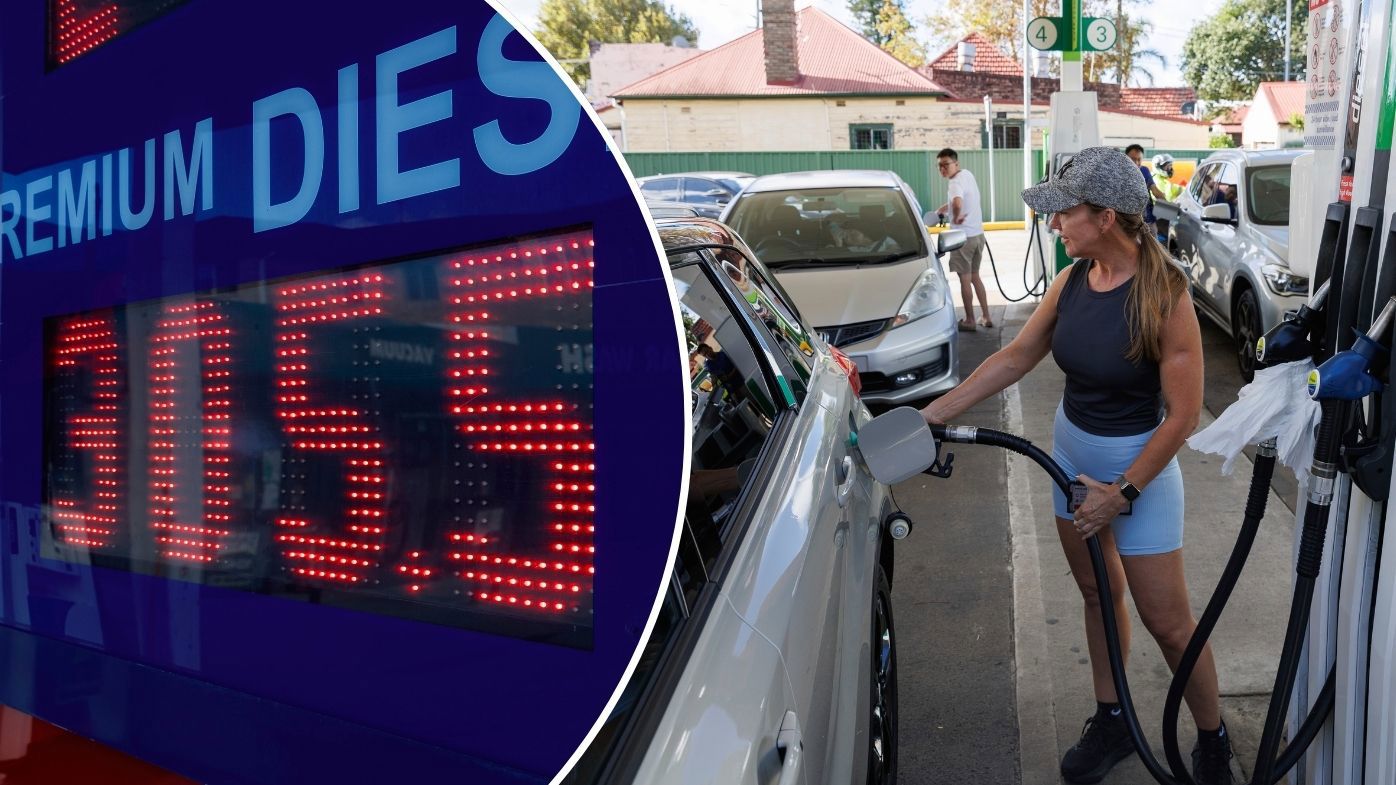
The US economy might have the financial depth to absorb the direct costs of military hardware, but the indirect costs of an energy shock are a different beast. If the Strait is closed, the price of Brent crude doesn't just go up; it teleports to levels that could trigger a global recession. In this scenario, the Treasury would be forced to fund not just the military effort, but potentially massive domestic subsidies to prevent an economic collapse at home.
The Hidden Cost of Defense Industrial Capacity
A major oversight in the "we have the money" argument is the distinction between financial capital and physical capital. You can print money, but you cannot print 155mm artillery shells or microchips for precision-guided munitions. The American defense industrial base has spent thirty years "leaning out" its operations. It is built for efficiency in peacetime, not for the massive, sustained consumption of a high-intensity war.
- Lead Times: Some advanced missile systems take two years to build from the moment the order is placed.
- Labor Shortages: There is a chronic lack of specialized welders and engineers in the naval shipbuilding sector.
- Raw Materials: The supply chains for rare earth minerals required for high-tech weaponry remain heavily reliant on competitors.
Money is a lubricant, not a fuel. If the factories can’t scale, the money simply sits on the books as unspent appropriations, or worse, it drives up the price of existing inventory without increasing the actual supply of weapons. This is the bottleneck that no amount of Treasury maneuvering can solve overnight.
The Geopolitical Insurance Policy
Why is the Treasury so confident? Because they know that in times of global chaos, capital flows toward the United States, not away from it. This is the "Safe Haven" effect. When missiles fly in the Middle East, investors flee emerging markets and European equities, seeking the safety of the U.S. Dollar.
This paradox allows the U.S. to fund its wars more cheaply exactly when the world is most volatile. As demand for dollars increases, the Treasury can issue debt at lower interest rates than would otherwise be possible. It is a self-reinforcing cycle of power. The more the U.S. involves itself in global security, the more the world relies on the U.S. financial system to protect its wealth.
The Domestic Breaking Point
While the institutional players are comfortable with the "infinite credit" model, the American taxpayer is increasingly skeptical. The disconnect between "plenty of money for war" and "no money for infrastructure/healthcare/education" is a growing fault line in domestic politics. This is the "guns vs. butter" debate for the 21st century.
The Treasury's stance assumes that the social contract can withstand the strain of prioritized military spending. If the public perceives that their purchasing power is being sacrificed to fund a war with no clear exit strategy, the political cost will eventually outweigh the financial capacity. We are seeing the early stages of this in the fragmented support for foreign aid packages. The "plenty of money" narrative only works as long as the domestic population believes that money is being spent in their long-term interest.
The End of the Unipolar Financial Era
The greatest risk to Bessent’s "plenty of money" claim isn't Iran; it is the acceleration of de-dollarization. If nations like China, India, and Russia successfully create alternative payment systems that bypass the dollar, the U.S. loses its superpower status. The ability to fund wars through debt relies entirely on the dollar’s status as the global medium of exchange.
If the "war with Iran" becomes a catalyst for the BRICS nations to move more aggressively away from the dollar, the Treasury’s credit card might finally hit its limit. At that point, the U.S. would have to fund its military the way every other country does: through actual savings, higher taxes, or severe austerity. That is a reality no one in Washington is prepared for.
The strategy currently in play is a high-speed game of chicken with economic gravity. The U.S. is betting that its financial plumbing can outlast any kinetic conflict. It’s a bet backed by aircraft carriers and the sheer inertia of the global financial system. But inertia is not a permanent state of being.
Monitor the "yield curve" on long-term Treasury bonds. If investors begin demanding significantly higher interest rates to hold American debt during a conflict, it means the market no longer believes the "plenty of money" rhetoric. That is the moment the music stops. Until then, the checks will continue to clear, regardless of the cost.