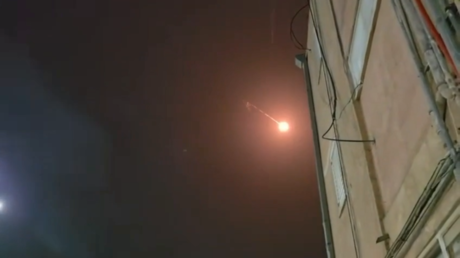
The tea was still warm when the world fractured. In the northern reaches of Tehran, where the Alborz Mountains cast long, cool shadows over the concrete, an evening usually tastes of gasoline, jasmine, and the low hum of a city settling into its skin. Then came the whistle. It is a sound that defies physics—a tear in the fabric of the air that reaches the ear a split second after the soul already knows it is coming.
The residential block on the corner didn’t just fall. It disintegrated.
Western news tickers will call this a "surgical strike." They will speak of "strategic assets" and "retaliatory measures" involving US-Israeli coordination. They will quantify the event with coordinates and ordnance types. But on the ground, there is no surgery. There is only the smell of pulverized limestone and the haunting, rhythmic beep of a car alarm that no one is left to turn off.
The Weight of Concrete
Imagine a woman named Farah. She is not a soldier. She is a mathematics tutor who, moments before the strike, was arguing with her teenage son about his messy bedroom. This is a hypothetical scenario, but it is the only way to understand the three lives lost in the rubble. When the missiles struck the upper floors, the architectural integrity of the building vanished.
Physics is brutal. When a multi-story structure loses its skeletal support, the floors pancake. Each layer of reinforced concrete, weighing several tons, slams into the one below it. There is no "room for survival" in a pancake collapse. There is only the instantaneous transition from a home filled with books, rugs, and half-eaten dinners to a tomb of grey powder.
The reports confirm three dead. In the grand ledger of geopolitical conflict, three is a small number. It is a footnote. It is a rounding error in the casualty counts of the 21st century. But to the people standing behind the yellow police tape in Tehran, three is an infinite void. It is the father who won't come home from the night shift. It is the grandmother who was known for making the best fesenjān in the district. It is the silence that follows the roar.
The Invisible Trajectory
To understand why a residential building in the heart of a sovereign capital becomes a pile of scorched rebar, you have to look past the smoke. You have to look at the invisible lines of tension stretching from Washington to Tel Aviv to Tehran.
This wasn't an accident. Modern precision-guided munitions are terrifyingly accurate. They go exactly where they are told to go. When a missile hits a residential structure, it is because a human being, or an algorithm supervised by one, decided that the value of whatever—or whoever—was inside outweighed the "collateral" cost of the lives nearby.
The strike is a message written in fire. By targeting a location in Tehran, the attackers are stripping away the illusion of sanctuary. They are saying: We can touch you anywhere. Your living rooms are our battlefields.
Consider the technology involved. These aren't the carpet bombs of the 1940s. We are talking about munitions equipped with GPS-aided inertial navigation systems.
$$d = vt + \frac{1}{2}at^2$$
The math of the descent is perfect. The tragedy is that the math doesn't account for the tutored students, the unwashed dishes, or the sleeping infants. The "strategic" objective might have been a hidden communications hub or a high-ranking official, but the kinetic reality is a crater where a family used to exist.
The Echo in the Alleyways
Watching the video footage released shortly after the strike is a lesson in human fragility. You see the flash first—a white-hot bloom that saturates the camera lens. Then the sound hits, a physical wall of pressure that blows out windows blocks away.
Then comes the scream. Not the cinematic scream of a horror movie, but a high-pitched, jagged sound of pure confusion.
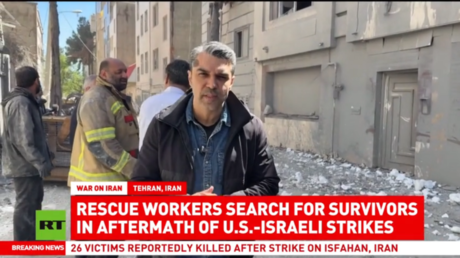
People began to dig with their bare hands. In the aftermath of such a strike, the first responders aren't always the men in uniforms. They are the neighbors. They are the shopkeepers who were selling cigarettes and bread five minutes earlier. They claw at the dust, their fingernails breaking against the jagged edges of what used to be a balcony.
The air in Tehran tonight is thick. It isn't just the smog. It is the collective intake of breath from a population realizing that the "shadow war" has stepped out of the shadows and into their hallways. When the theater of war moves from desert outposts to urban apartments, the psychological toll is far heavier than the physical one.
The Cost of Being "Right"
Every side in this triangulation of violence has a narrative. One side claims self-defense against "terrorist infrastructure." The other claims "martyrdom" and "sovereignty." They use words like "proportionality" and "deterrence."
These words are bandages that aren't big enough to cover the wound.
If you stand in the middle of the debris, the political justifications feel hollow. The "invisible stakes" aren't about which flag flies over which territory; they are about the erosion of the boundary between combatant and civilian. When we accept the destruction of a residential building as a standard Tuesday news item, we are losing something fundamental. We are losing the ability to be horrified.
The video of the Tehran strike shows a plume of smoke rising against the night sky, framed by the glowing lights of the rest of the city. Life goes on just a few hundred yards away. Cars continue to drive. Shops stay open. This is the most terrifying part of modern conflict: the way the extraordinary becomes ordinary. The way a missile strike becomes just another piece of "content" to be consumed on a smartphone screen before scrolling to the next video.
A City of Memory
Tehran is a city that remembers everything. It remembers revolutions, long wars with neighbors, and decades of sanctions. It is a city built on layers of history, much like the layers of the collapsed building.
When the dust finally settles on Damavand Street, the cranes will come. The rubble will be hauled away in the back of rusted trucks. A new building might eventually rise in its place, or perhaps it will remain a vacant lot—a gap-toothed smile in the city’s skyline.
But the people who lived through the whistle will never be the same. Every time a car backfires or a low-flying plane passes overhead, their hearts will skip. They will look at the ceiling and wonder if the math of some distant general has already marked their coordinates.
Three people are gone. The world will move on to the next headline, the next provocation, and the next "surgical" success. Yet, in a quiet room somewhere in Tehran, a tea cup sits on a table, cold and untouched, waiting for someone who is never coming back.
The mountains remain silent, watching the city below bleed in the dark.