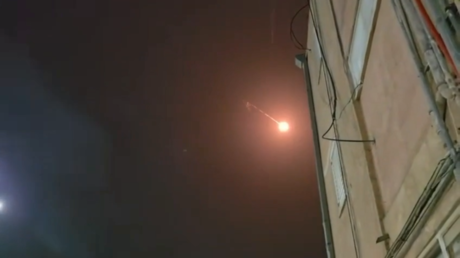
The headlines were unanimous. They called it a miracle of modern engineering. A 99% interception rate. A masterclass in multi-layered defense. Western media outlets spent days circulating high-definition footage of streaks in the night sky over Jerusalem, painting Iran’s April 2024 retaliatory strike as an embarrassing, expensive flop.
They are dead wrong.
If you measure victory by the number of craters in the dirt, Israel won. If you measure victory by the long-term erosion of economic stability, the exposure of critical intelligence, and the shattering of a thirty-year deterrence doctrine, Israel just suffered its most significant strategic setback since the 1973 Yom Kippur War.
I have watched defense contractors and "experts" pat themselves on the back for decades while missing the forest for the trees. This isn't a game of Missile Command. It is a war of attrition where the side with the cheaper "garbage" usually wins the marathon.
The Mathematical Trap of the Iron Shield
The most dangerous delusion in modern warfare is the belief that a successful interception is a net positive. It isn't. It is a massive, unforced transfer of wealth.
Let’s look at the cold, hard numbers that the "99% success" crowd ignores. Iran launched a swarm of Shahed drones and older-generation missiles. The estimated cost to Tehran? Somewhere in the neighborhood of $100 million.
To stop that "failure," Israel and its allies—the US, UK, and Jordan—burned through more than $1.3 billion in a single night.
- Arrow 3 Interceptors: Roughly $3.5 million per shot.
- David’s Sling: $1 million per interceptor.
- Jet Fuel and Air Sorties: Tens of millions in operational overhead.
Imagine a scenario where a burglar throws $100 bricks at your house, and you spend $1,300 on high-tech lasers to vaporize each brick before it hits the glass. You saved the window, but the burglar has a pile of bricks and you're out of cash. Iran didn't just fire missiles; they fired a financial stress test. In a war of attrition, the entity spending 13 times more than its opponent to maintain the status quo is the one losing.
Intelligence Harvesting Under the Guise of Failure
The "lazy consensus" says Iran’s attack was telegraphed because they are incompetent. They gave 72 hours of notice. They used slow-moving drones that took hours to arrive.
This wasn't a mistake. It was a probe.
By telegraphing the strike, Iran forced Israel to turn on every single sensor, radar, and battery in its repertoire. For five hours, Iranian intelligence sat back and recorded the "electronic signature" of the most sophisticated integrated air defense system on the planet.
They now know:
- Exactly where the "blind spots" are in the regional radar net.
- The exact response times of the RAF and USAF squadrons based in Cyprus and Jordan.
- The saturation point where the Arrow system shifts from "optimal" to "strained."
Tehran traded a few hundred pieces of aging hardware for a complete map of the West's defensive playbook in the Middle East. They didn't want to hit the Nevatim Airbase; they wanted to see exactly how Israel protects Nevatim Airbase. They got the data. Israel got a billion-dollar bill and a false sense of security.
The Death of the Deterrence Doctrine
Since the 1990s, the entire Israeli security architecture has rested on one pillar: "The War Between the Wars." The idea was that through proxy strikes and targeted assassinations (like the Damascus consulate hit), Israel could keep Iran in a box without ever facing a direct attack.
That box is gone.
By launching 300+ projectiles from Iranian soil, Tehran established a new "floor" for escalation. They proved that the "Red Line" of direct state-on-state conflict is a fiction. Every future Israeli operation now carries the weight of a direct ballistic response.
The status quo didn't hold. It shifted. Israel is now forced into a reactive posture, dependent on a "coalition of the willing" that is already showing cracks. Jordan’s participation in the defense was a one-time political gamble that may not survive the next round of domestic unrest.
The Myth of Self-Sufficiency
For years, the Israeli defense establishment marketed the Iron Dome and its siblings as proof of total military independence. April 2024 exposed the lie.
Without the United States' satellite tracking and the British and French fighter jets clearing the "outer ring," the 99% interception rate would have likely plummeted to 70% or lower. In missile defense, a 30% failure rate is a national catastrophe.
Israel is now more tethered to Washington than at any point in the last thirty years. This isn't "strength." It’s a strategic bottleneck. If US political winds shift—and they are shifting—the "Iron Shield" becomes a sieve.
Stop looking at the photos of intercepted sparks in the sky. Look at the balance sheet. Look at the depleted interceptor stockpiles. Look at the intelligence Iran just walked away with for the price of some lawnmower engines with wings.
The "failed" strike was the most successful reconnaissance mission in modern history.
Don't let the 99% statistic fool you. In the business of war, the side that spends the most to stay in the same place is the side that eventually falls.