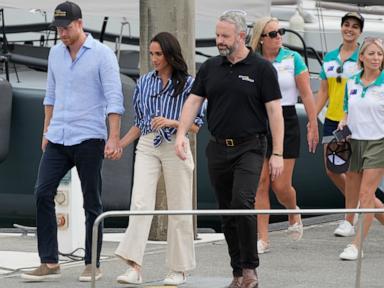
Flashbulbs do not just illuminate; they heat. For Prince Harry, the British press corps is less a collection of journalists and more a permanent weather system. Every time his name appears on a Heathrow flight manifesto, the atmospheric pressure changes across the United Kingdom.
The latest data point in this lifelong study of royal friction is a scheduled trip to London. It is a brief visit, ostensibly anchored to charity work and legacy projects. But the machinery of modern celebrity does not care about itineraries. It cares about absences. The moment the news broke, the commentary machine ignored the event itself and focused entirely on a five-word question: Will Meghan and the children come?
To view this as mere tabloid gossip is to miss the deeper, more human drama playing out beneath the headlines. This is not just a story about a prince boarding a plane. It is a story about the impossible math of modern exile, the weight of protective instincts, and the quiet, agonizing choice between a homeland and a home.
The Geography of Fear
Consider the logistics of an ordinary family vacation. You pack the bags, check the passports, and argue about who forgot the phone chargers. Now, layer that with the reality of an international security apparatus.
When Harry steps off a plane in the UK, he enters a legal and emotional minefield regarding his personal protection. The stripping of his official, taxpayer-funded royal security detail remains a point of intense legal contention. For a private citizen, hiring private security is a matter of writing a check. For a son of the King, it is a bureaucratic nightmare. Private bodyguards in Britain cannot carry firearms. They do not have access to local intelligence networks.
Imagine standing on a tarmac knowing that the people responsible for keeping your children safe are effectively blindfolded compared to the state apparatus.
This is the invisible wall built between California and London. It is easy for commentators sitting in climate-controlled television studios to accuse the Duchess of Sussex of "snubbing" the royal family or holding a grudge. It is much harder to look at the reality of a mother weighing the physical safety of Archie and Lilibet against the optics of a family reunion. The decision to stay in Montecito is often painted as a political statement. It is far more likely a tactical one.
The Memory of the Crowd
Rhythm dictates everything in public life. The royal family operates on a strict, metronomic beat of tradition, appearance, and duty. But Harry and Meghan broke that rhythm years ago. When you step out of the dance, returning to the ballroom is fraught with peril.
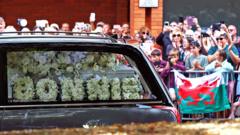
Every return to London for Harry is a haunting. The streets are the same ones he walked behind his mother’s coffin. The cameras are the same models—albeit upgraded—that chased her. The psychological toll of this environment is not speculative; Harry has spoken openly about the physical reaction he suffers when flying into London. The tightness in the chest. The hyper-vigilance.
Now, add the layer of a spouse who faced an unprecedented onslaught of media hostility.
The British public's relationship with Meghan Markle remains deeply polarized. For every supporter who views her as a breath of fresh air choked out by an archaic institution, there is a critic who sees her as a disruptive force. To bring her back into that arena is not a simple act of accompaniment. It is an escalation. It invites a media circus that guarantees the actual purpose of Harry’s trip—the causes he champions, the people he wishes to help—will be completely overshadowed.
Isolation is often the price of peace. The quiet of Santa Barbara, with its rolling hills and relative anonymity, offers something the UK currently cannot: a controlled environment. In California, they are celebrities in a sea of celebrities. In London, they are lightning rods in a thunderstorm.
The Toll on the Next Generation
The real tragedy of this geographical and emotional schism is not the relationship between the adults. Adults can rationalize. Adults can read contracts, sign non-disclosure agreements, and hire lawyers. The real cost is levied against the children.
Archie and Lilibet are growing up with a phantom limb. They have an entire half of their heritage—a royal lineage stretching back centuries, castles, titles, and a grandfather who sits on a throne—that exists for them primarily through FaceTime screens. They are princes and princesses of a realm they barely know.
But consider the alternative. To bring them into the UK media fishbowl is to introduce them to the very pressures that fractured their father's life. How do you explain to a child why people are shouting their name from behind steel barricades? How do you shield them from the lens when the lens is the ultimate commodity?
The choice not to bring the children to London is an act of fierce, almost desperate preservation. It is a declaration that the cycle stops here, even if the cost of breaking that cycle is a profound sense of estrangement.
The Unforgiving Lens
The media buzz surrounding this trip reveals a fundamental truth about our relationship with the House of Windsor. We treat them as characters in a prestige television drama rather than human beings navigating a catastrophic family breakdown. We demand access. We demand conflict. We demand the catharsis of a reunion or the drama of a snub.
But real life does not have a writers' room. It has broken relationships that heal slowly, if at all. It has logistical hurdles that cannot be hand-waved away in a montage.
As the date of the visit approaches, the speculation will reach a fever pitch. Flight paths will be monitored. Hotel bookings will be scrutinized. Every empty seat next to Prince Harry will be analyzed as if it were a geopolitical statement.
But the real story is found in the quiet moments before departure. It is in the heavy conversation between a husband and wife in a kitchen in California, weighing the desire to connect with one's roots against the primal instinct to protect one's family. It is the realization that sometimes, the greatest act of love is staying behind.
The plane will land. The cameras will flash. Harry will step out into the cold British air alone, carrying the weight of a crown he walked away from, and the heavy silence of the family he left across the ocean to keep safe.