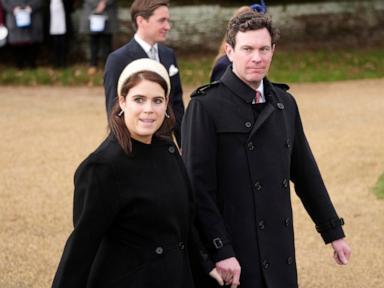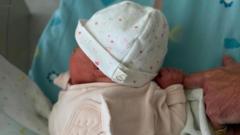
Princess Eugenie and her husband, Jack Brooksbank, have officially named their newborn daughter Adelaide Elizabeth Annina Brooksbank. Born on August 3 in Lisbon, Portugal, the infant is the couple's third child, joining older brothers August and Ernest. Released via a coordinated social media announcement exactly fourteen days after birth, the moniker immediately triggered global interest.
Beyond the surface-level charm of a royal baby reveal lies a deliberate exercise in modern dynastic positioning. Tabloid coverage fixated on the sentimental nods to Queen Elizabeth II and European history. Mainstream media outlets treated the announcement as a sweet family milestone. They missed the underlying strategic architecture. Also making news lately: The Voice That Refused to Leave the Coast.
The Geography of Independence
The choice of birth location sets this generation apart. Delivering in Lisbon rather than a traditional London maternity ward is not a logistical accident. It is a calculated step away from the institutional fishbowl.
Splitting time between Portugal and the United Kingdom allows the Brooksbank family to operate on their own terms. Modern royal branding requires oxygen outside the immediate palace ecosystem. By anchoring the child's name in both English and Portuguese heritage, Eugenie signals a transnational identity. She is carving out a European-adjacent sphere of influence that completely bypasses the traditional British court circular. More details on this are detailed by Associated Press.
Consider the historical weight of the primary name. Adelaide reaches back to Queen Adelaide, consort of William IV, alongside historical Portuguese figures. It is an aristocratic choice without being aggressively archaic. It sounds established, refined, and entirely detached from the controversies surrounding other factions of the Windsor family.
The Fourteen-Day Window
Timing matters in media manipulation. Senior working royals typically rush out names within forty-eight hours to satisfy institutional demand and media cycles. Prince William and Catherine, Princess of Wales, moved swiftly with their children.
Eugenie and her sister, Princess Beatrice, operate differently. Beatrice waited thirteen days to announce Sienna and a full week for Athena. Eugenie took a full fortnight for Adelaide.
This delay is a deliberate reclamation of narrative control. By refusing to dance to the beat of the daily news cycle, the couple trains the public to wait for them. They dictate the schedule. In an era where hyper-connectivity commodifies every second of personal life, withholding a royal name for two weeks is a luxury statement. It communicates absolute autonomy.
Navigating the Title Void
The children of Princess Eugenie hold no royal titles. This was a conscious decision made by their parents to shield them from the bureaucratic burdens and public scrutiny that plague working royals.
Without a princely title or an HRH designation, the children must rely on personal brand equity. Their names are their primary assets. Adelaide Elizabeth Annina carries enough historic gravitas to command respect in professional or social circles, yet it remains grounded enough to avoid parody.
The inclusion of Annina points to personal intimacy rather than statecraft. It honors a close circle friend, grounding the high-society nomenclature in authentic human connection. This duality protects the child. She is royal enough to capture global headlines, yet ordinary enough to navigate a private school, a career, and a life outside institutional obligations.
The Shift in Windsor Public Relations
The House of Windsor is currently undergoing a massive contraction. With fewer working members handling a staggering volume of public engagements, peripheral family members must find sustainable economic and social footing.
Eugenie and Jack represent the blueprint for the post-institutional royal. They maintain patronages and family ties while maintaining commercial independence abroad. The branding around baby Adelaide reflects this modern reality. She is an infant born into global aristocracy, shaped by European mobility, and insulated from the obligations of the crown.
The twenty-first-century royal baby announcement is no longer about succession. It is about lifestyle design. By stepping away from the traditional London clinic, taking two weeks to craft the narrative, and selecting a name that bridges two distinct European nations, Princess Eugenie has quietly published a masterclass in modern dynastic survival.