Hong Kong no longer functions as the bridge between two worlds because the worlds themselves have moved. For decades, the city operated on a simple, lucrative friction. It was the only place where Western capital could meet Chinese labor under a legal system that both sides trusted. That friction has evaporated. As Beijing prioritizes national security and internal self-reliance through its "dual circulation" strategy, and the West moves toward "de-risking," the very concept of a middleman is becoming obsolete. The city is not merely writing a new chapter; it is being forced to invent a different reason to exist while its traditional economic engines—IPO fees, property premiums, and logistics—sputter under the weight of a new geopolitical reality.
The end of the golden age of arbitrage
The old Hong Kong thrived on a massive imbalance. On one side, you had a restricted mainland economy desperate for foreign exchange and global recognition. On the other, you had global investors eager to tap into Chinese growth but terrified of mainland courts. Hong Kong solved this by offering a British-inspired legal framework on Chinese soil. It was the ultimate arbitrage play.
That play is over. Beijing’s shift toward the Greater Bay Area (GBA) integration is not just a regional planning exercise; it is an absorption strategy. The goal is to turn Hong Kong into one of several high-tech nodes, rather than the singular gateway. When Shenzhen can handle its own tech financing and Shanghai can manage its own primary markets, the "specialness" of Hong Kong’s status begins to look more like a legacy feature than a modern necessity.
The numbers tell a grim story. IPO proceeds in the city have hit multi-decade lows. The flow of capital is no longer a torrent; it is a controlled drip. Wealthy mainlanders still move money here, but the nature of that wealth has changed. It is no longer about aggressive expansion. It is about preservation and hiding from the volatility of the mainland’s property sector collapse.
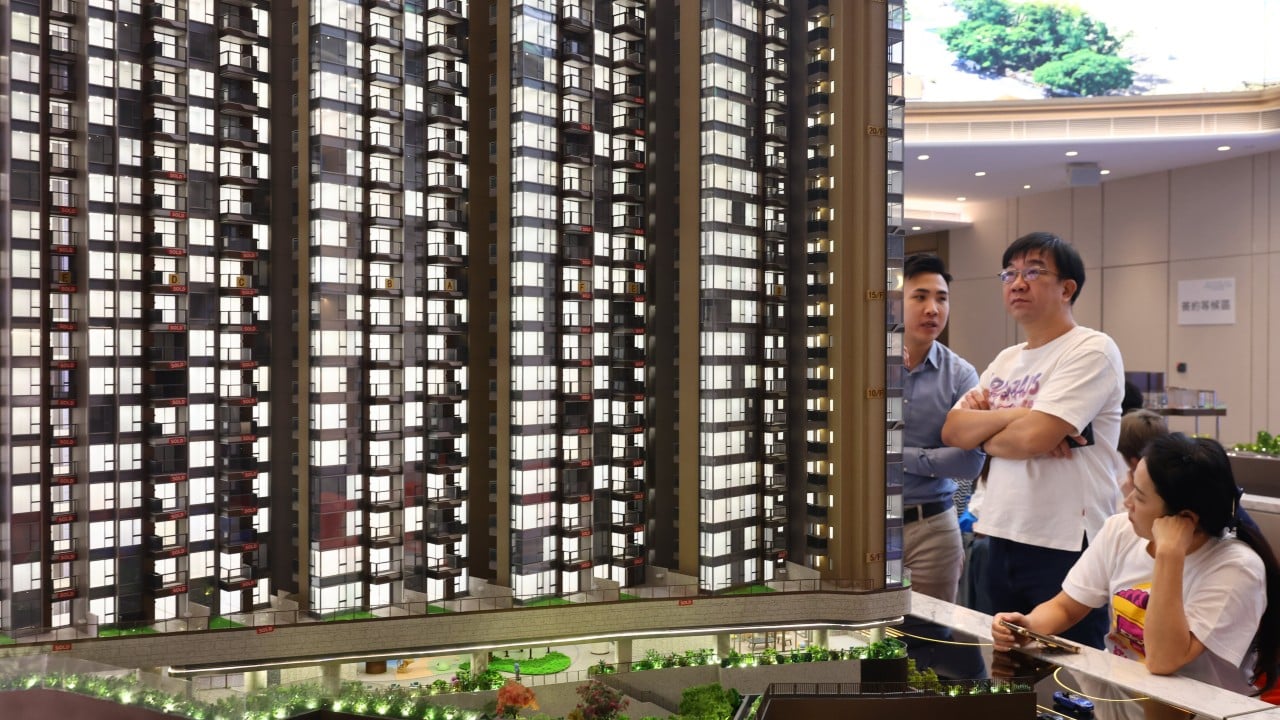
The hollow shell of the property market
For thirty years, the Hong Kong government’s secret sauce was land. By keeping supply artificially low, they ensured property prices remained among the highest on earth. This created a massive wealth effect for the elite and provided the government with a steady stream of revenue without needing a high income tax.
This model is breaking. With interest rates staying higher for longer and a significant exodus of the professional middle class, the demand floor has dropped. More importantly, the mainland developers who used to bid up land prices to astronomical levels are now mostly insolvent or struggling to survive. Without the "China bid" at government land auctions, the city’s fiscal foundation is looking increasingly shaky.
We are seeing a structural shift where the city must find a way to fund its social services without relying on the property teat. This is a terrifying prospect for a bureaucracy that has never had to manage a truly diverse or innovative tax base. The government is pushing "Family Offices" as the next big thing, but a family office doesn't employ thousands of people like a major investment bank or a shipping conglomerate does. It is a niche solution to a systemic problem.
The talent trap and the quality of the new arrivals
There is a narrative in official circles that the "Top Talent Pass Scheme" is a roaring success. The statistics show thousands of visas issued, mostly to mainland professionals. On paper, the population is rebounding. On the ground, the reality is more complicated.
Replacing a New York-trained hedge fund manager or a London-educated architect with a mainland professional is not a one-to-one swap in terms of global connectivity. The new arrivals bring deep expertise in the Chinese market, but they often lack the international networks that gave Hong Kong its "World City" edge. We are seeing the "Mainlandization" of the professional class. While this aligns perfectly with Beijing’s integration goals, it diminishes the city’s utility to the rest of the world.
If Hong Kong becomes just another Chinese city with slightly better internet access, why pay the premium to be there? Rent, school fees, and cost of living remain at global-hub levels, but the professional opportunities are narrowing toward a single market. This creates a "talent trap" where the city attracts those who have nowhere else to go, rather than the global elite who can choose to be anywhere.
Technology as a desperate pivot
The push into Web3, virtual assets, and life sciences is a frantic attempt to diversify. The government is throwing money at startups, hoping that something will stick. But innovation cannot be mandated by a committee.
Hong Kong has historically been a city of traders, not inventors. Its culture is optimized for the quick buck, the deal-making, and the commission. Building a deep-tech ecosystem requires a tolerance for failure and a long-term horizon that doesn't exist in a city where the "payback period" is the only metric that matters.
Furthermore, the tech sector is where the friction between US and Chinese regulations is most painful. If a Hong Kong-based AI firm uses American chips, it risks the wrath of Washington. If it uses Chinese data, it must comply with Beijing’s increasingly stringent data security laws. Managing these two conflicting masters is an administrative nightmare that few startups are equipped to handle.
The myth of the neutral ground
The most significant casualty of the last five years is the perception of neutrality. In the past, a Western company could base its regional headquarters in Hong Kong and feel insulated from the political whims of the mainland. That insulation has worn thin.
The implementation of national security legislation has fundamentally changed the risk assessment for multinational corporations. It isn't just about what you can't say; it's about the uncertainty of where the lines are drawn. In business, uncertainty is more expensive than a bad rule.
We see this in the quiet migration of regional headquarters to Singapore. It isn't a mass exodus; it’s a "slow puncture." A firm doesn't close its Hong Kong office overnight. Instead, it moves the regional CEO to Singapore. Then it moves the compliance team. Then the new hires are made in the Lion City. Over five years, the Hong Kong office goes from a regional hub to a "China desk."
The high-end retail ghost town
Walk through Central or Causeway Bay and the change is visible. The luxury brands are still there, but the customers are different. The big-spending mainland tourists of the 2010s are gone, replaced by "cultural tourists" who take photos for social media but spend very little.
This is a reflection of the "L-shaped" recovery in China. The middle class is feeling poor because their primary asset—their apartment—is losing value. When the Chinese middle class stops spending, Hong Kong’s service economy feels the chill immediately. The city’s retail and hospitality sectors are built for a volume and a price point that no longer exists.
To survive, the city is trying to pivot to "mega events"—concerts, art fairs, and sports. But you cannot run a first-tier economy on the occasional visit from an international pop star. You need a consistent, high-velocity flow of capital and people.
A city in search of a mission
Hong Kong is currently a city in a defensive crouch. It is trying to protect what it has left while signaling loyalty to a central government that demands total integration. This is a difficult balancing act. To be useful to Beijing, Hong Kong must be different from the mainland. But to be safe in the eyes of Beijing, it must be increasingly similar.
This paradox is the defining challenge of the current era. If the city loses its distinctiveness, it loses its value to the very country it is trying to please.
The future of the city depends on whether it can find a role that doesn't rely on being a middleman. That might mean becoming a center for green finance, a hub for specialized international arbitration, or a base for the "Belt and Road" legal services. But all of these are smaller, more specialized niches than the broad-based prosperity of the past.
The era of easy money is over. The era of the "Gateway to China" is over. What remains is a highly efficient, deeply stressed city-state trying to outrun its own irrelevance in a world that is rapidly carving itself into two distinct spheres.
Business leaders need to stop waiting for a return to the status quo. The 2019-2024 period wasn't a temporary disruption; it was a permanent realignment. Success in this new environment requires a cold-blooded assessment of what Hong Kong actually offers in a de-coupled world. If your business model relies on the city being a "bridge," it is time to find a new foundation before the span collapses entirely.