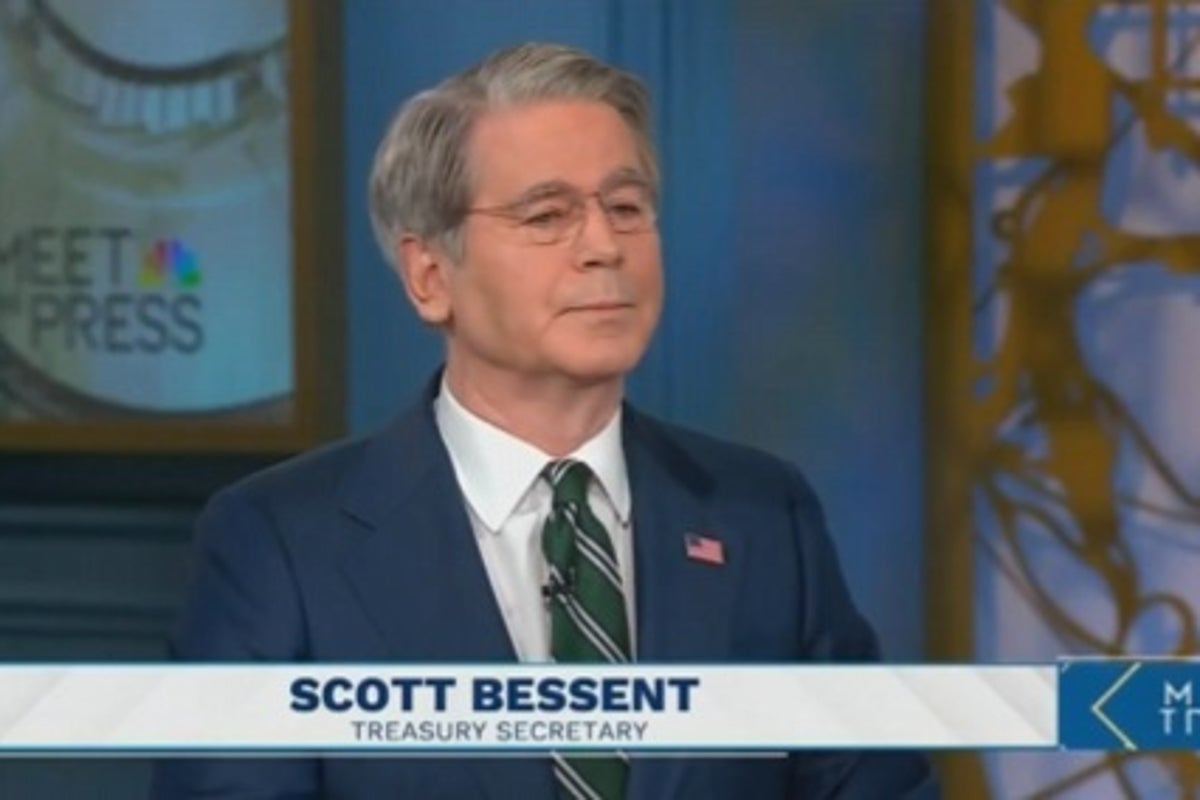
Treasury Secretary Scott Bessent is attempting to perform a high-stakes act of fiscal reassurance. His message to the American public is simple: a direct military conflict with Iran would not necessitate a tax hike. By pointing to a "plenty" of domestic resources, Bessent is signaling that the Treasury intends to absorb the costs of a potential war through a combination of increased energy production and existing budgetary flexibility. However, his confidence relies on a specific set of assumptions about energy markets and debt capacity that have rarely been tested in a modern, multi-front geopolitical crisis.
The underlying premise of the Bessent strategy is that American energy independence acts as a permanent shield against the kind of stagflationary shocks seen in the 1970s. By ramping up domestic oil and gas extraction, the administration believes it can offset the spike in global crude prices that would inevitably follow a closure of the Strait of Hormuz. In this view, the "plenty" Bessent references isn't just cash in the vault—it is the untapped potential of the Permian Basin and the strategic leverage of the U.S. dollar.
The Calculus of War Without New Revenue
Financing a war without raising taxes is a departure from historical norms. Historically, the United States used war bonds or temporary tax surcharges to ensure the domestic economy didn't overheat while the military-industrial complex scaled up. Bessent’s approach suggests that the current U.S. economy is sufficiently large and resilient to carry the burden of a Persian Gulf intervention through debt issuance alone.
This relies on the continued dominance of the U.S. Treasury market. For Bessent’s "no tax hike" promise to hold, global investors must remain willing to buy U.S. debt at manageable interest rates, even as the deficit widens to fund Tomahawk missiles and carrier strike group deployments. If the bond market balks at the increased borrowing, the cost of servicing the existing $34 trillion national debt could skyrocket, creating a back-door tax on the American public through inflation and higher borrowing costs for mortgages and car loans.
The "plenty" Bessent speaks of also refers to the Strategic Petroleum Reserve and the capacity of American drillers to flood the market. The theory is that if Iran attempts to choke off global supply, a surge in U.S. production will act as a price ceiling. This is an aggressive gamble on the elasticity of supply. Oil production cannot be turned on with a light switch; it requires infrastructure, labor, and lead time.
Energy as the New Fiscal Buffer
Bessent’s confidence is rooted in the belief that the U.S. is now an "energy superpower" rather than a vulnerable importer. This shift changes the math of war. During the Iraq and Afghanistan conflicts, the U.S. was still deeply sensitive to price shocks in the Middle East. Today, higher oil prices can actually provide a perverse benefit to the U.S. trade balance, as the country is now a net exporter of petroleum products.
- The Permian Hedge: Increased drilling permits and reduced regulatory friction are viewed as fiscal tools.
- The Dollar’s Role: As a safe-haven currency, the dollar typically strengthens during global turmoil, lowering the relative cost of imports.
- Tariff Revenue: The administration views incoming tariff receipts as a significant pool of capital that can be diverted to defense needs without touching personal or corporate income tax rates.
However, using tariffs to fund a war is a double-edged sword. If trade wars and shooting wars occur simultaneously, the cost of goods for the average American family will rise, regardless of whether their tax bracket stays the same. The "tax" is simply shifted from the IRS form to the grocery store receipt.
The Hidden Costs of T-Bill Diplomacy
If the Treasury avoids tax hikes, it must lean more heavily on the Federal Reserve. This creates a friction point between fiscal policy and monetary stability. If the government borrows billions to fund a Middle East campaign, it puts upward pressure on interest rates. To keep the economy from stalling, the Fed might be pressured to keep rates lower than inflation would dictate.
This is where the Bessent doctrine meets its most difficult challenge. You cannot fight a war, maintain massive social spending, and keep taxes low without eventually devaluing the currency. The "plenty" he describes is, in part, the ability to print more money. While this avoids the political suicide of a tax increase during an election cycle, it risks a long-term erosion of purchasing power.
The market has a way of finding the true cost of things. If the U.S. enters a protracted conflict with a regional power like Iran, the cost of insurance for shipping, the price of jet fuel, and the disruption of global supply chains will act as a de facto tax. Bessent is promising that the government won't take more of your paycheck, but he cannot promise that your paycheck will buy as much as it used to.
Breaking the Historical Cycle
Bessent is betting on a "high-growth" escape hatch. The idea is that by deregulating the economy and lowering the cost of energy, the resulting GDP growth will outpace the cost of the war. It is a supply-side approach to military funding. If the economy grows at 3% or 4%, the debt-to-GDP ratio becomes more manageable, even with a surge in defense spending.
Critics argue this is overly optimistic. Military spending is notoriously "unproductive" in economic terms; it creates demand for specialized equipment that does not contribute to the broader civilian economy’s efficiency. Every dollar spent on an interceptor missile is a dollar not spent on infrastructure or private sector R&D.
The administration’s stance also assumes that Iran’s response would be limited to conventional military theater. If the conflict spills into the cyber realm or involves the targeting of domestic infrastructure, the "cost" of the war transcends the federal budget. The economic damage of a major grid failure or a banking system disruption cannot be solved by simply not raising taxes.
The Geopolitical Gamble
There is a psychological component to Bessent’s rhetoric. By telling the world—and Iran—that the U.S. has "plenty" to fund a war, he is attempting to project strength and deter escalation. It is a form of financial brinkmanship. He wants the adversary to believe that the U.S. can outspend them without breaking a sweat or bothering its citizens for more money.
But this projection requires a unified front from the U.S. private sector. If banks and energy companies are not aligned with this "drill-and-defend" strategy, the fiscal buffer thins out quickly. The Secretary is essentially asking for a blank check from the bond markets based on the promise of future energy dominance.
The reality of 21st-century warfare is that it is won on balance sheets as much as on battlefields. Bessent knows that the American public has no appetite for another "forever war" funded by austerity at home. His promise is the only way to maintain public support for a hawkish foreign policy. Whether the math holds up under the pressure of real-world combat remains the great unanswered question of this administration.
Watch the 10-year Treasury yield. That is the true barometer of whether the world believes Bessent has "plenty," or if the U.S. is just digging a deeper hole.