The refrigerator drawer smells faintly of moisture and cold steel. Inside sits a plastic clamshell, half-full of baby spinach leaves that look as innocent as a morning lawn. They are washed. They are pre-packaged. They promise convenience in a frantic world where time is the only currency we never seem to have enough of.
Yet, reaching for them triggers a sudden, involuntary hesitation.
You look at the green leaves. You think about the headlines. You remember the microscopic invader hiding behind the crunch: Cyclospora.
We have reached a strange psychological juncture where our most basic instinct—nourishing our bodies with fresh produce—now requires an internal debate. It sounds dramatic until you trace the path of a single microscopic parasite from a distant field to the quiet corner of your kitchen counter. It is a story of globalization, fragile supply chains, and the invisible anxiety that settles into our daily habits when food safety falters.
Let us be completely honest. For years, salads were the ultimate symbol of virtue. Eating a bowl of mixed greens was a quiet moral victory, a way to balance out the compromises of modern life. You tossed the greens, drizzled the vinaigrette, and felt healthy.
Then came the outbreaks.
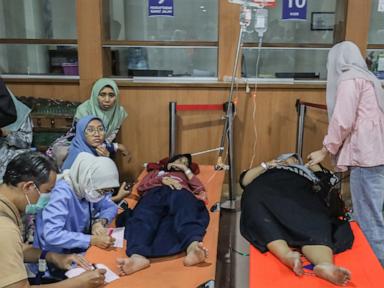
Consider what happens next when news breaks of a Cyclospora contamination traced back to imported leafy greens or regional processing facilities. Public health alerts flash across screens. Numbers tick upward. Cases multiply across states. People spend days, sometimes weeks, battling severe gastrointestinal distress, fatigue, and weight loss caused by a single-celled parasite that most of us cannot pronounce, let alone picture.
Panic follows.
Shoppers stand paralyzed in the produce aisle. They pick up bags of romaine, examine the expiration dates, look for signs of condensation, and then put them back down. They pivot toward heavier, cooked meals, abandoning the crisp textures they once loved. The salad bowl, once a canvas of wellness, becomes a potential hazard.
Why does this happen? The answer lies in the biology of the parasite itself and the sheer complexity of modern agricultural logistics.
Cyclospora cayetanensis is not a bacterium like E. coli or Salmonella. It does not multiply on the food itself. It is a protozoan, a microscopic traveler that thrives in warm climates and spreads when water contaminated with human feces comes into contact with fresh produce. Because it requires a host to complete its lifecycle, it behaves differently than standard foodborne pathogens.
More importantly, it is frustratingly resilient. Standard kitchen washing routines do not faze it. Rinsing your spinach under the tap, even with enthusiasm, will not wash away a parasite that has adhered to the rugged, undulating surface of a leaf. The rough texture of kale, the folds of a butterhead lettuce leaf, the crevices of baby spinach—these are microscopic landscapes where a pathogen can easily hide from a quick rinse.
When consumers realize that simple washing offers a false sense of security, trust fractures.
We crave certainty. When we buy food, we sign an unwritten contract with the growers, distributors, and regulators. We trust that someone, somewhere, checked the water source, tested the soil, and sanitized the washing tanks. When that contract breaks, the betrayal feels personal. It happens right at the dinner table, in the middle of a family meal.
The economic fallout of this lost appetite is swift and unforgiving. Farmers who spend months cultivating crops watch their yields rot in the fields because distributors halt orders. Small-scale growers who practice meticulous organic methods take the financial hit alongside massive industrial farms, as consumer fear rarely discriminates.
Yet, abandoning fresh produce entirely is a knee-jerk reaction that misses the broader picture.
The solution is not to live in perpetual fear of a green leaf. The solution is to understand how the food system is evolving to meet these microscopic threats. Agricultural scientists and food safety regulators are deploying advanced genomic tracking to trace outbreaks back to their exact geographic origins in hours rather than weeks. Irrigation water management is undergoing a massive overhaul, with stricter testing mandates and ultraviolet purification systems replacing antiquated open-canal methods.
Back in the kitchen, our relationship with greens must mature.
We stop treating pre-washed salads as ready-to-eat miracles and start treating them with a healthy, pragmatic awareness. For those who remain deeply concerned, shifting toward produce that requires peeling, cooking, or local sourcing offers a psychological buffer. Steaming, sautéing, or buying whole heads of lettuce to peel away outer layers and soak in targeted vinegar solutions changes the risk equation entirely.
The crunch returns. But the innocence is gone.
We no longer look at a bowl of salad with naive optimism. We look at it with the quiet sophistication of people who understand that modern survival requires a partnership with science. The fear of Cyclospora changed our plates, but it also forced a long-overdue reckoning with how our food travels from the earth to our mouths.
The plastic clamshell sits on the shelf. The light catches the condensation inside. You reach out, turn it over, read the label, and make your choice with eyes wide open.